
Advertisement
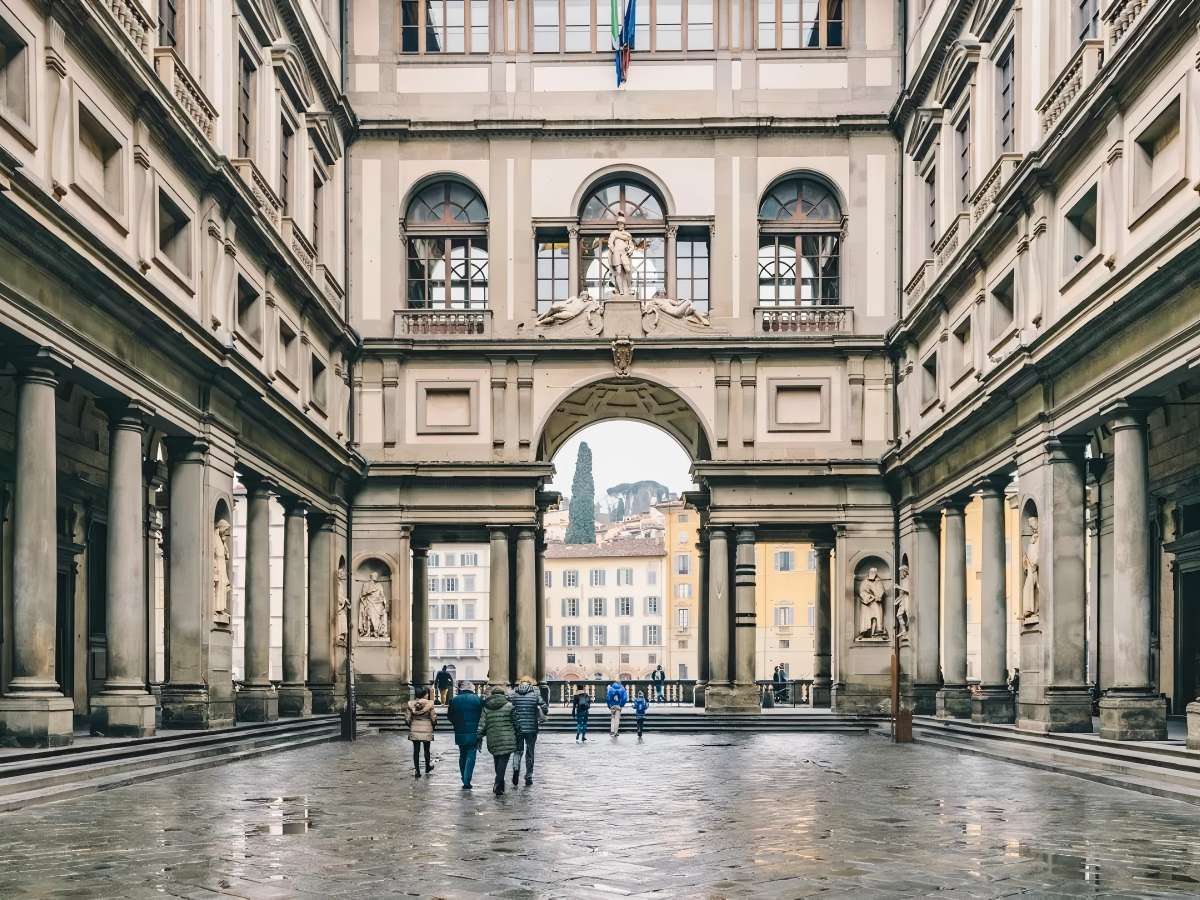
In the center of Florence lies one of the world's most famous art galleries, the Uffizi Gallery, which houses a number of Renaissance treasures, one of the most iconic of which is the Italian painter Sandro Botticelli's masterpiece, The Birth of Venus. -The Birth of Venus. Not only does this painting symbolize the pinnacle of Renaissance aesthetics, it is also one of the jewels of art history, attracting countless tourists to see it.
Advertisement
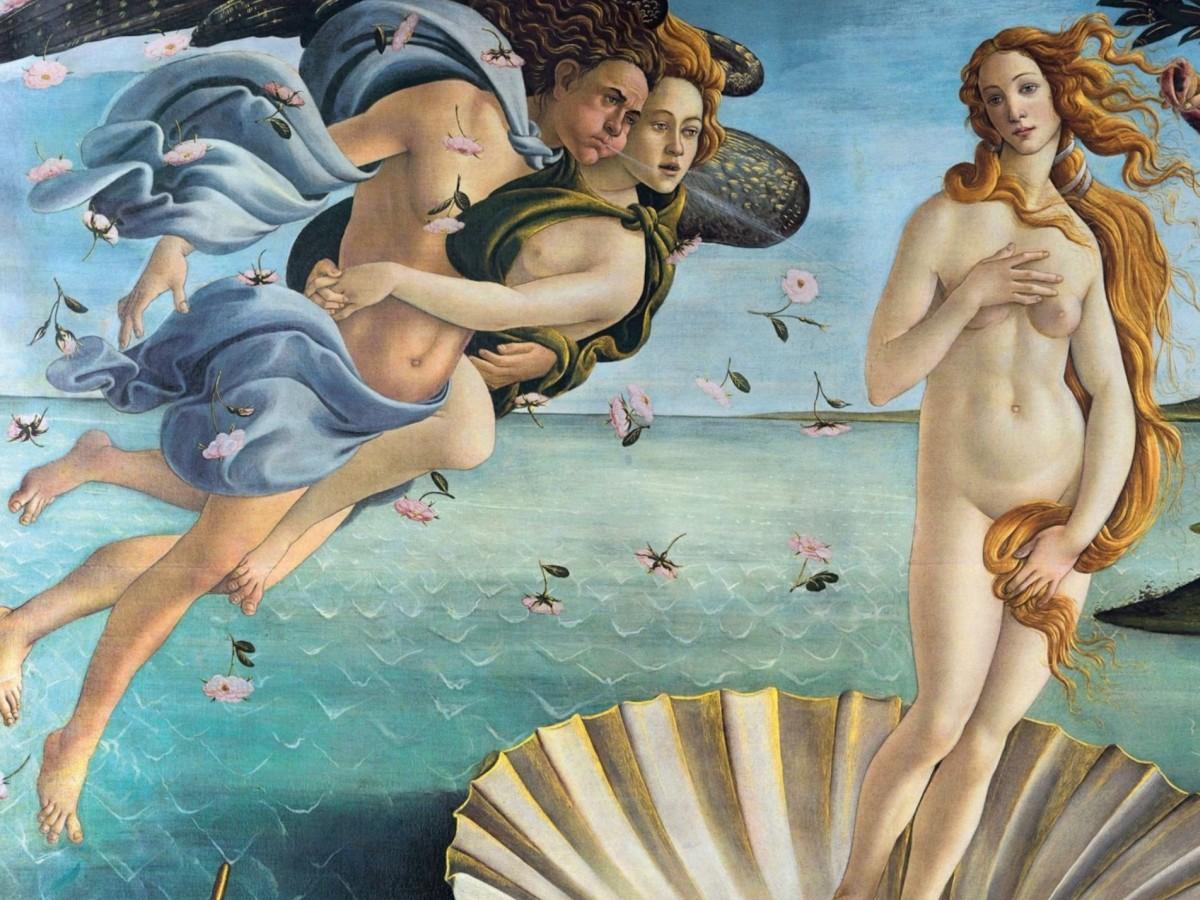
The Birth of Venus was created between 1484 and 1486, during the golden age of the Italian Renaissance. Based on ancient Greek mythology, the painting depicts the moment of birth of Venus, the goddess of love and beauty. Filled with soft colors, smooth lines and idealized aesthetics, the painting demonstrates Botticelli's unique artistic style and maps the trend of humanism at the time.
Advertisement
Venus stands on a huge shell, floating slowly towards the shore as the waves push in. Her body is perfectly proportioned like a classical sculpture, and her skin is delicate and smooth, as if emanating a divine radiance. Her slightly tilted posture revealed a hint of shyness, yet carried an irresistible charm of elegance. This image of softness and sanctity coexisting is the ultimate pursuit of beauty in the Renaissance.
This painting is inspired by ancient Greek mythology. According to legend, Venus was born from the blood of Uranus, the god of the sea, fused with seawater and drifted to the shore with the waves. Botticelli depicts this scene as if it were a dream, giving the picture a transcendental atmosphere.
On the left, a pair of wind gods, Zephyrus, the god of the west wind, and Chloris, the goddess of flowers, are working together to blow a warm breeze that will carry Venus to land. Their robes flutter in the wind, adding a dynamic beauty. On the right, Hora of Spring, the goddess of the earth, holds an ornate cloak as she prepares to clothe Venus, symbolizing the ceremonial nature of her imminent entry into the earth.
Throughout the painting, the waves gently ripple and flower petals float in the wind, each detail demonstrating the perfect combination of nature and myth. Botticelli's use of delicate brushstrokes here makes the picture poetic, as if the whole world were immersed in the sacred moment of Venus' birth.
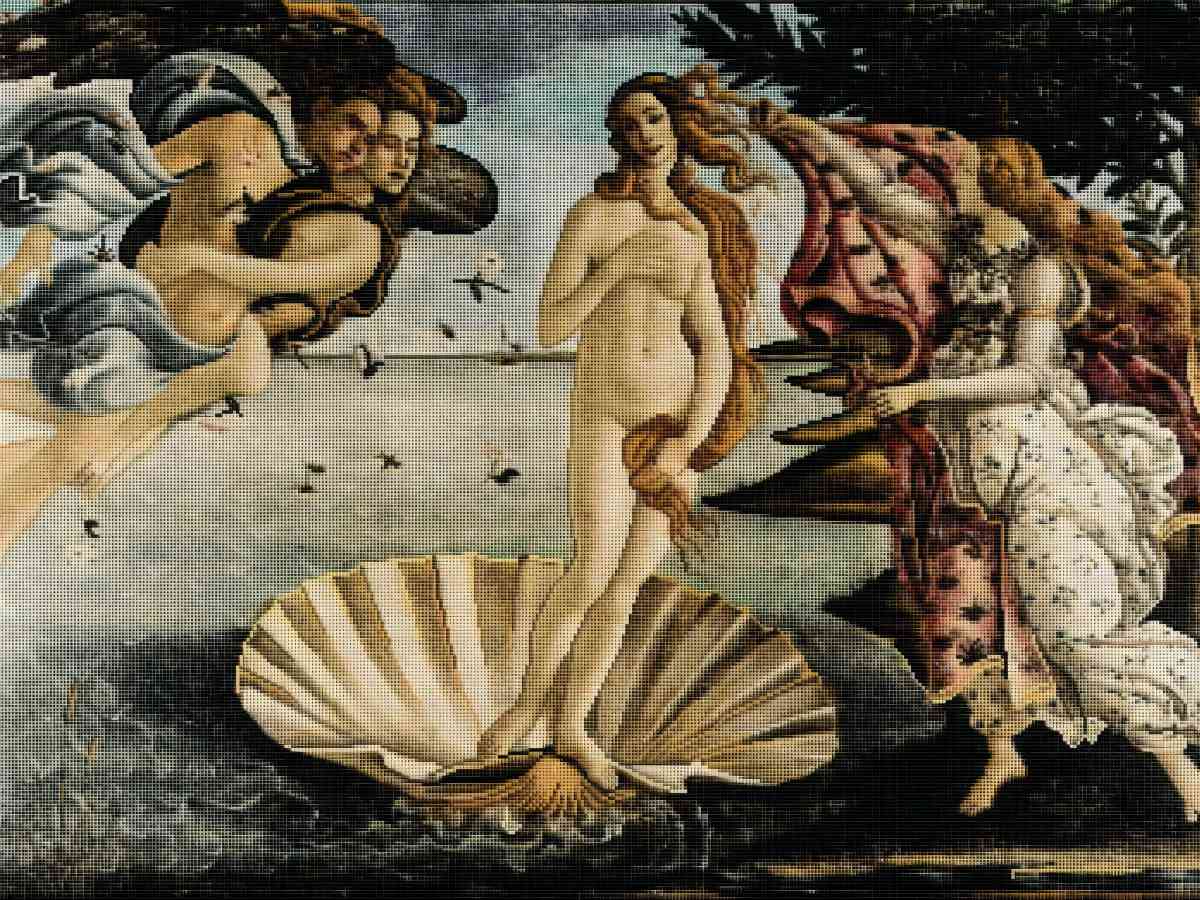
In contrast to the perspective and anatomical studies that were popular at the time, Botticelli's style of painting emphasized the smoothness of lines and the expression of emotion in the figures. In The Birth of Venus, he abandoned complex spatial compositions and instead adopted a flat expression, making the picture more decorative. This style not only gives the work a dreamlike beauty, but also distinguishes it from the works of other Renaissance masters of the same period.
Advertisement
The pose of Venus is a reference to the ancient Greek sculpture Venus of Aphrodite, showing an elegant and subtle beauty. Her hands gently cover key areas of her body, retaining a sacred mythological flavor while revealing a hint of gentle femininity. This classic aesthetic style has made this painting an object of imitation for later generations of artists.
Botticelli was extremely meticulous in his use of color. The entire picture is dominated by soft pinks, light blues and golds, creating a warm and harmonious visual effect. The skin of Venus is almost transparently white, contrasting with the surrounding nature, making her look as if she is beyond the world.
Light and shadow are also handled with great care. Botticelli did not use a strong contrast between light and dark, but a soft transition to express the three-dimensionality of the characters, making the picture look smoother and more delicate. This treatment gives the painting a unique halo effect, as if the whole scene is bathed in the divine morning sun.
The Birth of Venus is not just a painting, it is an interpretation of beauty and a celebration of humanism. Whether in the Renaissance or in modern times, the pursuit of beauty has remained constant, and Botticelli's idealized beauty in this painting remains a source of fascination. The painting has also inspired countless artists in later generations, from French neoclassicism to modern pop art, all of which can be seen in its shadow. Its influence extends far beyond Florence to become an art treasure on a global scale. Standing in the gallery of the Uffizi Gallery, gazing quietly at this masterpiece that spans more than five hundred years, it is as if you can hear the echoes of the Renaissance. Whether it is the Venus in the painting or the flowing breeze, everything seems to be frozen in this moment, so that everyone who appreciates it can feel the transcendent beauty.