
Advertisement
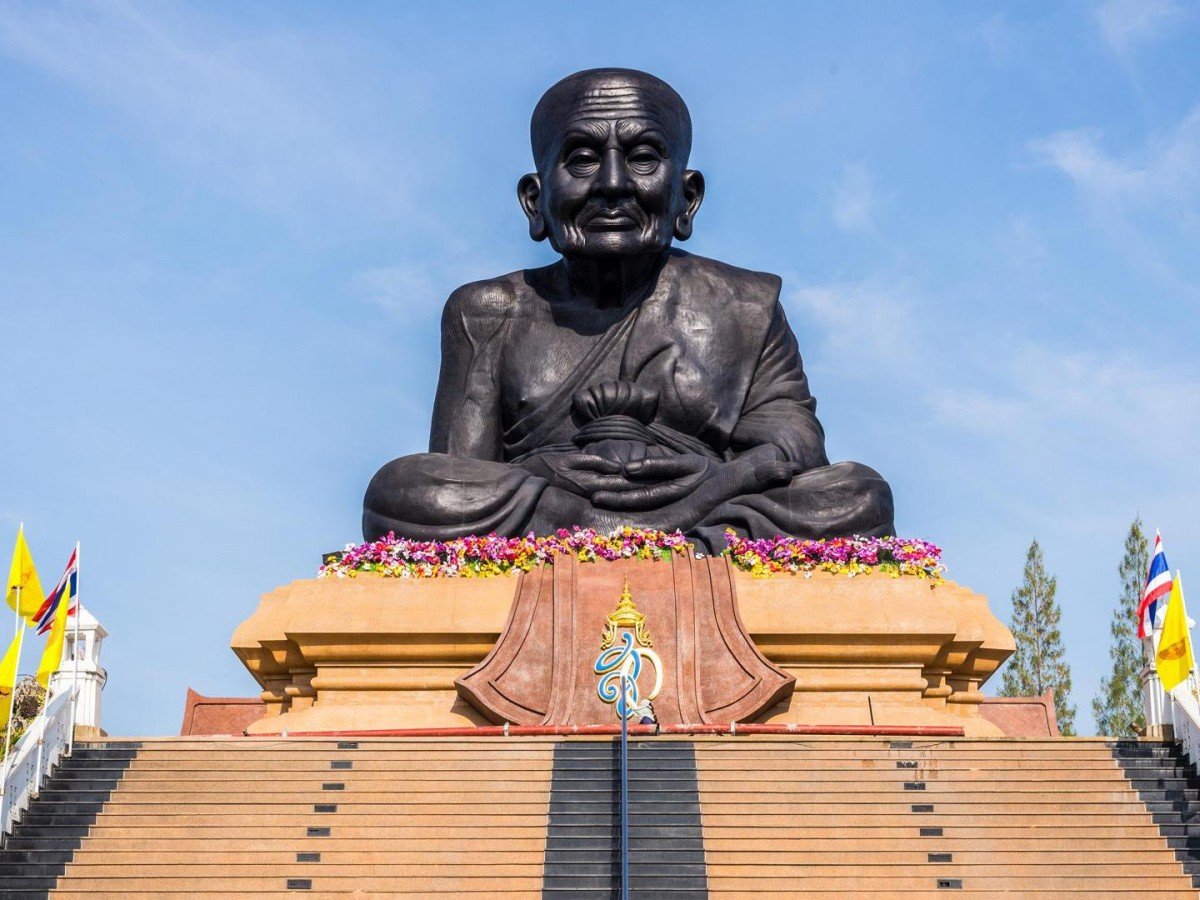
Tucked away in the green hills of Hua Hin, Thailand, lies a temple that could easily charge admission based on its "world's best" status, yet it insists on offering free admission. It's Wat Huay Mongkol. Located northwest of downtown Hua Hin, about 10 kilometers from Hua Hin Beach, it's a 20-minute taxi ride from the city center, offering breathtaking views of rice paddies and coconut groves along the way. The temple's most striking feature is the 25-meter-tall statue of Luang Phor Thuad, currently the largest in the world. Sitting majestically in white, it sits mid-mountain, resembling the guardian deity of Hua Hin from afar. Even more surprising, whether you visit the statue, pray, or explore the temple grounds, it's all free. This contrasting combination of "free yet world-class" makes it a must-see attraction in Hua Hin. However, there are many details to consider when visiting the statue properly. This guide will help you plan everything.
Advertisement
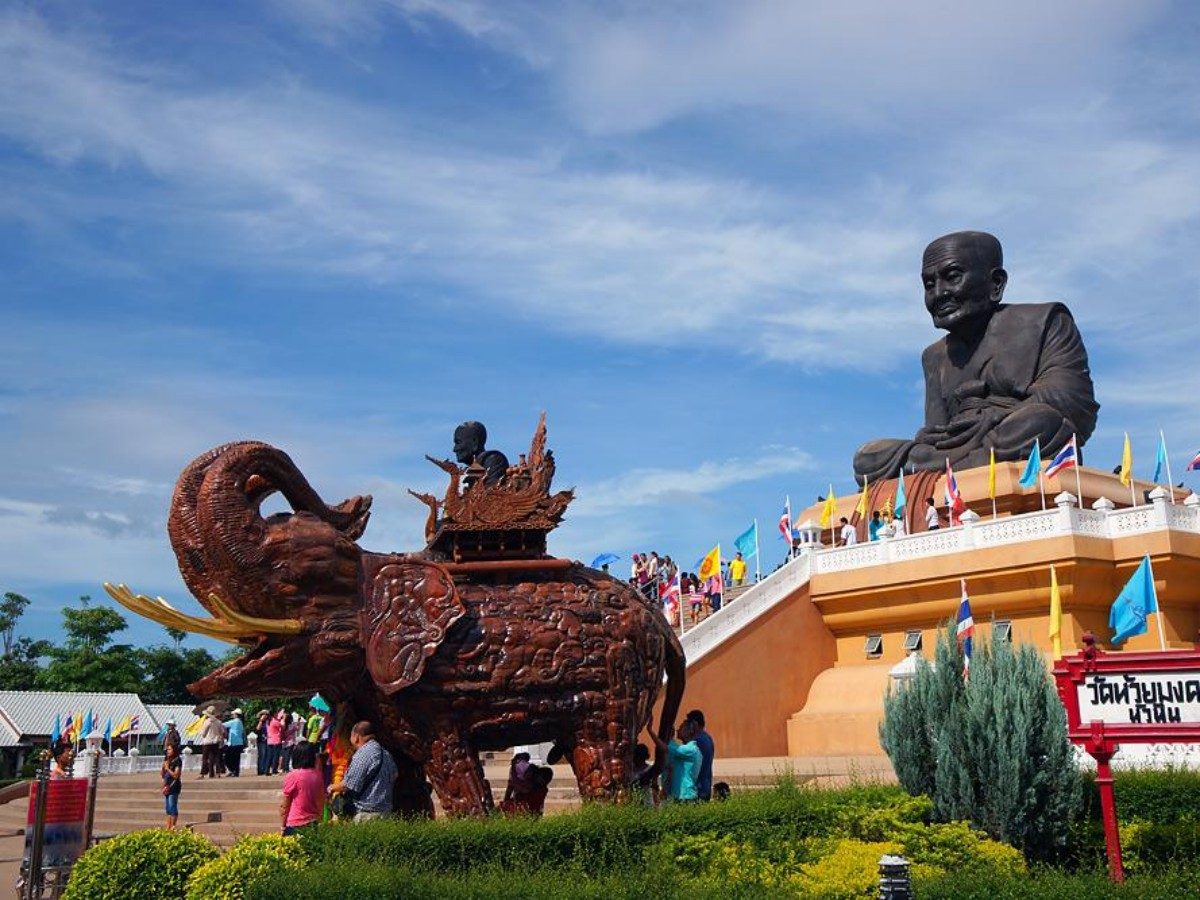
Many first-time visitors to Wat Huay Mongkol are struck by the sheer size of the Luang Phor Thuad statue. However, its "specialness" lies not only in its size but also in the cultural significance and detailed design. Understanding this will help you better understand why the locals hold it in such high esteem.
Advertisement
Luang Phor Thuad is a renowned monk in Thai history. He is said to ward off evil and bring peace to his followers, and he holds a high reputation in Thailand. The statue at Wat Huay Mongkol, dedicated to Luang Phor Thuad, took five years to complete. At 25 meters tall, it's the equivalent of an eight-story building, and its base alone is five meters wide. Photographing the statue in its entirety requires standing on the temple's observation deck. The details of the statue are exceptionally exquisite: Luang Phor Thuad, draped in an orange robe, his hands in a mudra, his face benevolent, his eyes slightly closed, as if praying for the world. The folds of the robe flow smoothly, revealing subtle textures in the sunlight. A closer look reveals Thai scriptures engraved on the statue's base, each word clearly and neatly crafted. Most remarkable is the statue's location: it's perched on a platform mid-mountain, with lush green mountains behind it and the vast Hua Hin plains in front. Standing before it, one can both feel the monk's majesty and admire the beauty of nature. This blend of humanity and nature lends the statue a certain spirituality.
The statue also has a hidden gem: every morning between 6 and 7 a.m., when the first rays of sunlight strike it, the white statue turns golden, resembling a "golden Buddha" from afar. Locals believe this is a sign of Luang Phor Thuad appearing, and many devotees rise early to witness this spectacle. If you have ample time, arrive early to avoid the crowds and still see this rare spectacle.
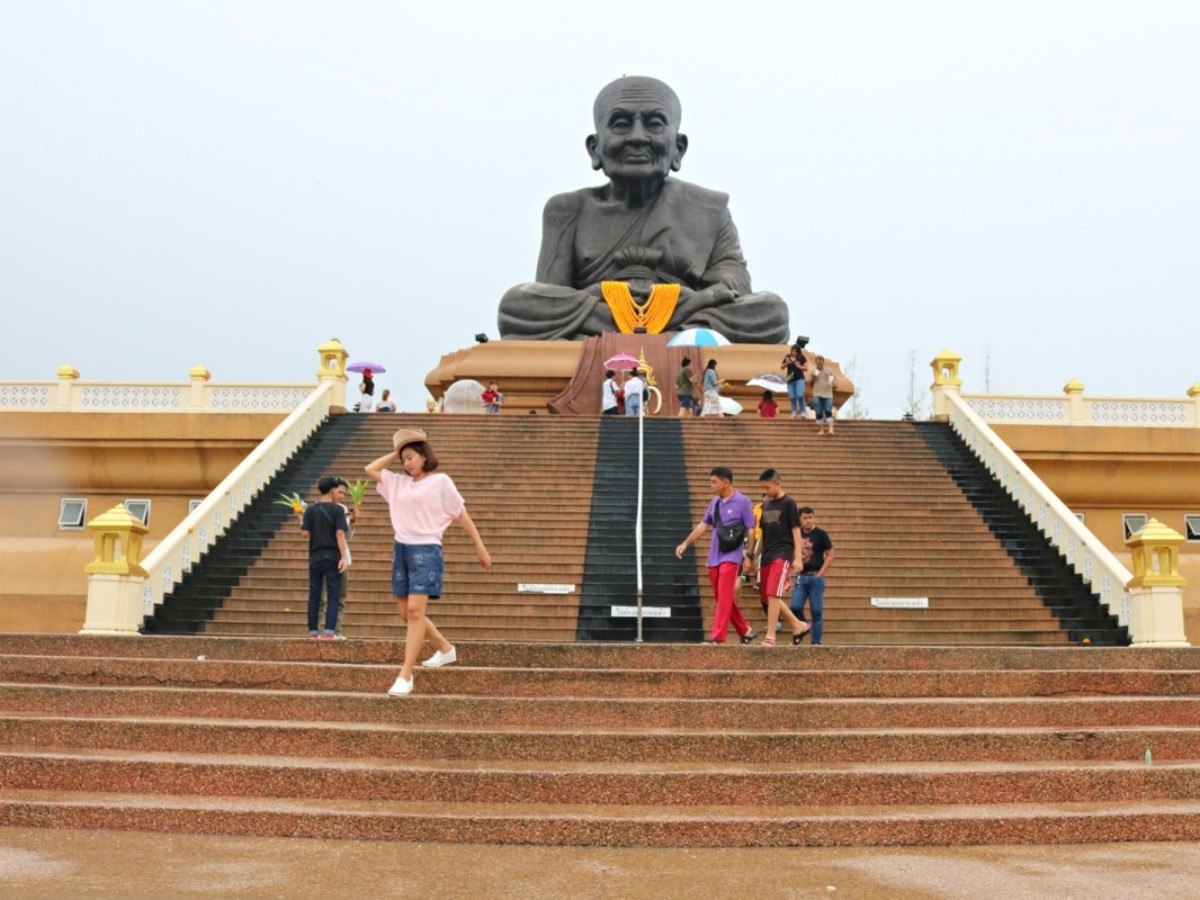
Although Wat Huay Mongkol is free to enter, a thorough and enjoyable temple tour requires careful order and skill, otherwise it's easy to miss the highlights.
Advertisement
First, let's discuss the "tourist route." We recommend entering through the main gate and following the sequence of "first explore the courtyard, then worship the sacred image, and finally pray." There are two stone lions at the main gate. Free incense and flower bouquets are available at the entrance (no need to purchase; the temple provides them, limited to one per person). After receiving the incense and flower bouquets, explore the temple's front courtyard. There are many small shrines in the front courtyard, each housing a different Buddha statue, such as the Four-Faced Buddha and the Medicine Buddha. Following Thai etiquette, you can first bow with your hands together before placing the flower bouquet in front of the shrine. No donation is required; sincere prayers are a blessing. There's also a century-old banyan tree in the front courtyard. Beneath it, you can rest and listen to the temple bells and soak in the tranquil atmosphere.
Next, worship the sacred image. From the courtyard, ascend the steps, which take about five minutes to reach the platform where the sacred image rests. Remember to take off your shoes when ascending the steps (there's a free shoe rack at the temple entrance; you can simply place your shoes on it without worrying about losing them; the locals are very considerate). Dress appropriately—no shorts or skirts (anything above the knee) or sleeveless tops. If you're wearing something that doesn't meet the requirements, there are free saris available for borrowing at the temple entrance. Simply register your ID and return them after use. Upon reaching the statue platform, light the incense you received and place it in the incense burner in front of the statue. Then, place your hands together and bow three times toward the statue, silently reciting your wishes (no need to speak them out loud). After worshiping the statue, walk around it in a clockwise circle, which is said to bring "good fortune." As you walk, touch the base of the statue; locals say that touching the base brings good luck. Finally, there's "Prayer and Experience." Next to the statue platform is a small pavilion with free "prayer plaques." You can take one, write your name and wish on it with a marker provided by the temple, and then hang it on a rope in the pavilion. These plaques will remain there, and the monks will chant regularly. Also, in the temple's backyard is a "holy water spring." The spring water flows down from the mountains. Locals say it's "holy water for dispelling misfortunes." You can use the small cups provided by the temple to collect a cup, drink from it, or sprinkle it on your head, symbolizing "washing away troubles." The spring water is cool and sweet, especially refreshing in the summer. However, be aware that you must queue up to collect the water. Don't cut in line, and don't waste it. Take only enough for your needs. If you have enough time, you can also browse the temple's souvenir shops (although the temple is free, the souvenir shops do charge admission, though the prices are very affordable. For example, Thai bracelets and Buddha pendants are mostly between 100 and 200 baht, making them perfect souvenirs). Or you can have lunch at the temple's vegetarian restaurant. The vegetarian dishes are all prepared by the monks, such as pad thai and vegetable soup, and are only 50 baht per portion. They are light and delicious, making them a "lucky meal."
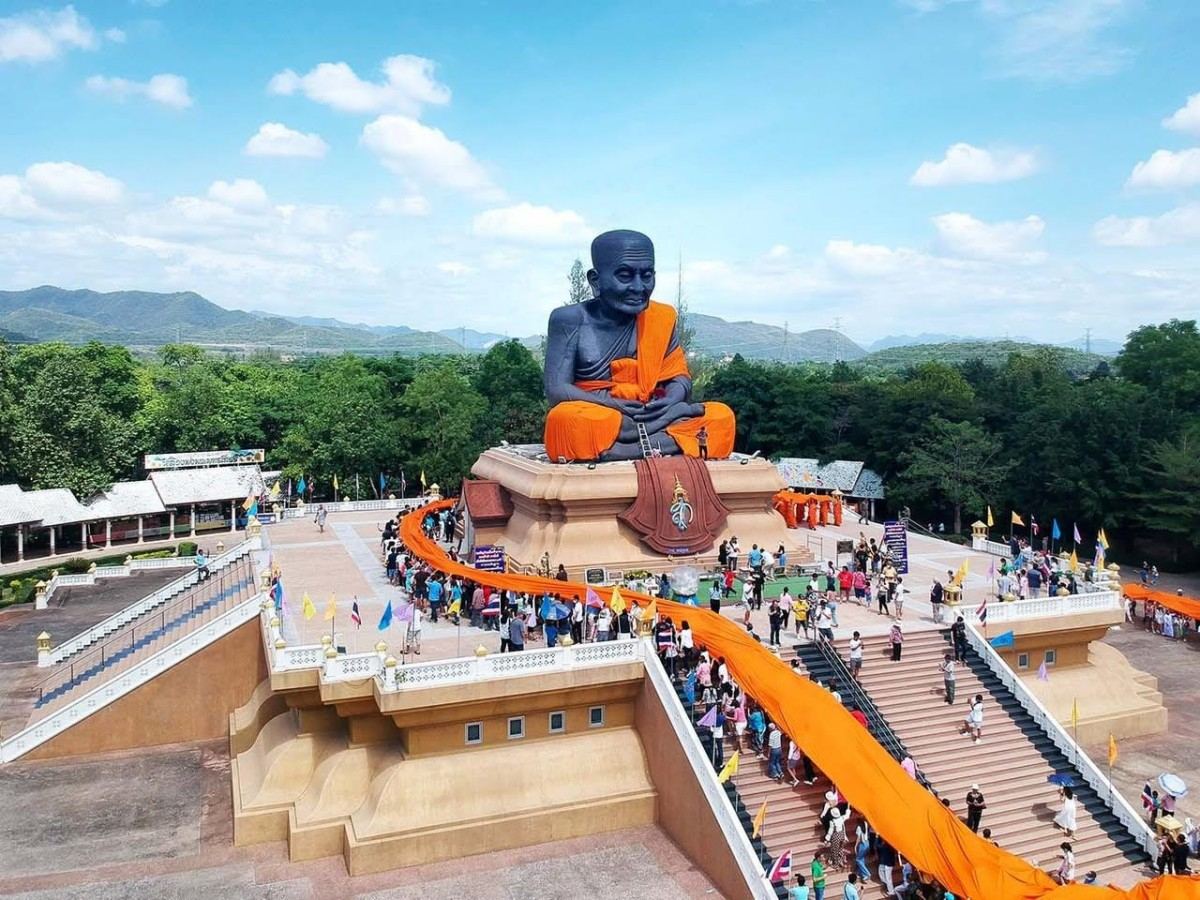
While Wat Huay Mongkol is a friendly place, it is a religious site after all, and there are many etiquette and rules to follow. Knowing these precautions in advance will make your visit smoother and avoid offending the locals.
First, the dress code is the most common mistake. The temple clearly stipulates that tops must have sleeves (short-sleeved or long-sleeved are acceptable, but not sleeveless or suspenders), and bottoms must be below the knee (long pants or long skirts are acceptable, but not shorts, short skirts, or hot pants). If you forget to bring appropriate clothing, don't panic. Free saris and trousers are available for loan at the temple entrance. Saris are solid colors, such as black, white, and blue. Men can borrow trousers, while women can borrow saris. Please register your passport or ID card with the staff when borrowing. Return your ID after use and you will receive it back without a deposit. Also, avoid wearing slippers (slippers are easy to slip off and impolite). Sneakers or canvas shoes are recommended for easy walking up and down stairs.
The second is "behavioral etiquette." Maintain quiet in the temple. Avoid loud noises, fighting, or running around, especially around statue platforms and shrines. Show respect. When taking photos, be mindful: You can photograph statues, but not monks (unless the monks agree). Do not photograph the statue's head (photograph the entire body, not just the head, as this is considered impolite in Thailand). Avoid using flash photography to avoid damaging the statue's paint finish. Also, avoid touching the statue's body, only the base. Avoid climbing the steps leading to the statue; stay on the designated platforms.
The third is "prayer taboos." When receiving incense and bouquets, receive them with both hands, not one. When lighting incense, place it in the incense burner and do not throw it on the ground. When writing prayer cards, avoid writing unlucky words or other people's names (unless the person agrees). When drinking holy water, use the temple-provided cup, not your own bottle. After drinking, return the cup to its original location and do not take it with you. Also, avoid smoking, drinking, or eating non-vegetarian food in temples. Temples are vegetarian areas, and non-vegetarian food pollutes the environment and disrespects religious beliefs.
Fourth, regarding timings: The temple is open daily from 6:00 AM to 6:00 PM. It's recommended to visit between 8:00 AM and 10:00 AM or between 2:00 PM and 4:00 PM. These are less crowded and the weather is less hot (Hua Hin can get very hot at noon, making heatstroke more likely). If you want to see the Golden Image, visit between 6:00 AM and 7:00 AM. However, morning fog can be a problem, so it's best to check the weather forecast in advance; clear days offer better viewing opportunities. Furthermore, the temple is particularly bustling during major Thai holidays (such as Songkran and Lent), when many worshippers come to pray and bring blessings. Therefore, it's recommended to avoid these times if you prefer a quieter visit.
Fifth, "Transportation and Safety." From downtown Hua Hin to the temple, it's best to take a legitimate taxi or tuk-tuk. Avoid illegal taxis, as they can be rip-offs. A metered fare for a legitimate taxi is around 200 baht, while a tuk-tuk can be negotiated for around 150 baht. If you rent an electric bike, be mindful of the hilly roads. The road near the temple is somewhat sloped, so slow down and exercise caution. The temple steps can be slippery, especially on rainy days, so be careful when walking and avoid running or jumping. Also, there are no ATMs within the temple. If you plan to buy souvenirs or have lunch, it's best to exchange Thai baht in advance; cash is more convenient.
When you follow this guide, dress appropriately, enter Wat Huay Mongkol, pay homage to the 25-meter-tall statue of Luang Phor Thuad, drink the refreshing holy water, and hang a prayer plaque filled with wishes, you'll understand why this "world's best free place" is so popular—it's free of commercial stigma, filled with pure faith and kindness. Here, you can experience Thai religious culture, admire stunning cultural landscapes, and pray for yourself and your family, all without spending a penny. As you leave, don't forget to look back at the white statue, standing quietly among the green hills, as if to say "peace." I hope this guide will help you visit Luang Phor Thuad's statue correctly and create a warm and unforgettable memory in Hua Hin.