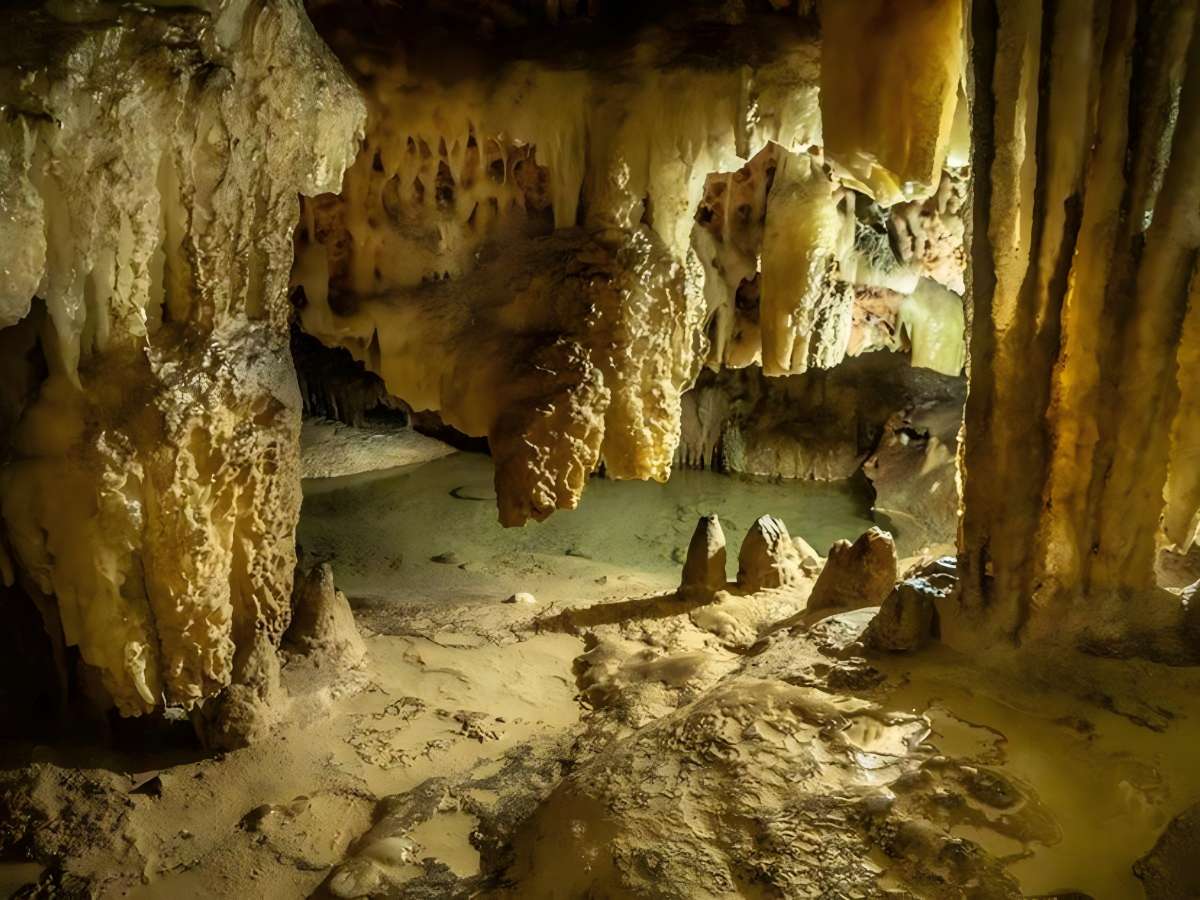
Hidden in Cuba is the subterranean wonderland of Cueva de Bellamar, a kilometer-long cavern that is not only one of the country's oldest tourist attractions, but also an important window into the Caribbean's geologic evolution, rock formations, and changing landscapes. A walk through the cave reveals not only limestone stalactites, stalagmites and underground rivers, but also a geological epic carved over millions of years.
Advertisement
The formation of Cueva de Bellamar was made possible by a key geological element: limestone. In remote geological times, the Matanzas region was a shallow marine environment where calcium carbonate sediments made up of shellfish, coral and plankton remains accumulated on the seafloor. As the earth's crust moved, these sedimentary layers gradually lifted and consolidated into limestone layers. It is on this geological basis that the formation of caves was possible.
Advertisement
Limestone itself is highly susceptible to dissolution by weakly acidic water. When rainwater absorbed carbon dioxide from the atmosphere and converted it into weak carbonic acid, it seeped into the ground, pooled into the soil and further enhanced the acidity. Over thousands or even millions of years, these water streams slowly traveled through the limestone, gradually eroding out cracks, channels and underground cavities. The dripping of water through the limestone is not a legend, but a real process of cave formation.
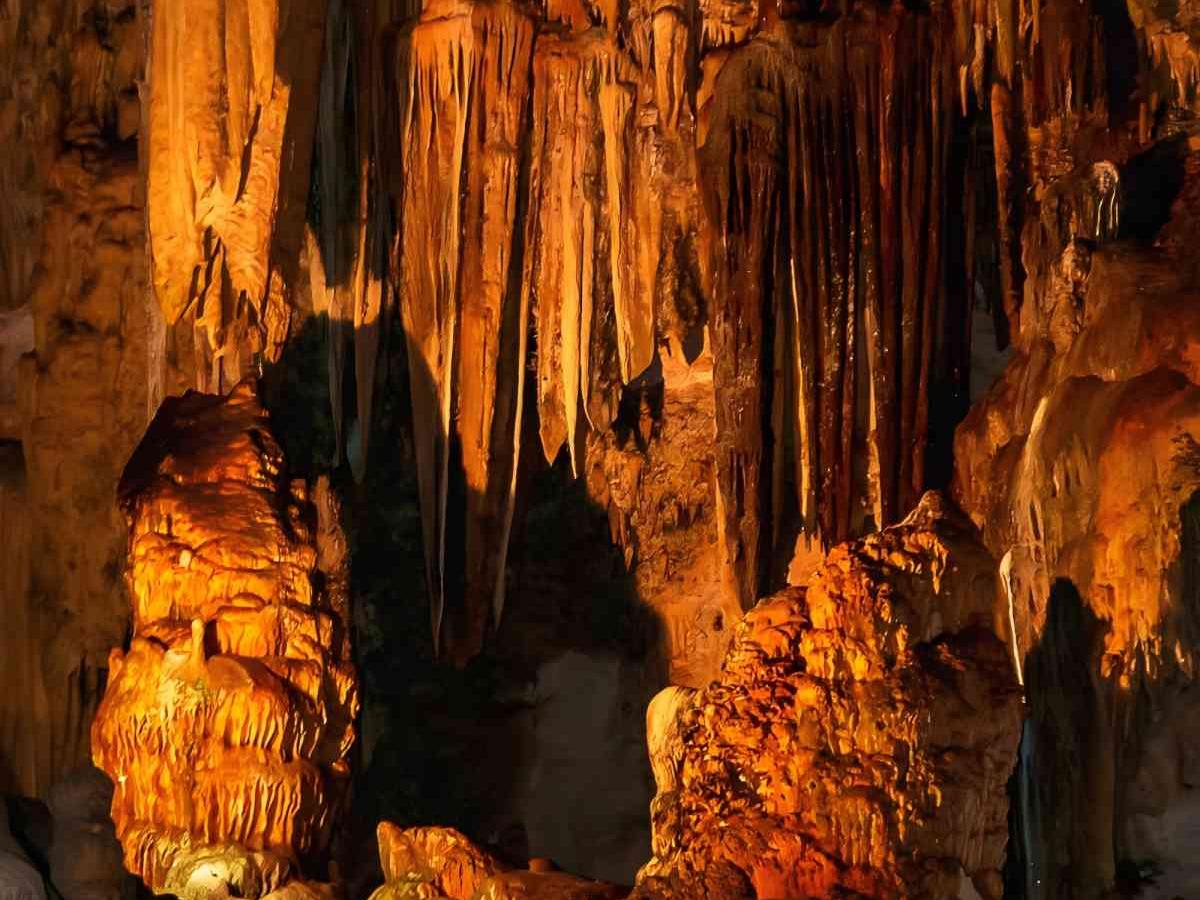
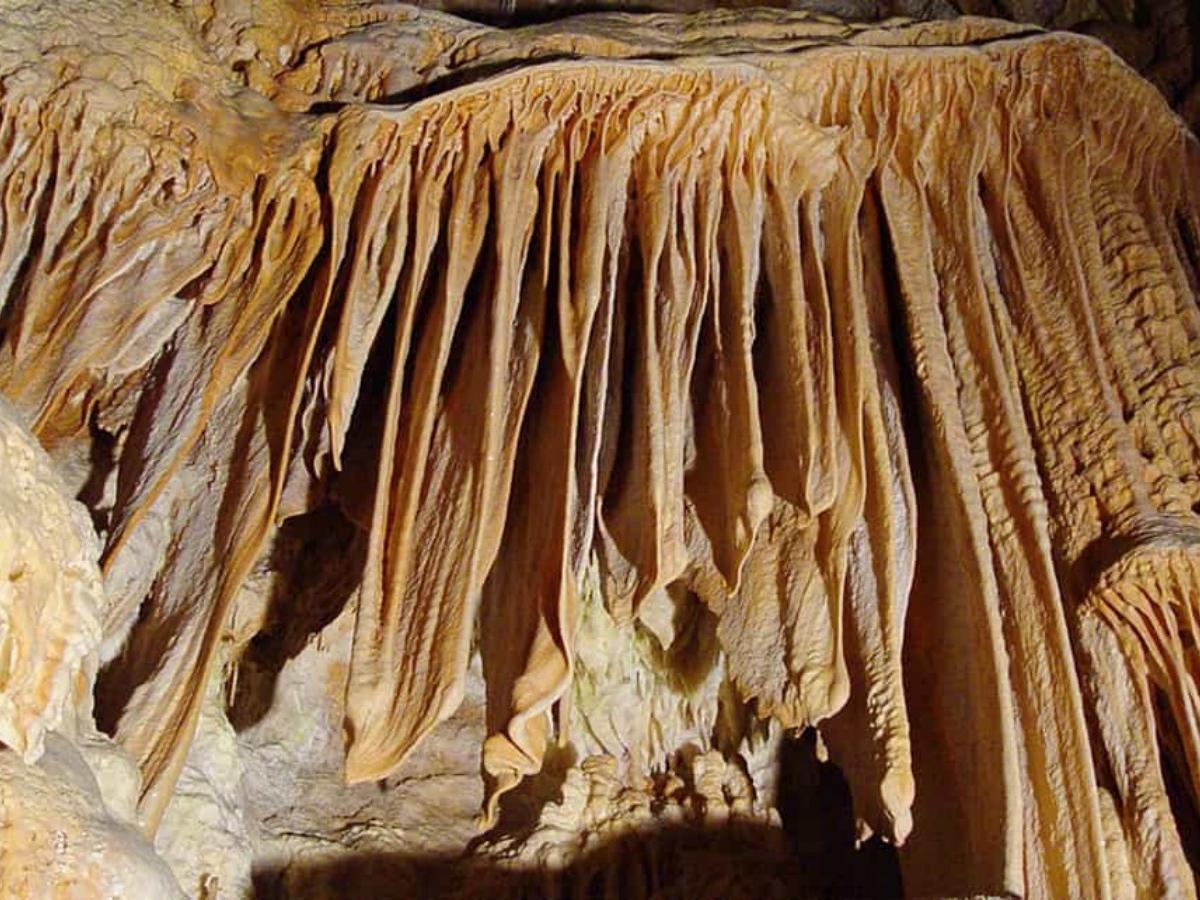
In the depths of Cueva de Bellamar, visitors can clearly see stalagmites, stalactites, stone mantles and other typical secondary sedimentary features. These structures are formed when calcium carbonate dissolved in the groundwater is redeposited in the dripping process, creating layers and layers of natural sculptures year after year. Particularly striking are the natural wonders of “Columbus' Cloak” and the “Fountain of Love,” as if the imagery of human civilization had been inscribed in stone, and where science and art meet.
From a macroscopic point of view, Cueva de Bellamar is not only a product of chemical weathering, but also a record of the crustal changes brought about by the long-term collision and tectonic movement of the Caribbean and North American tectonic plates. The island of Cuba itself is the result of complex evolution on the convergence zone of the two plates. Volcanic activity, seafloor deposition, and uplift of strata over many geologic periods have shaped the rugged landscape and rich geologic faults of the Matanzas region.
Advertisement
In several sections of the Bellamar Cave, geologists can clearly identify contact lines, fault dislocations, and paleontological fossils in the sediments of different ages. These features not only provide clues as to when the cave was formed, but also help to reconstruct the evolution of geologic structures throughout eastern Cuba. For example, through radioisotope dating and calcium carbonate layer profiling, scientists have hypothesized that the main cavity of the cave may have formed during the early Pleistocene, at least 300,000 years ago.
In addition, the presence of the Cueva de Bellamar groundwater system provides a natural laboratory for studying the hydrogeology and groundwater circulation of the area. Some of the channels are still slowly expanding, indicating that the system is not completely “static”, but is still evolving under the influence of external climatic and hydrodynamic influences. This phenomenon makes it a valuable example for studying the dynamics of karst landscapes in the tropics.
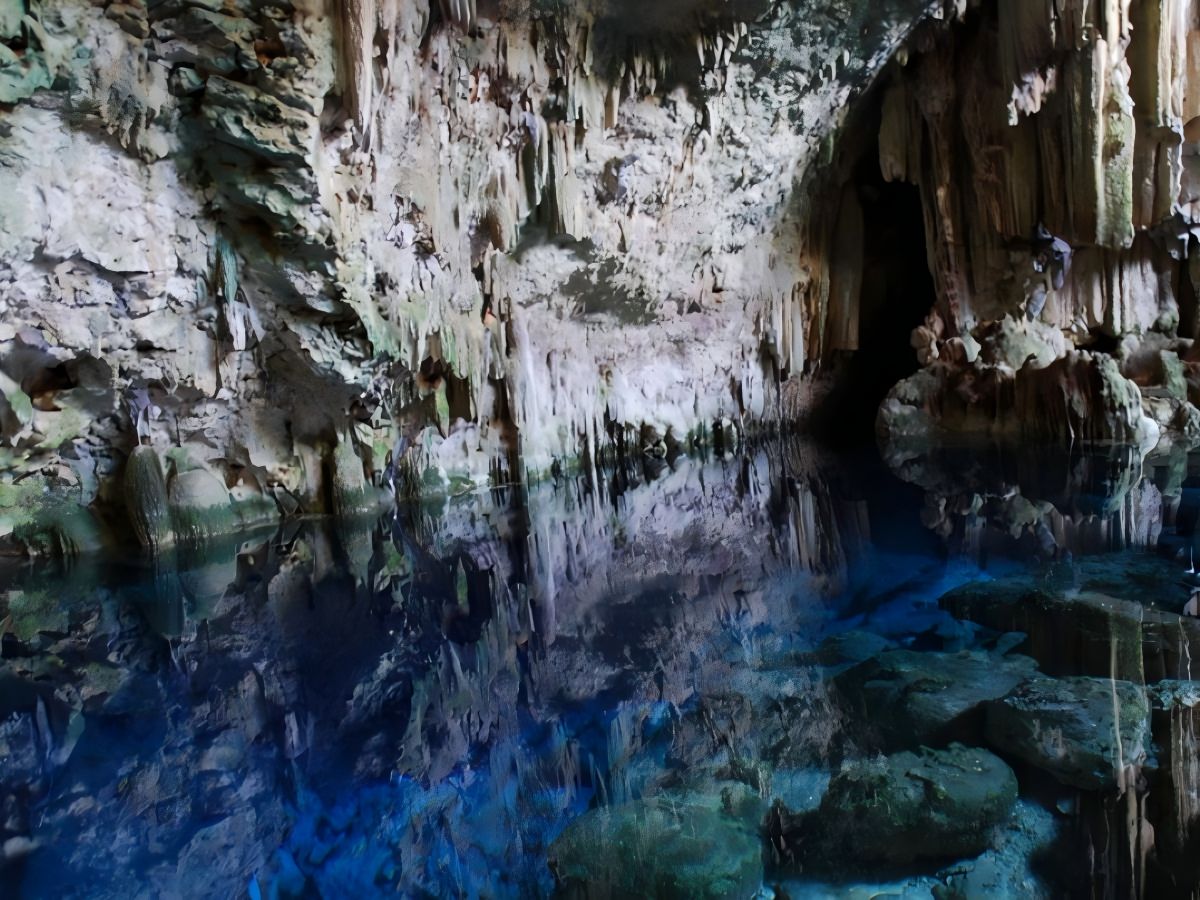
Although the Belamar Caves are renowned for their scientific value, they are not an ivory tower confined to the realm of academic research. Since its accidental discovery in the mid-19th century, it has attracted countless tourists, explorers and artists. Records of early explorations show that people used turpentine torches to illuminate the dark, moist chambers, depicting natural wonders and leaving behind precious historical scribbles and travelogues. This continuation of human curiosity about nature also reflects the special significance of caves in human geography.
More importantly, Cueva de Bellamar's model of preservation and openness also reflects the sustainable management of geological heritage. In modern tourism development, the Cuban government has taken the approach of limiting the number of people, installing trails, and controlling humidity and light in order to avoid destroying the natural environment in which the stalactites grow. Parts of the area are set aside for scientific research and are closed to the public to ensure the rigor and integrity of geological research.
When one stands in the depths of Belamar Cave and looks up at the stalactites and stone mantles that never seem to stop dripping, one will not only be struck by the delicacy of nature's hand, but also feel the weight of time itself in the silence. Here, hundreds of years are just a thin layer of crystallization, while tens of thousands of years are needed to create a true “underground palace”.