Advertisement
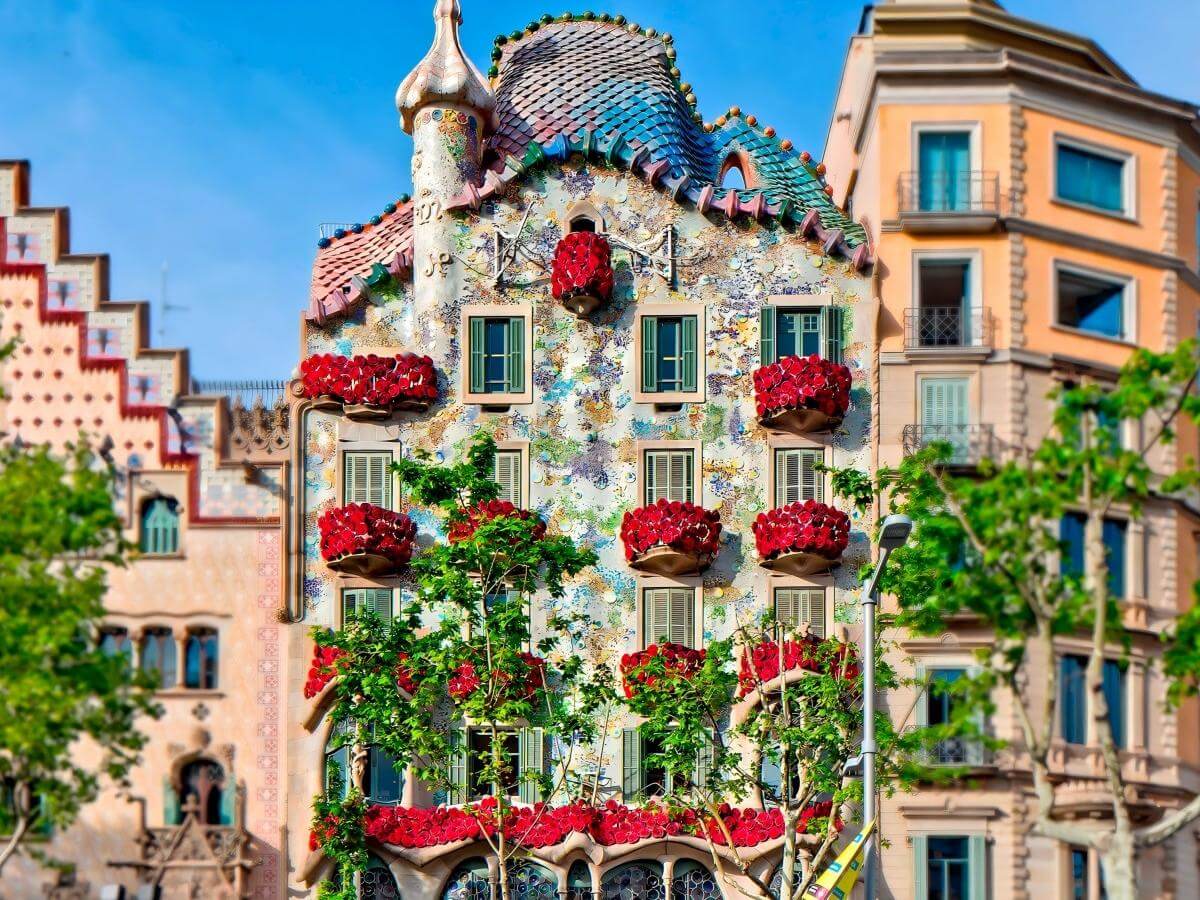
On Barcelona's Paseo de la Gracia, there stands a dreamlike building, the Casa Batlló, which, like a bright pearl, exudes a unique and fascinating charm. This masterpiece created by the Spanish architect Antoni Gaudi is a perfect fusion of architecture and art, which opens up a marvelous journey beyond imagination for every visitor.
Advertisement
Originally built by architect Emilio Sala Cortés in 1877, before the dawn of the electric age in Barcelona, the Casa Batlló was purchased in 1903 by Mr. Josep Batlló, who had the foresight to invite Gaudí to completely renovate the building. Between 1904 and 1906, Gaudi's creative genius completely remodeled the building's facade and interior, enlarged the patio, and transformed the ordinary building into a fantastical temple of art, a classic example of his creative maturity, and in 2002, the Casa del Bartholomeo opened its doors to tourists, and is now a UNESCO World Heritage Site. It is now a UNESCO World Heritage Site and attracts visitors from all over the world to discover its unique charms.
Advertisement
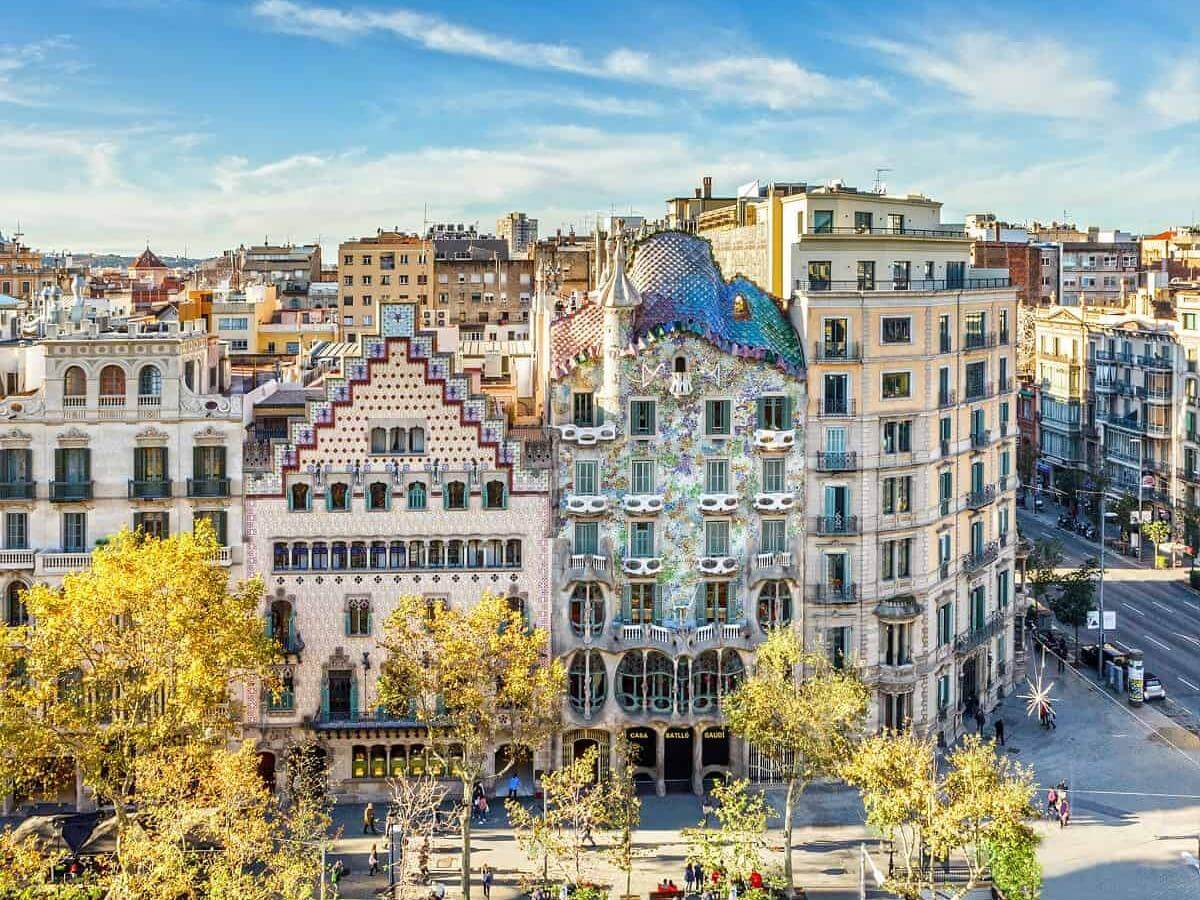
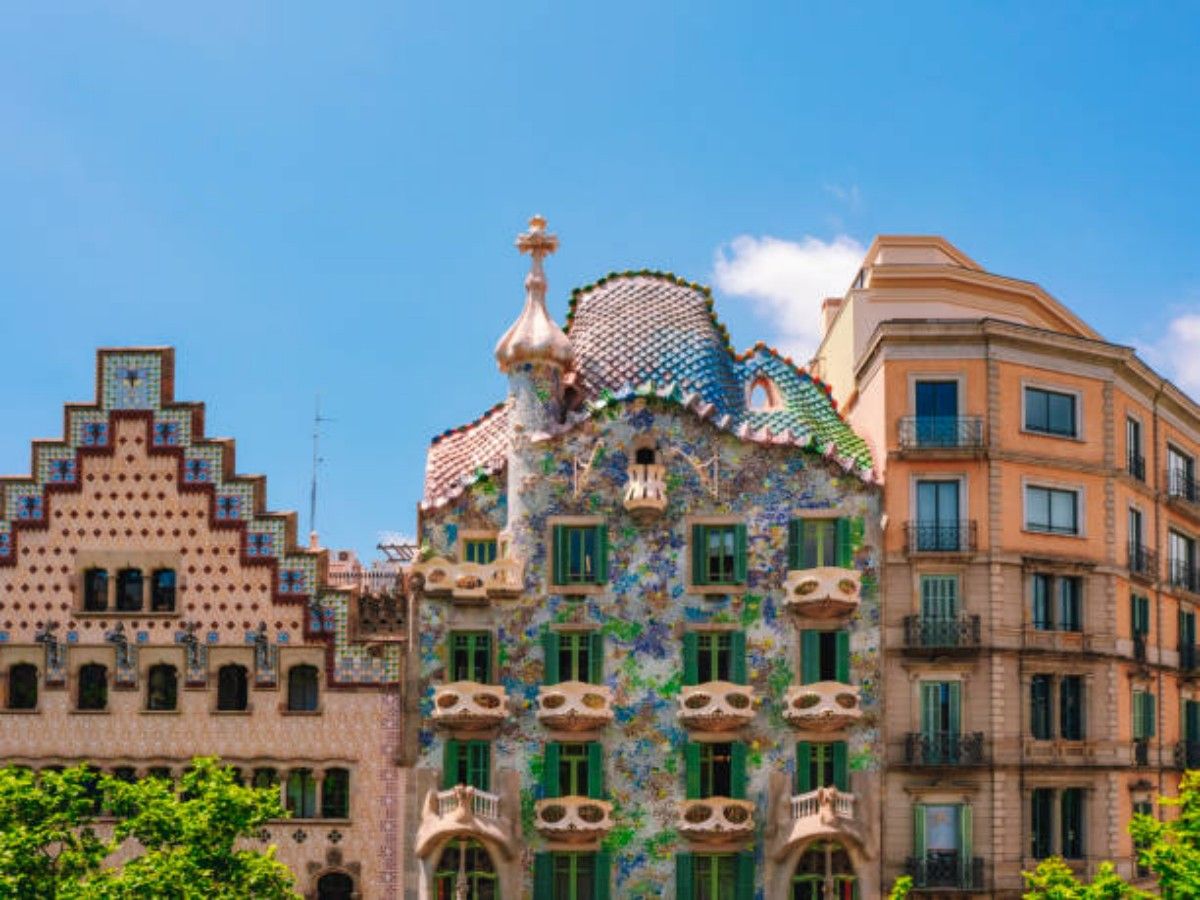
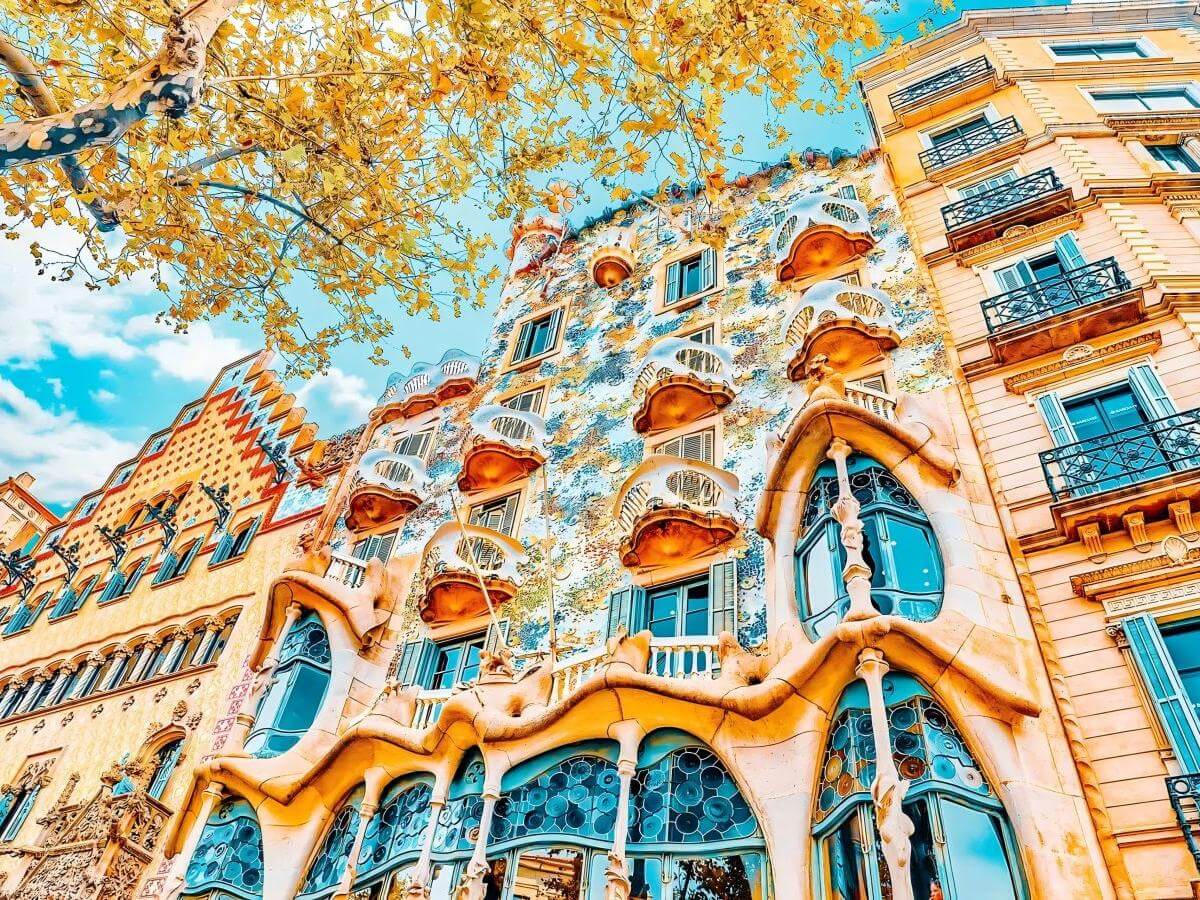
The exterior of the House of Batlló is a three-dimensional artwork that instantly catches the eye. The façade is colorfully decorated with blue and green ceramics of different sizes and shapes, which, through Gaudi's ingenious patchwork, shimmer in the sunlight like a serene and mysterious underwater world, which is no wonder Salvador Dali likened it to “a serene lake”.
Advertisement
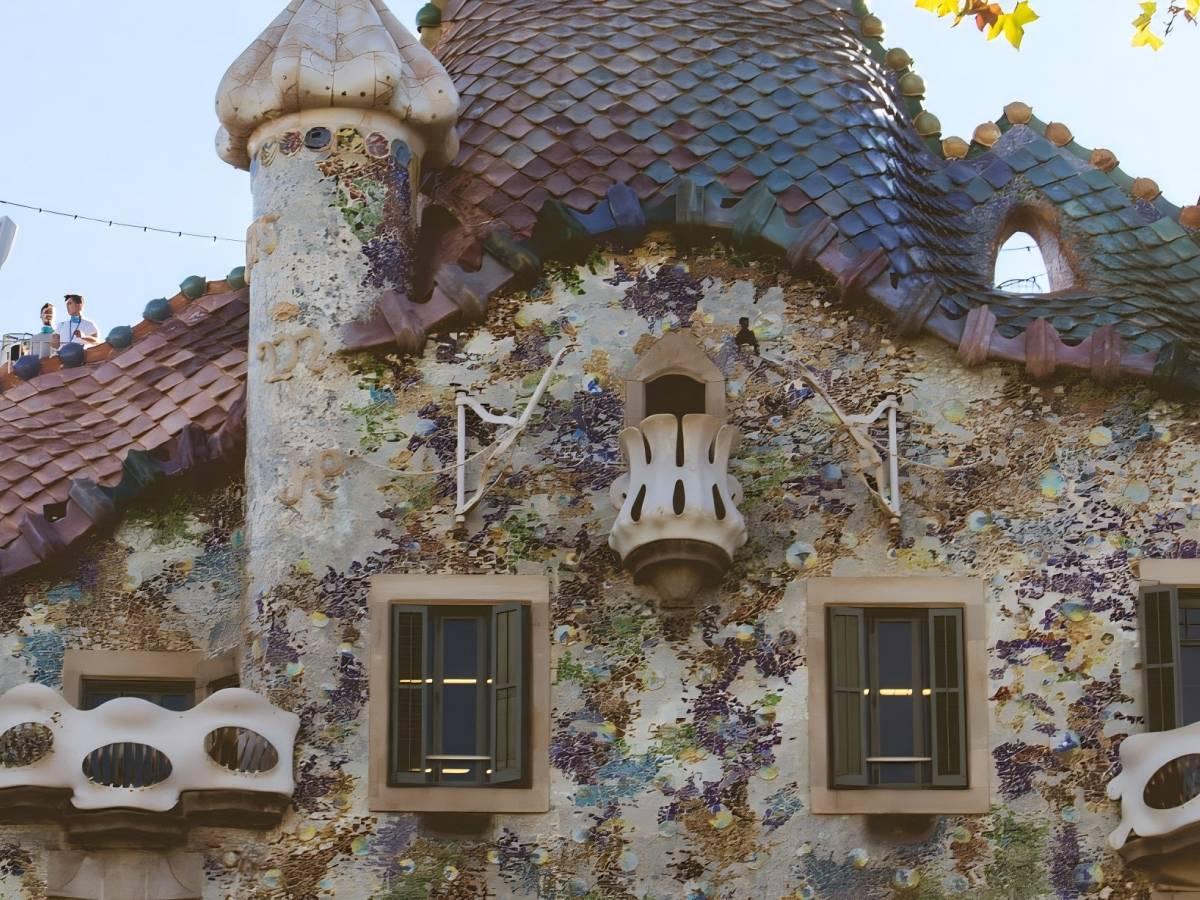
Upon closer inspection, the façade's pattern is full of marvelous metaphors. Some see in them the masks worn in processions, others the shape of the frontal bone in a human skull. The most striking of all is the sinuous undulating roof, which resembles a dragon perched on it, with a piece of glazed ceramic tiles composed of “dragon scales” clearly visible, glittering in the light and shadow of the change. Above the roof, a three-dimensional cross supported by a garlic-like base stands tall, symbolizing the protection of Catalonia's St. George's sword used to slay the dragon, adding a touch of sacred and legendary color to the entire building.
The balcony of the building is also unique, the railing is designed as a masquerade mask, full of mystery and fun. The four bone-shaped pillars, supporting the entire building at the same time, also seems to tell an ancient and mysterious story, so Bartolo House is also jokingly called “House of Bones”.
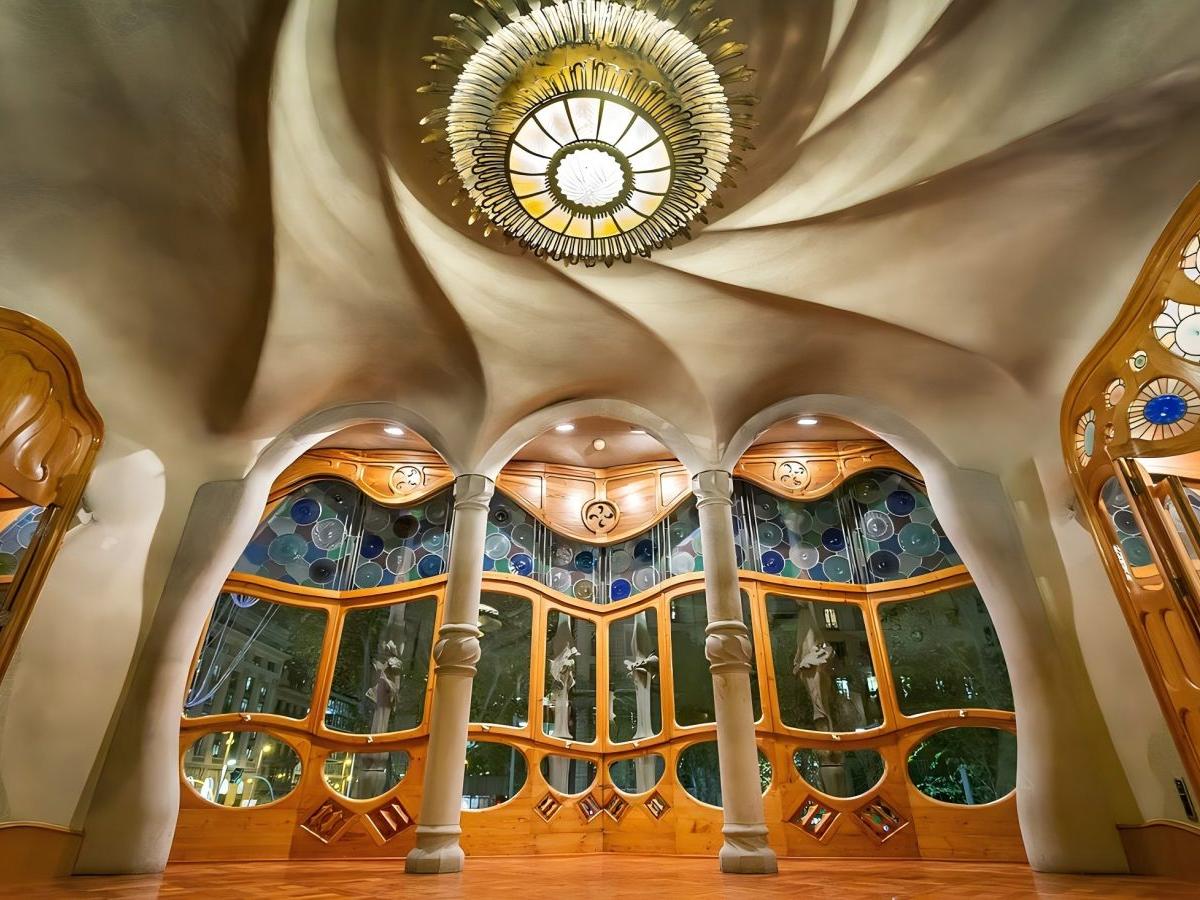
Stepping into the interior of the House of Bartolo is like stepping into a fairy tale world full of fantastical colors. The main hall on the first floor, as the essence of the whole building, shows Gaudi's unique design style. Inside the hall, there is not a single angle, but all soft and smooth wave shapes, and the lines of the floor and ceiling are round and natural, as if guiding people's eyes to flow freely in the space.
The top of the hall is a huge spiral shape, like a vortex in the depths of the sea, the center of the vortex is an anemone-like top light, the light emanates from here, illuminating the entire space, creating a dreamlike atmosphere. The surrounding walls are decorated with a variety of modern flavor crafts, complementing the overall architectural style.
The main hall opens to a modernist courtyard, whose walls and floors are also decorated with a large number of mosaic tiles, with colorful and exquisite patterns. The sunlight pours through the stained glass, creating a patchwork of light and shadow that fills the courtyard with life and vitality. This is not only a beautiful landscape, but also often used to organize various large-scale activities, providing the perfect space for the integration of art and life.
As you climb up the staircase, the doors, windows, and staircases on each floor have different shapes, and the walls are carefully selected and designed according to the shapes of the doors and windows, which is full of interest. The handrail of the staircase is made of ceramics with smooth curves, resembling a spirited python. At the corner of the staircase, the huge stained-glass window introduces the outdoor light into the interior, forming a colorful painting of light and shadow, so that people can also feel the charm of art in the process of walking.
Come to the attic on the top floor, which is called the “Dragon's Belly”, the interior of the Dragon's Ridge. The main color is tooth-white, and it adopts a delicate hanging chain arch structure. This structure imitates the gravity distribution of the dinosaur's body, which is strong and pressure-resistant and saves materials, while showing a unique aesthetic sense, which fully reflects Gaudi's deep understanding of nature and the ingenious use of bionic design. On the wall of the attic, the gill-like open design is unique, which not only increases the transparency of the space, but also adds a unique oceanic flavor to the whole building.
Tickets: Bartolo House offers a variety of ticket types for visitors to choose from. The Blue Ticket is a standard ticket costing 35 euros per person, which includes an audio guide (available in Mandarin and Cantonese) that meets the basic needs of the tour; the Silver Ticket, costing 43 euros per person, includes, in addition to the audio guide, a wide range of experiences such as Gaudi's Magic Cube 360, Gaudi's Dome, the immersive exhibition halls, the AR-enhanced video guide, and a discovery of the secrets of the building's concierge; and the Gold Ticket, costing 45 euros per person, adds fast passes, free cancellations and modifications to the tour. The Golden Ticket price of €45 per person adds to this price fast-track access, free cancellation and rescheduling services, and access to the restored Bartolo Family Residence gallery. It is advisable to book your tickets a week in advance on the official website to avoid waiting in line and to ensure a smooth start to your visit.
Route: Follow the sequence of Foyer → Main Parlor → Dining Room → Courtyard → Patio → Rooftop to better appreciate Gaudí's naturalistic style and the magic of light and shadow. Entering from the mysterious foyer, you will gradually experience the splendor of the main living room, the delicacy of the dining room, appreciate the colorful courtyard and the unique lighting design of the patio, and finally climb up to the rooftop for a close-up view of the roof of the Dragon Ridge and the Holy Sword Crucifix, as well as a view of the city of Barcelona, which will be the perfect ending of this tour.
Photo ops: Every corner of the Casa Barcelona is a photo op. The colorful mosaic dragon ridge on the roof is magnificent and is a must-photograph iconic landscape; the daylight patio in the atrium is illuminated by the watery glass, as if the ocean has been introduced into the room, which makes the photos full of fantasy; the curved floor-to-ceiling windows in the lobby of the first floor are vintage and magical, and it is easy to use them as the background to take portraits with a sense of artistry. In addition, the building's spiral staircase, fishbone ceiling and other unique designs are also a good place to take photos. When taking photos, why not make use of the rich colors and unique lines inside the building, and look for different angles to capture this unforgettable fantasy journey?
Surroundings: Located in the discordant neighborhood of Barcelona's city center, the Casa Bartholomew is within walking distance of a number of equally unique buildings, such as the Casa de la Mira, also by Gaudí. In addition, Avenida de Gracia is Barcelona's famous shopping street, where you can enjoy shopping and local specialties while exploring the city's charms.
The House of Batlló is a feast for the eyes and the soul, where architecture is no longer a cold pile of masonry, but a fantasy space full of vitality and art. Every detail is a manifestation of Gaudi's wisdom and creativity, and every corner tells an ancient legend and story. The moment you step into this fantastic building, you will begin a wonderful journey that is deeply intertwined with architecture and art, leaving behind an unforgettable memory.