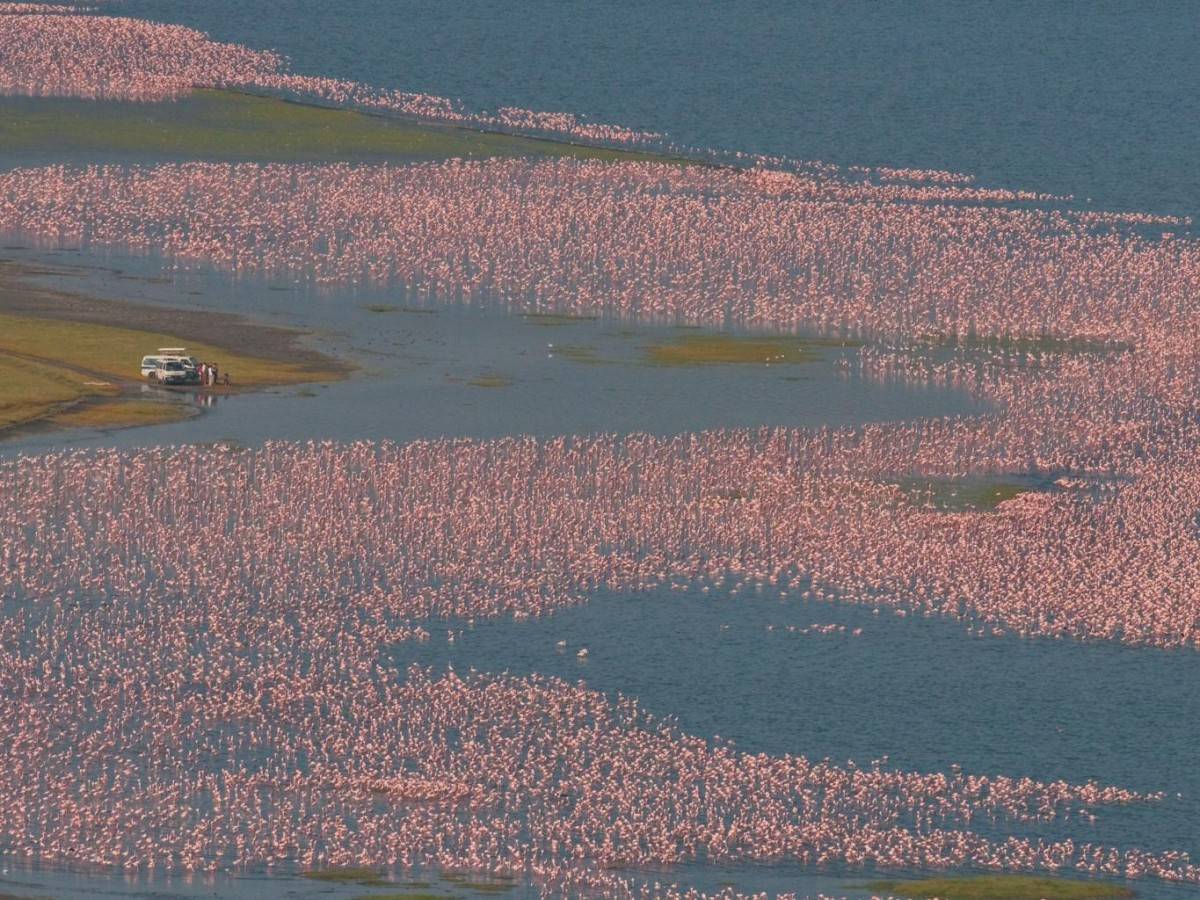
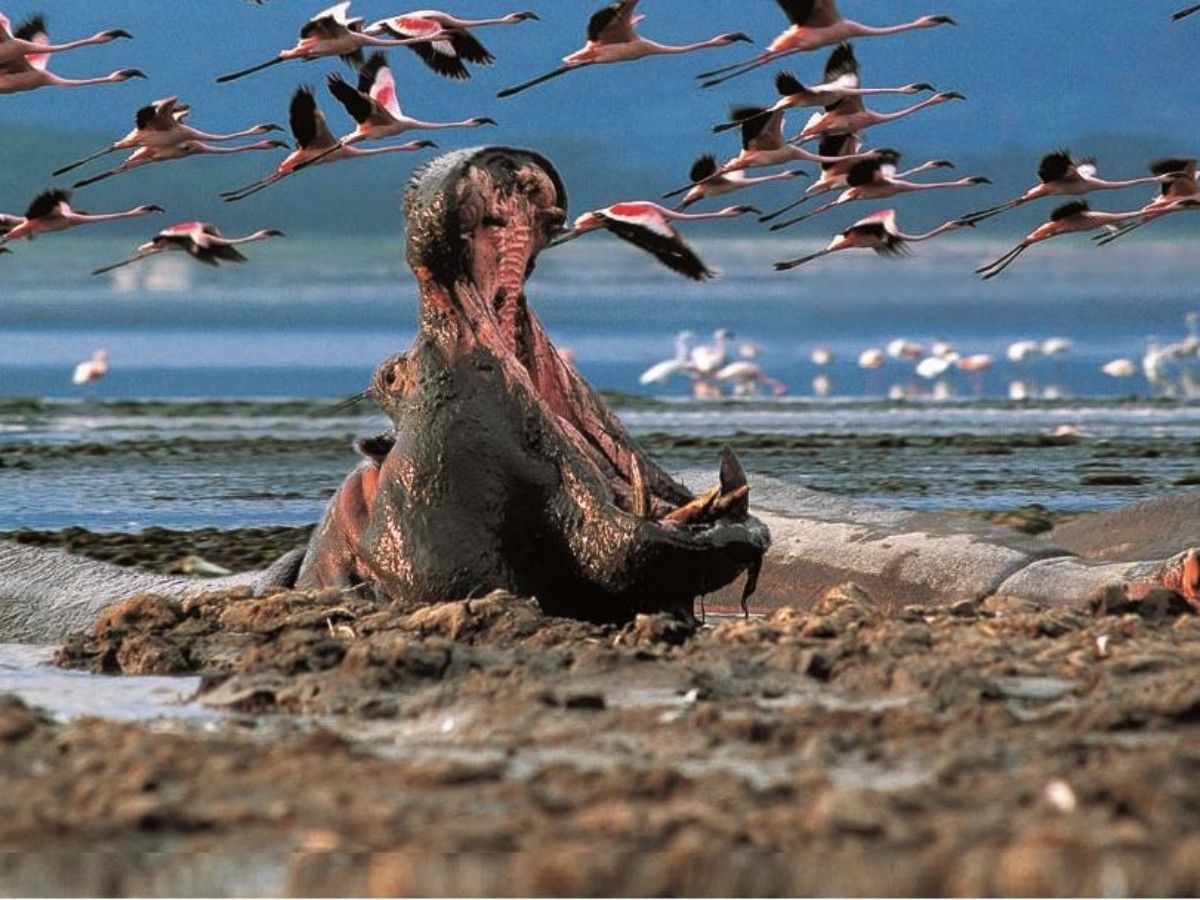
If your impression of Africa still remains in the grassland and lions, then you must come to Lake Nakuru in Kenya to see! There are no reinforced concrete buildings here, but there is a glimpse of the pink “clouds” - thousands of flamingos roosting around the lake, like a layer of moving pink carpet to the earth. The lake reflects the blue sky, rhinoceros, zebra in the shore walk leisurely, as if into a wildlife documentary. But you know what? Behind this paradise on earth, there are many interesting stories and natural codes. Today, let's unravel the mystery of Lake Nakuru together!
Advertisement
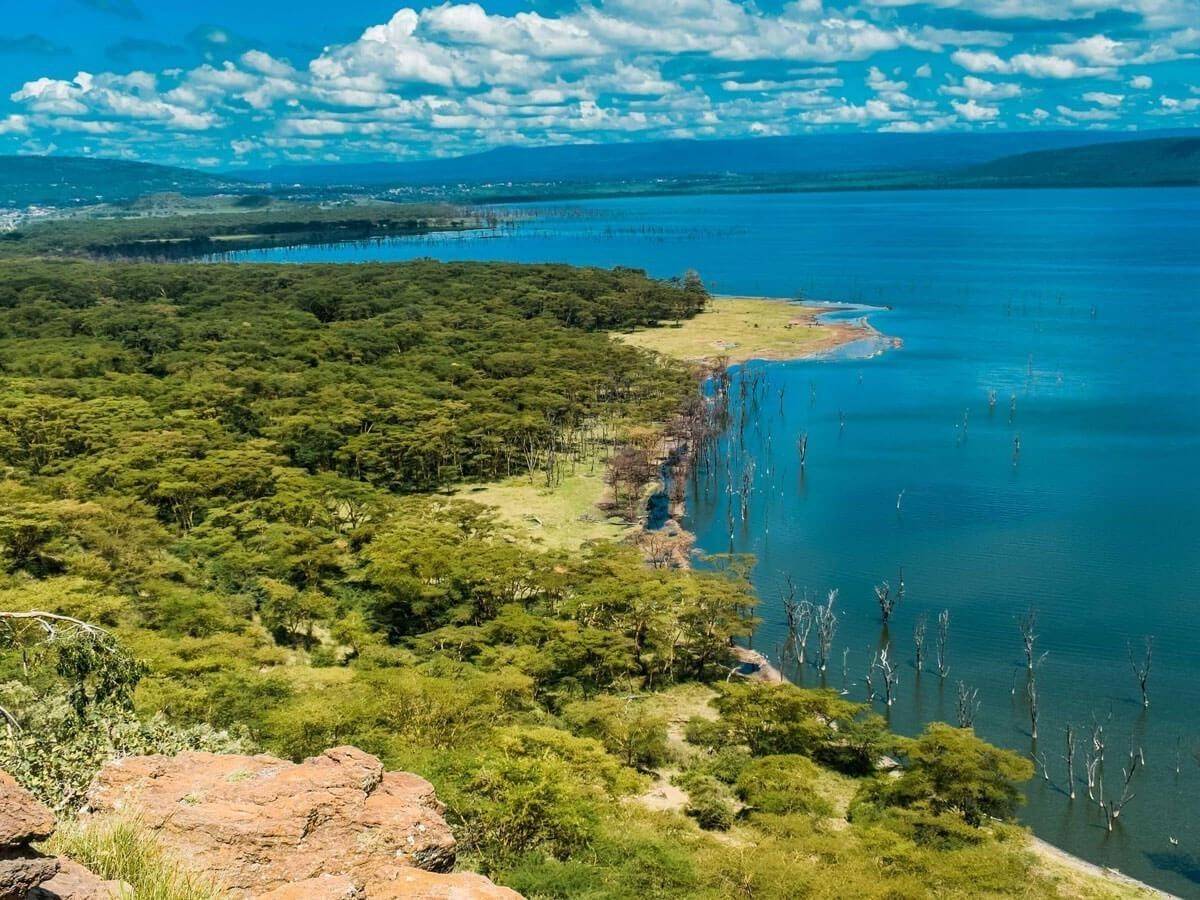
Don't look at Lake Nakuru now vibrant, its “origin” can be a bit “hot”! About 10,000 years ago, a volcanic eruption in the Great Rift Valley of East Africa created a huge depression basin. Rainwater and groundwater accumulated over time and finally formed today's Lake Nakuru. However, it really became famous in the 1960s. At that time, the Kenyan government slapped its thighs: “Such a beautiful place, can not let people casually spend!” So in 1961, Lake Nakuru was officially upgraded to a national park, which became one of the first protected areas in Africa specializing in the protection of birds.
Advertisement
But the good times did not last long, to the 80's, the surrounding farmland expansion, industrial pollution so that the deterioration of the lake's water quality, flamingos once collective “move”. Fortunately, the world's environmentalists anxious, UNESCO rushed to include it in the “Man and the Biosphere Program”, Kenya also made a serious effort to rectify the sewage. Today, this is not only a “five-star hotel” for flamingos, but also a refuge for black rhinoceros and white rhinoceros, and in 2011, the park simply expanded its territory, encompassing the surrounding forests and grasslands, and renamed it as Lake Nakuru National Park, which has become a super paradise for wildlife. It has become a super paradise for wildlife.
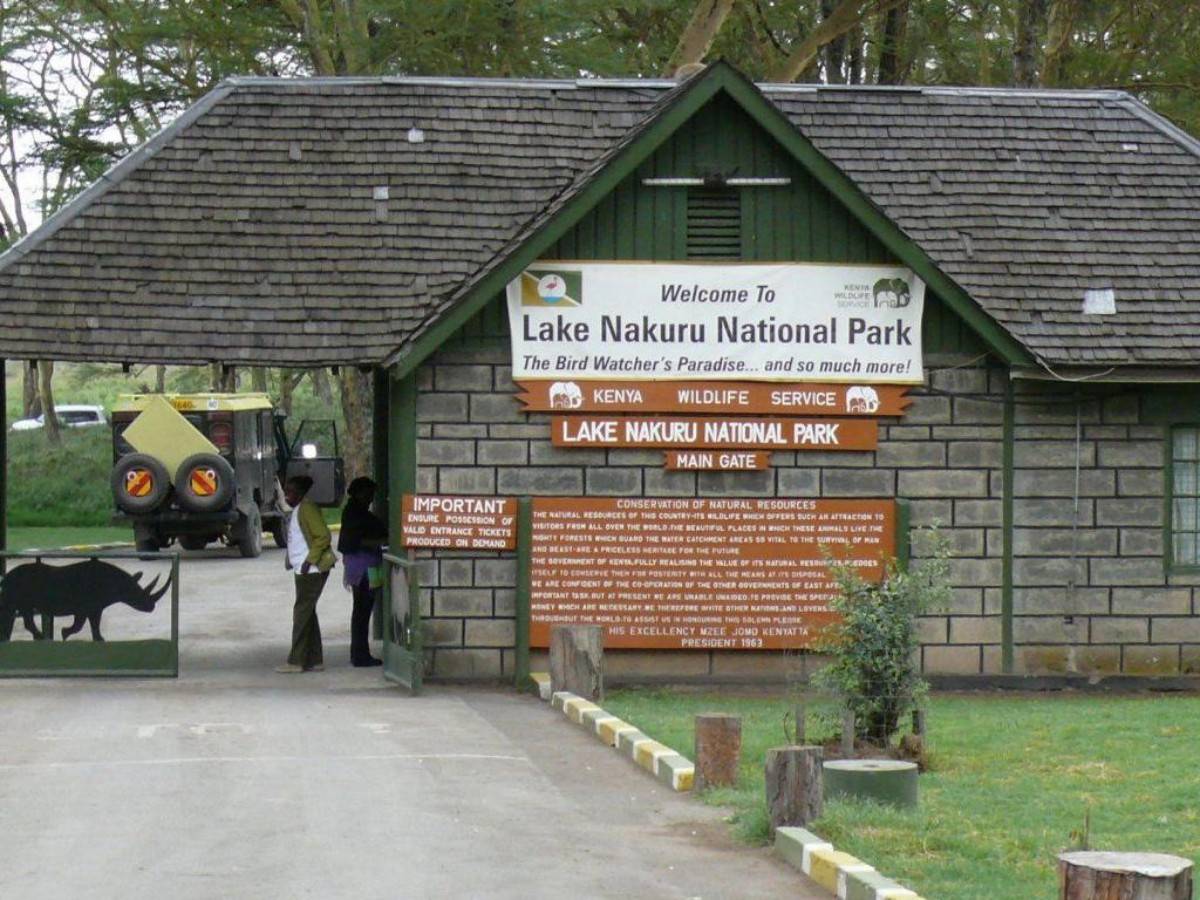
At the entrance of the park is a visitor center with huts made of local wood and thatched roofs, which look like mushrooms growing out of the soil. The most interesting are those hidden in the bushes of the birdwatching platform: iron frame built into a three-story building, the outer layer wrapped in camouflage netting, the tourists cat back into, set up binoculars can peep at the flamingos “in love”.
Advertisement
To say the most hardcore building, but also to count the rhino watchtower. This 15-meter-high steel frame standing in the middle of the grassland, climb up to see the rhinoceros walking 360 degrees without dead angle. The tower is full of holes, not to save money, but to let the wind through - after all, who do not want to turn into iron plate in the African sun! But the most thoughtful design of the lake is that wooden trestle: two meters high from the water, not only do not disturb the waterfowl, but also allows visitors to shoot close to the flamingo “water ballet”. These seemingly simple buildings, in fact, everywhere hidden in the protection of ecological care!
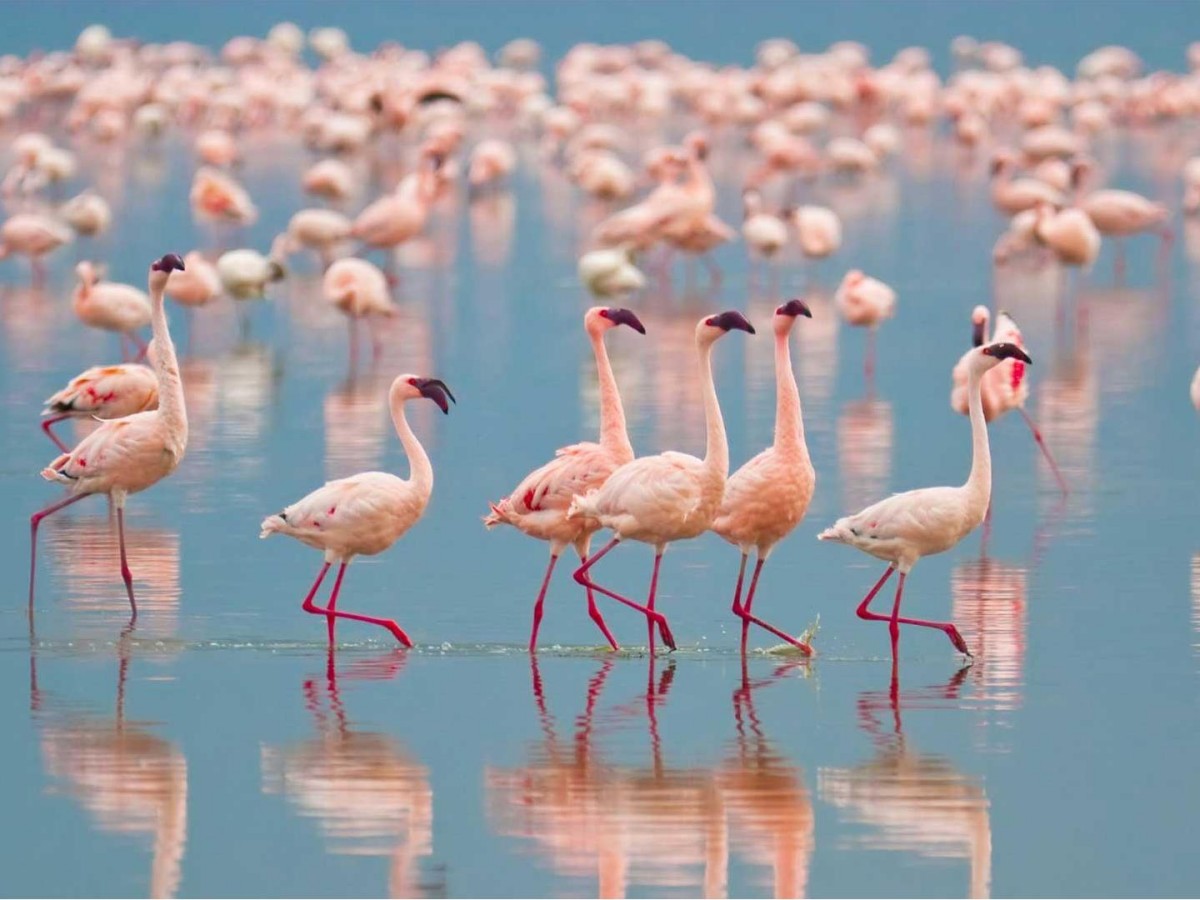
Lake Nakuru's most magical ability is to “change colors”! During the dry season, when the lake evaporates and the saline concentration soars, the surface of the lake becomes silver-white “frost”; when the rainy season comes, the blue-green water of the lake looks like a piece of emerald. This “drag show” is not for the sake of looking good - the high salinity of the lake feeds countless algae, which are the “pink fuel” for the flamingos. Flamingos every day, low shivering algae, eat more and more feathers the more pink, and finally became the lake moving “pink filter”.
In addition to flamingos, this is also Africa's “animal civil service district”. Seven o'clock in the morning, the giraffe punctually in the lake “clock” drinking water; noon zebra group to gnaw grass, by the way, to the rhinoceros as a “live alarm”; evening lion family squatting on the rocks “meeting In the evening, the lion family squatted on the rock “meeting”, discussing which antelope to eat tonight. The most surprising thing is that leopards also occasionally come to visit - they are the “invisible rich” in the animal world, and usually do not even bother to show up! By the way, in recent years, even the endangered Rothschild's giraffe has moved in, turning the reserve into a “rich neighborhood”.
When you visit Lake Nakuru, you are afraid of encountering the “weather blind box”. Kenya has two rainy seasons in a year: the long rainy season is from March to May, and the short rainy season is from November to December. During these two periods, the grasslands become swamps, lions hide and lick their paws, and flamingos refuse to go out because of the heavy rain. Worst of all, some of the dirt roads are washed into mud ponds, where off-road vehicles can get stuck and do the “hip dance”.
The best time to visit is during the dry season from June to October and the “little dry season” from January to February. During this time, the grassland is golden, and the animals are all crowded around the lake to drink, so just lift up your camera and you'll be on the cover of Animal World. The temperature difference between morning and evening is a bit big, wearing short-sleeved sunbathing at noon, but in the morning you have to wrap up in a down coat and drink hot coffee - yes, near the equator in the morning can also be cold to the white air! If you want to see the flamingos “collective blind date” in August-September, tens of thousands of birds crowded together to dance “tap dance”, the scene is more lively than the square dance competition.
When you leave Lake Nakuru, you'll probably suffer from “choice difficulty” like me: your cell phone albums are so full that you won't be able to delete a single photo. The flamingos here teach us that life can be so gorgeous, the rhinos remind us of the importance of protecting nature, and even the wind on the lake carries the flavor of freedom. Next time someone asks, “What's so interesting about Africa?”, don't just say Masai Mara, throw him the name of Lake Nakuru - after all, if you've seen a pink lake, you'll always have a sunset in your eyes. Remember to bring a telephoto lens! The flamingos look close, but are actually at least a hundred meters away from the shore; don't wear blue - I've heard that waterfowl mistake blue for lake water, you know; and lastly, be sure to take the early morning Game Drive, when the animals are most alive and the lake is as beautiful as an overturned color palette in the morning light!