In the heart of the old city of Tunis, the capital of Tunisia, the Zaytouna Mosque is a jewel that exudes a unique charm. It is not only a religious building, but also a central symbol of Tunisian culture and religion, carrying a thousand years of history and tradition, attracting tourists and believers from all over the world to explore its secrets.
Advertisement
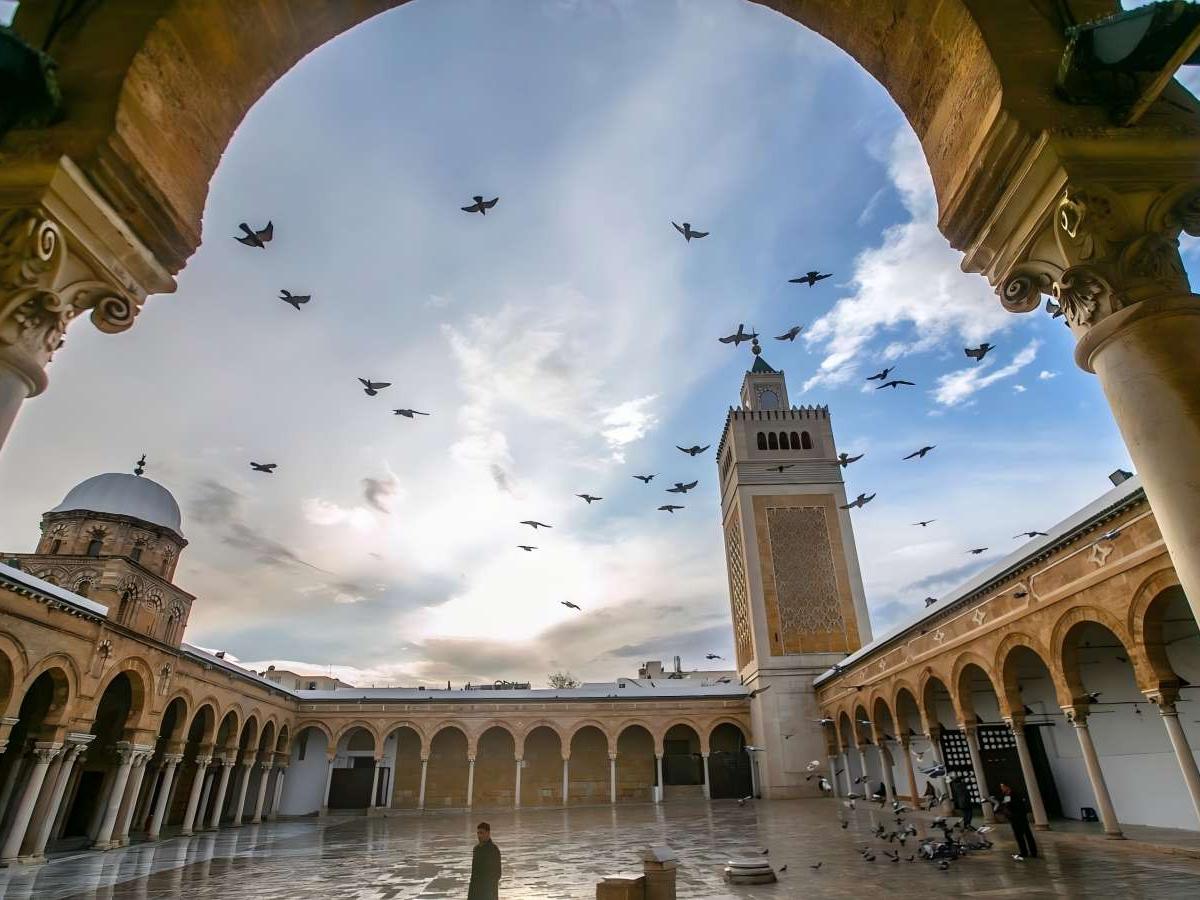
The architecture of the Zaïtouna Mosque is a unique blend of elements. Built in the 7th century AD, it was initially built on a small scale, but over the centuries it was expanded and restored, incorporating architectural features from different periods.
Advertisement
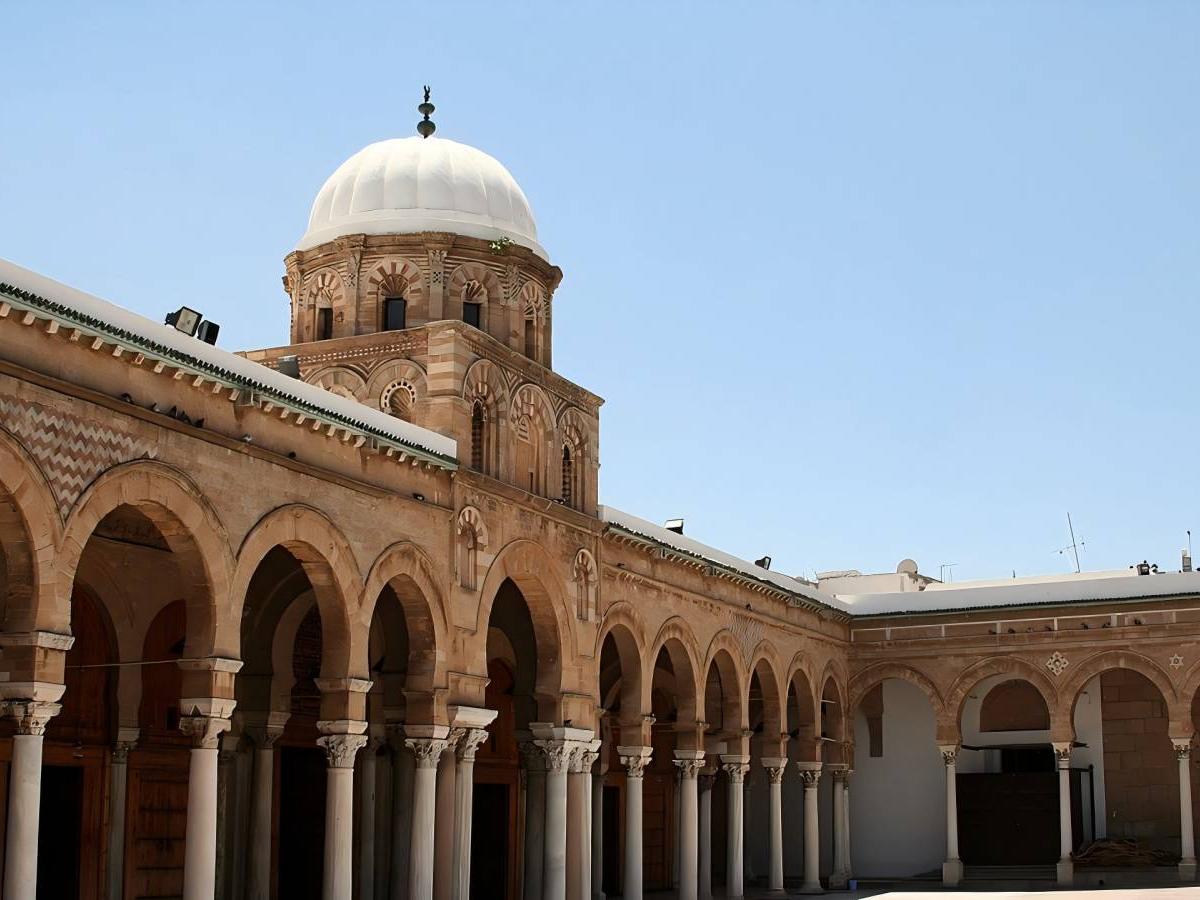
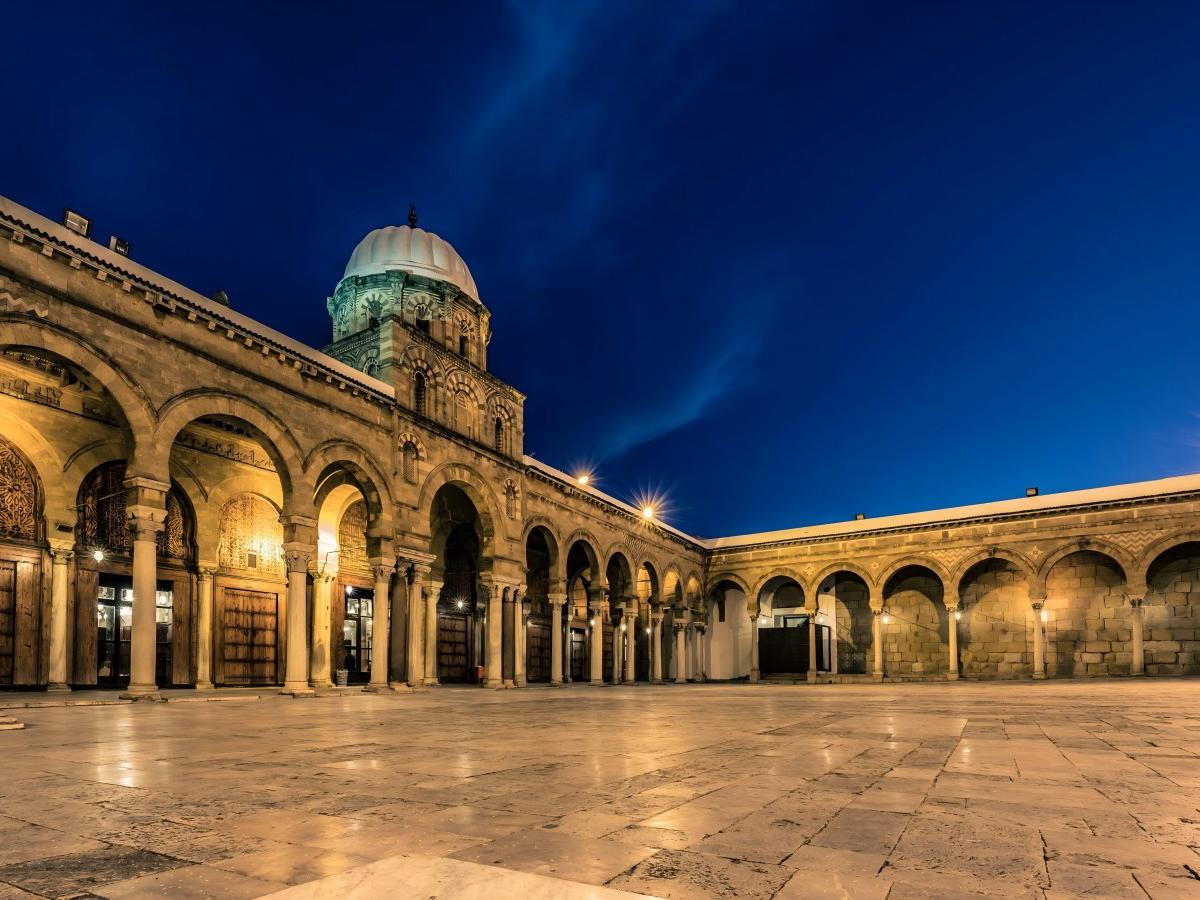
From the outside, the gate of the mosque is magnificent, showing the exquisite craftsmanship of Islamic architecture with fine carvings and decorations. The archway at the entrance adopts a horseshoe design, which is a typical Moorish architectural element with smooth lines and a sense of rhythm. Stepping into the temple, the courtyard is spacious and open, surrounded by a colonnade with arched corridors. The columns are made of marble and granite, of different thicknesses and styles, witnessing the superposition of different historical periods. Some of the columns are relics of the Roman period and have been skillfully reused to reflect the continuity and integration of history.
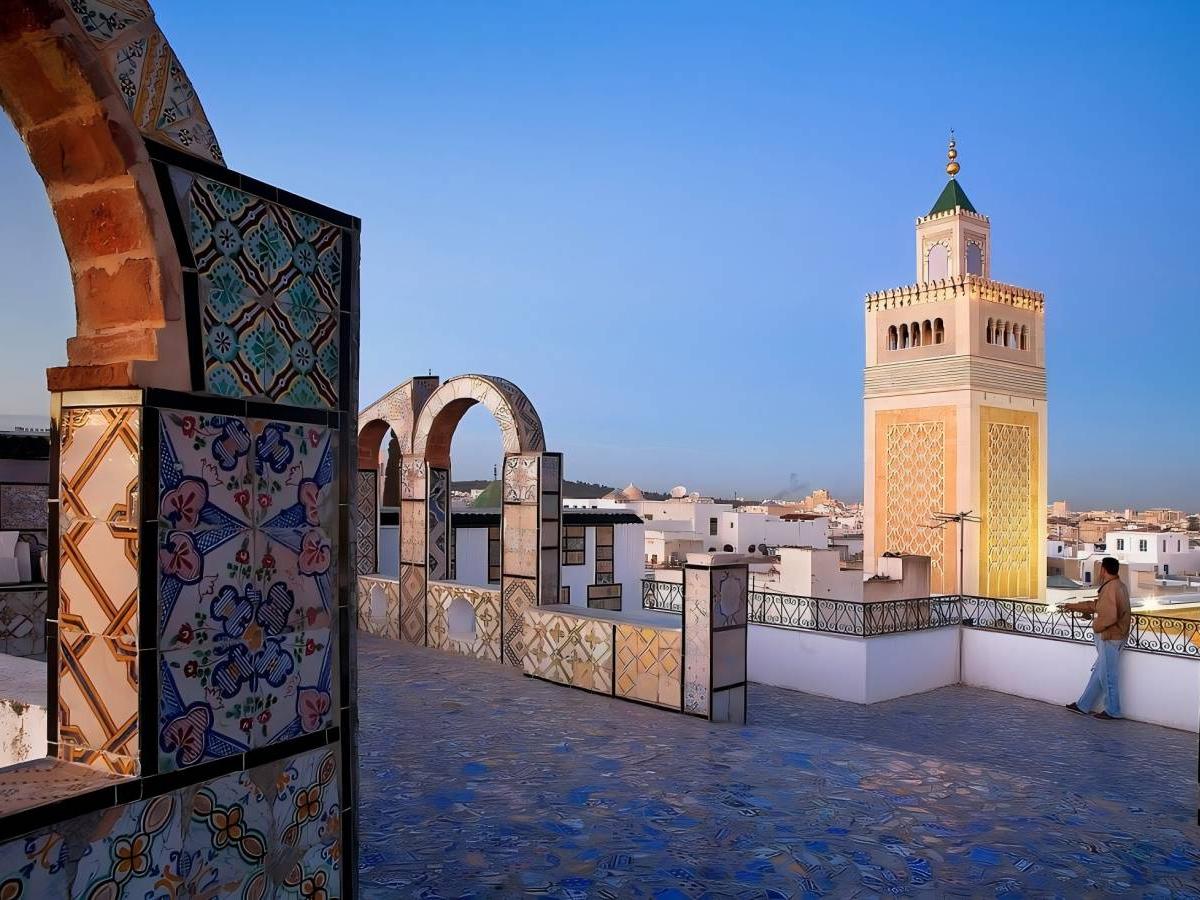
The minaret of the mosque towers over the city skyline. Its architecture is simple and dignified, with white as the dominant color, and it shines with a holy light in the sunlight. The balcony at the top of the tower, where the crier calls the faithful to worship, is uniquely designed to allow the sound of the crier to be heard in all directions. The temple's worship hall is equally stunning, with a huge dome covering the entire space, the interior of which is adorned with beautiful geometric patterns and Arabic calligraphy, creating a serene and solemn atmosphere. These decorative motifs were not drawn at random, but follow the strict norms of Islamic art, conveying reverence for God through the repetition of geometric shapes and beautiful calligraphic lines.
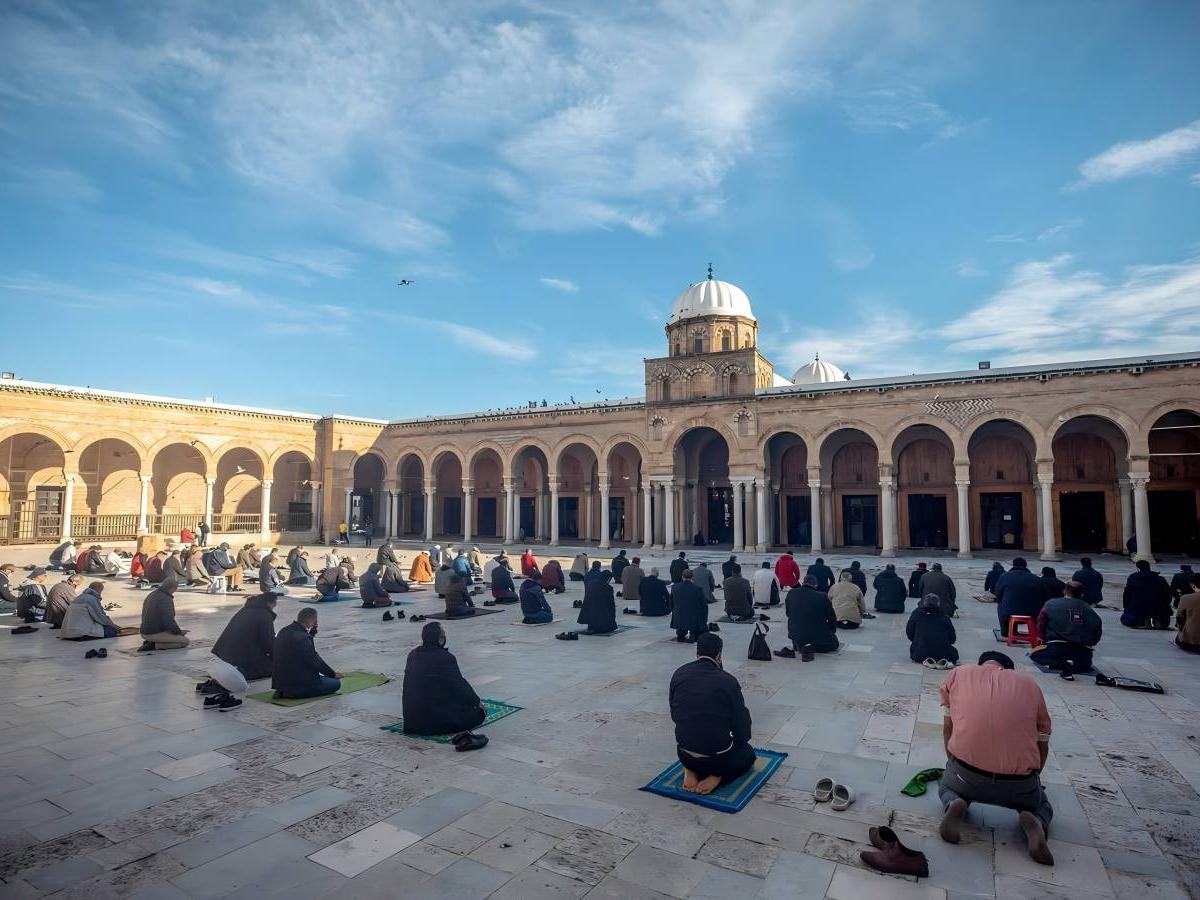
The Zaytuna Mosque occupies an irreplaceable place at the heart of Tunisian religious life. It is the main place where local Muslims conduct their daily services, Friday gatherings and celebrate important religious festivals. Every day, the call to five services rings out on time, echoing over the city and summoning the faithful to the mosque for prayers. At the time of worship, the mosque is crowded with people, believers are neatly arranged in the worship hall and courtyard, facing the direction of Mecca and praying piously, the scene is solemn and solemn.
Advertisement
For Tunisian Muslims, the Zaytuna Mosque is not only a place for religious ceremonies, but also a place for their spiritual beliefs. It is a place where they feel close to God and gain spiritual comfort and strength. During major religious festivals, such as Eid al-Fitr and Eid al-Adha, the mosque is bustling with activity. Believers come from all corners of the world in full dress to celebrate the festivals. Grand religious ceremonies are held in the mosque, and the Imam (the title of the Islamic clergy) delivers a sermon, explains the teachings, and conveys the teachings of God. This collective religious activity not only strengthens the faith of the believers, but also enhances the cohesion and sense of belonging of the community.
The Zaïtouna Mosque is a living history book that has witnessed many important events and changes in Tunisia's history. Its construction is closely linked to the spread of Islam in Tunisia. Islam came to Tunisia in the 7th century A.D. when Muslim Arab armies conquered the region. The Zaytuna Mosque was built to meet the religious needs of the growing Muslim community. Over the following centuries, as Tunisia was ruled by different dynasties, the mosque was expanded and renovated.
Under the Agrabid dynasty (9th century AD), the mosque underwent a major expansion that significantly increased its size and architectural style. The Agrabid rulers invested considerable resources in the construction of the mosque, making it one of the most important religious buildings in North Africa. By the time of the Hafs (13th - 16th centuries AD), the Zaytuna Mosque was once again extensively restored and decorated, with the addition of many fine architectural elements such as ornate domes and fine mosaic decoration. The architectural remains of these historical periods have become an important material source for the study of Tunisian history and the development of Islamic architecture.
In addition, the Zaytouna Mosque played an important role in a number of significant historical events. During Tunisia's struggle for independence, the mosque became an important place for nationalists to propagate the idea of resistance and to gather the strength of the people. It bears witness to the tireless efforts of the Tunisian people for freedom and independence and has become one of the symbols of the national spirit.
The Zaytouna Mosque has played an invaluable role in Tunisia's cultural heritage. It is not only a center of religious education, but also a cradle of knowledge and art. Since its construction, the mosque has had a madrasa attached to it, which has trained countless religious scholars and clerics. These scholars studied religious knowledge such as the Qur'an, Hadith, and Shariah, and also dabbled in other fields such as philosophy, literature, mathematics, and medicine. Upon graduation, they spread what they had learned throughout Tunisia, making an important contribution to the advancement of local culture and education.
In the field of art, the Zaytouna Mosque has also had a profound impact. The architectural decorations, calligraphic art and music of the mosque have become an important part of traditional Tunisian art. The mosque's architectural style and decorative techniques have provided a constant source of inspiration for local architects and artists, and many modern buildings and works of art can be found in the Zaytouna Mosque. In addition, the mosque houses a large number of historical artifacts and ancient books, a precious cultural heritage of great value for the study of Tunisian history, culture and art.
Zaytuna Mosque still attracts visitors from all over the world with its unique charm. It shows people the rich history and culture of Tunisia and its deep religious heritage, and has become an important bridge connecting the past and present, religion and culture. Whether believers come to pray or tourists come to admire the architecture and history, the Zaytouna Mosque gives them a unique and unforgettable experience. Its secret lies in its millennia of history, its multiculturalism and its deep religious feelings, which together make it an irreplaceable symbol of Tunisian culture and religion.