If you come to Hue and only visit the Imperial City, you are only reading the cover of a thick book. In fact, not far from the Imperial City, there is a small place that hides a lot of old objects that can truly represent the “essence of Vietnamese royal culture”, which is the Hue Museum of Royal Antiquities.This museum is not big, and there is no high-tech displays, but it is particularly quiet, especially real, like an old man who has not been pushed forward by time. An old man who has not been pushed forward by time, in his own way, the traces of the old dynasty, quietly preserved. It is only when many people arrive here that they suddenly realize that the life of the Vietnamese royal family was not just about splendor and dragon robes and jade seals, but full of details, telling and endless stories. From the queen's make-up box to the emperor's dining dishes, from ancient musical instruments to court costumes, each item is not a decoration, but a living past life.
Advertisement
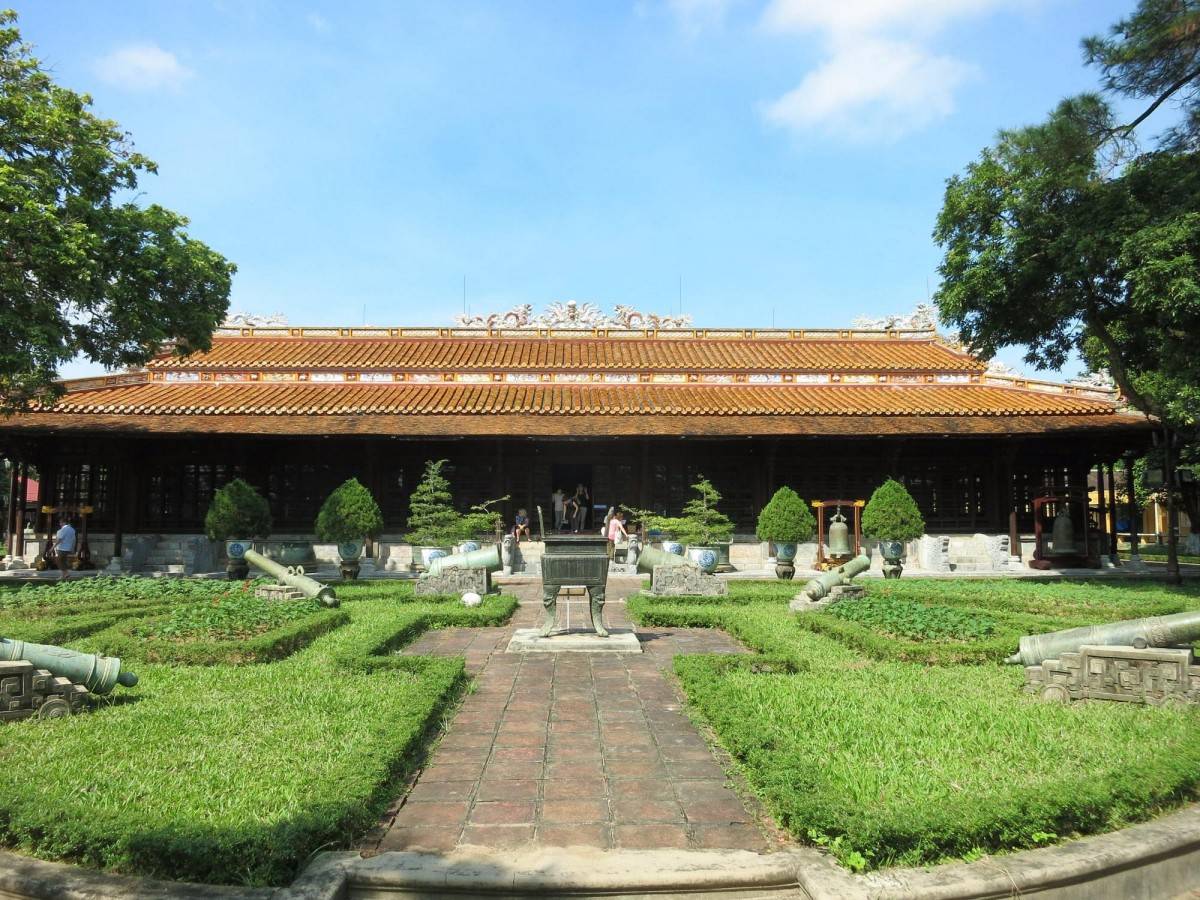
The Hue Museum of Royal Antiquities itself is an old house, officially called Long An Palace, built in 1845 during the time of Emperor Minh Mien, one of the emperors of the Nguyen Dynasty. It was originally a place for members of the royal family to rest, meet guests or conduct business. The whole building is in the traditional Vietnamese palace style, with a wooden structure, roofs with flying eaves, pillars carved with dragons and phoenixes, all of which were made by the proper palace craftsmen in those years, one by one.
Advertisement
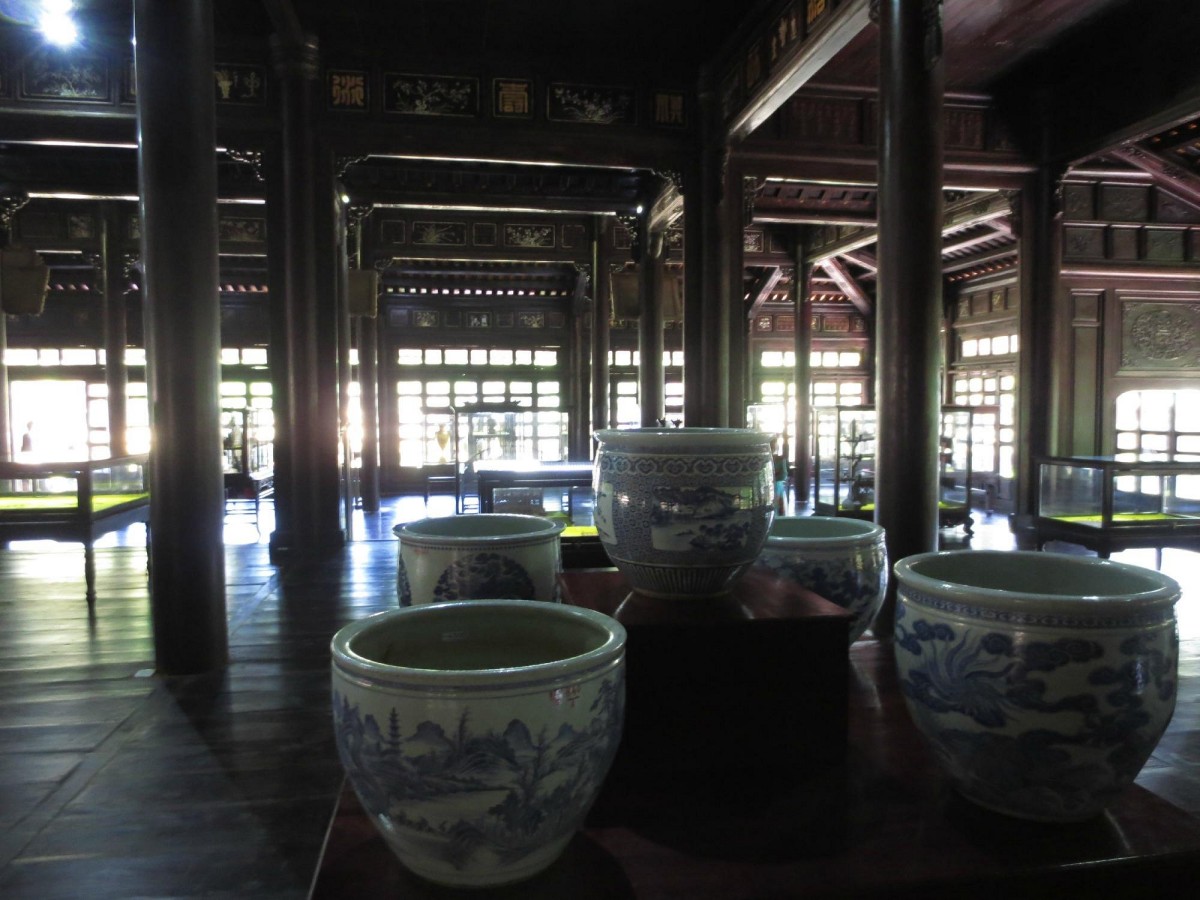
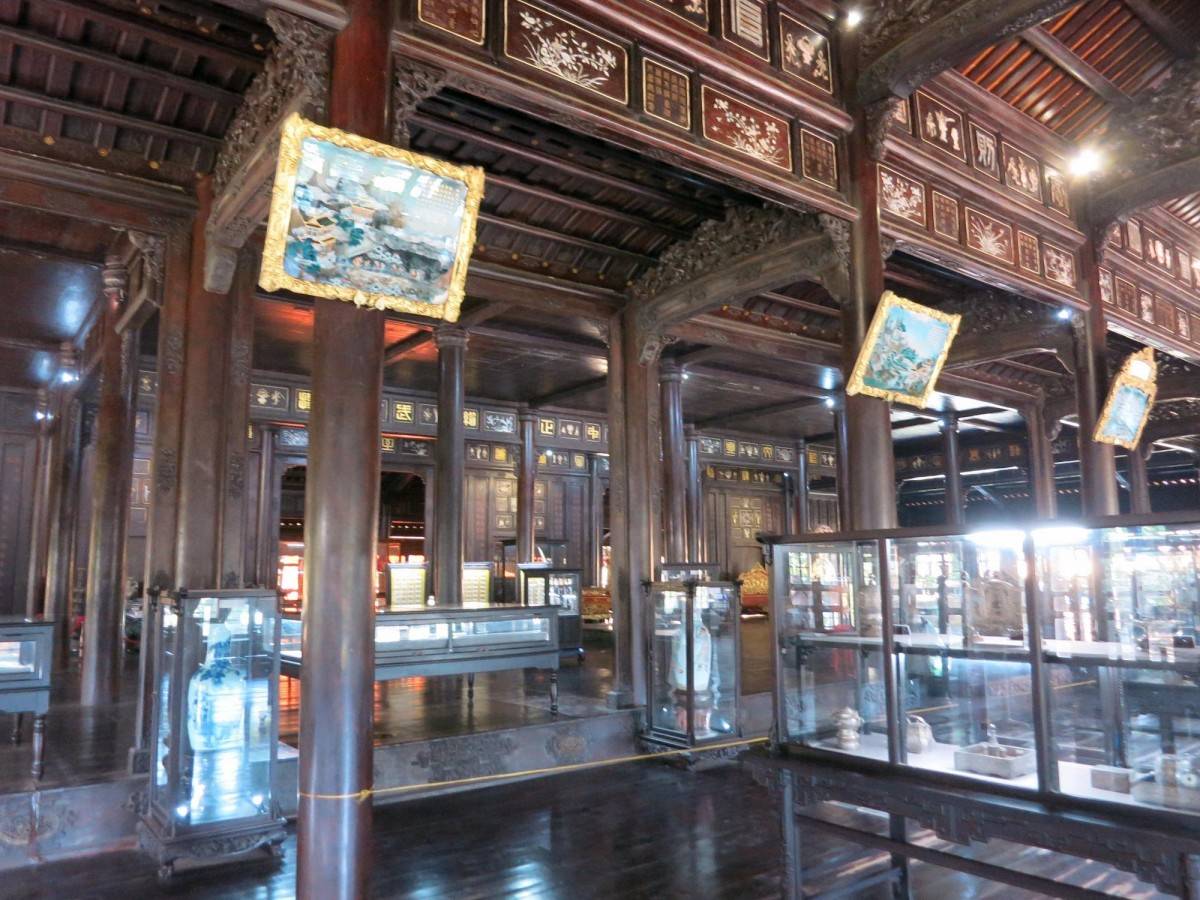
You walk into the house, you will find that it is not quite the same as our common modern museum. There are no glass walls or light projections, but wooden beams and pillars hold up a sense of old-school quiet. The floorboards creak slightly when you step on them, and the light coming in through the windows is soft, as if traveling from some early morning in the past.
The entire exhibition hall is roughly divided into several parts, displaying about 300 pieces of objects, all of which are royal items, including the four treasures, lacquer ware, porcelain, musical instruments, palace costumes, swords, daily life utensils, etc. Some of the items look quite plain at first glance, but they are not as simple as they look, so they are not as simple as they used to be. Some things at first glance quite simple, but if you carefully read the explanatory card, you will find that these are only in the emperor's home to use the “imperial” items, the status should not be underestimated.
When it comes to exhibits, many people are most interested in those palace clothes and jade. These clothes are heavy just by looking at them, with gold threads, dragon patterns, and embroidery, all of which are traditional Vietnamese royal features that represent rank and status. There is a special set of “emperor's court dress” on display, the color is strong yellow, a huge five-clawed golden dragon in the middle, it is said that only the emperor himself can wear that kind of pattern. Next to the Empress dress, Prince of plain clothes, even shoes, hats, belts have a complete set of display.
Advertisement
In addition to wear, there are also used. For example, used to write the pen holder, seal, ink cartridge, all made especially elaborate, carved flowers and gold; and then for example, eating utensils, some look like porcelain bowls, in fact, is from China Jingdezhen special customized, there are local high-grade kilns in Vietnam burned palace specialties, simple style but implies a status symbol.
The musical instruments section is also interesting, some of which were used by the palace orchestra, such as drums, guqin, flutes, and a metal chime bell with an accompanying instruction plate stating that the instrument was only used during ceremonies and rituals. Although no one knocks on it anymore, you can still imagine standing in front of it and imagining the scene of music being played and danced in the royal palace back then.
The display of this museum is relatively traditional and does not rely on multimedia to attract attention, but it is better than the original flavor. Many exhibits are not separated by glass, you can lean very close to see, and you can even smell the wood and ancient fabric that kind of light old flavor. If you're someone with an interest in history or antiques, this kind of up-close-and-personal contact will definitely get you excited.
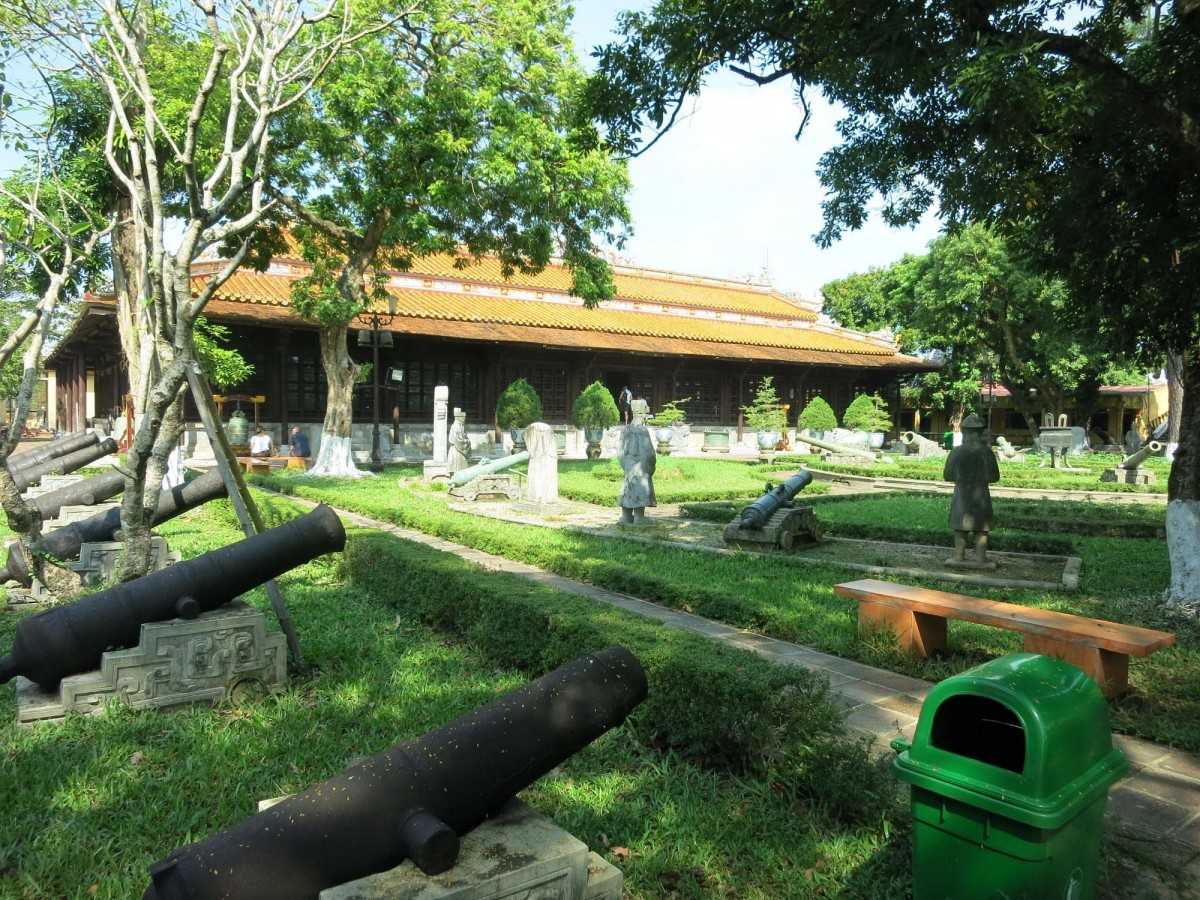
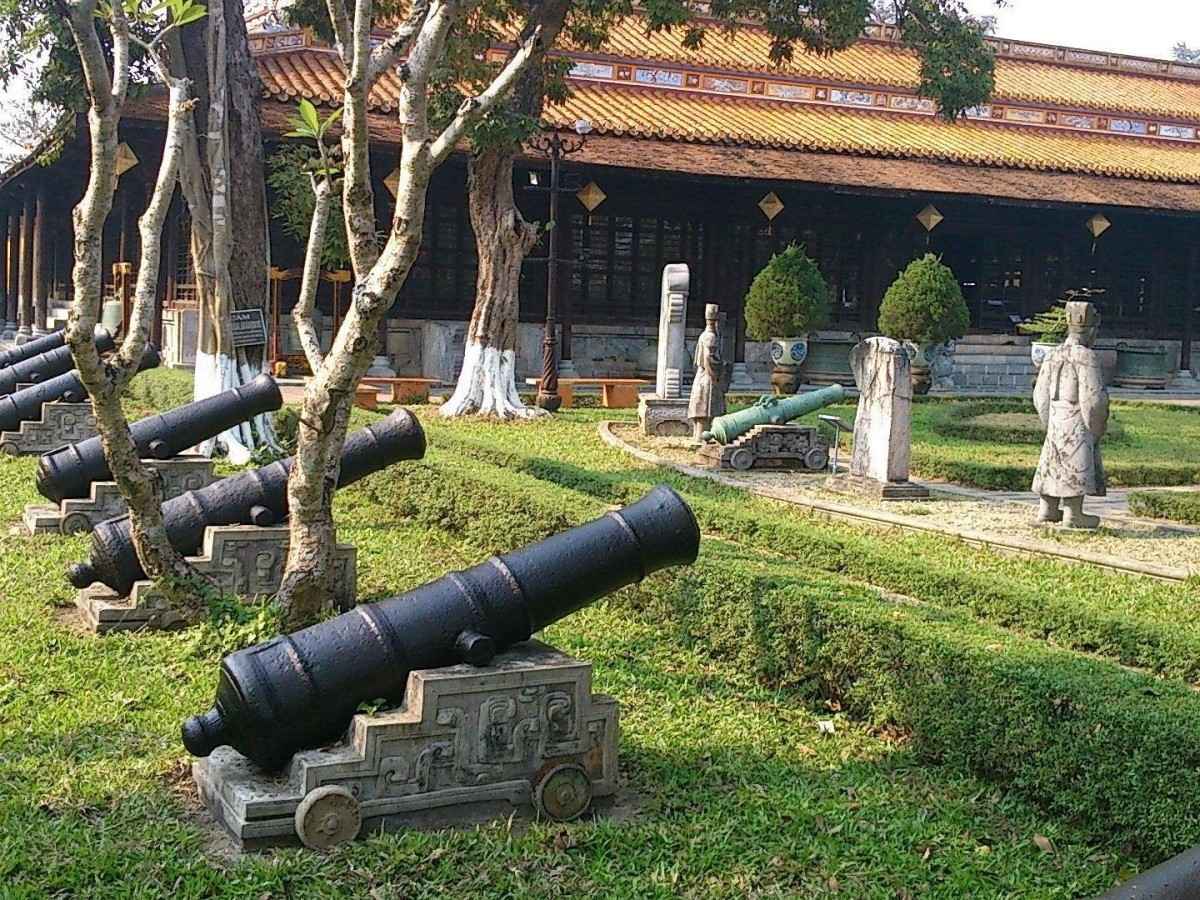
In addition to the exhibition halls, there is also a modest garden outside the museum, with some flowers and plants, a few stone sculptures and incense burners, and a small pavilion that's quite suitable for sitting down and taking a break. The garden used to be a place for the royal family to take a rest, read books and play chess. Nowadays, although there are more tourists, it still retains the feeling of “peace and quiet, not in a hurry”.
Also, there is a small exhibition hall next to the museum, which sometimes temporarily displays manuscripts of documents related to the royal family, portraits, and even maps of ancient Hue. If you are lucky enough to stumble upon the exhibition, you may want to go in and take a look, the content is generally more cold, but also very interesting.
There's not much of a barrier to visiting this museum, and admission is cheap - usually VND50,000 (about $2) - and very foreigner-friendly. The museum is open from 7:30am to 5:00pm, sometimes with a break for lunch, but basically all day long.
The museum is not big, so it takes about 40 minutes to an hour to walk around, or less than two hours if you go slowly. There are English explanatory boards inside, most of the information is translated quite clearly; if you want to understand more in-depth, you can also find a docent on the spot, the cost is not high, and their explanations will add a lot of small stories, quite worthwhile.
It is important to note that there is no strict dress code, but since this is a royal site after all, it is recommended not to wear anything too revealing or out of place. Eating, drinking, smoking, and touching exhibits are prohibited inside the museum, and please also control the sound of your photos and don't use flash, as these are the most basic respect for cultural relics.
Hue is a city with a heavy historical heritage, walking in the streets you will see many old buildings, temples, tombs, but if you want to find a place to quietly look at the “evidence” that these royals once lived in real life, then the Royal Antiquities Museum is really a very worthwhile point to go. It is not noisy, no card tide, also not very likely to queue. It is like a low-key and storytelling old man, set up the tea, waiting for you to slowly sit down to listen to him talk about the past. You may walk out without much shock, but you will remember a certain detail, such as the tiny dragon pattern on the side of the porcelain bowl used by the emperor to eat, or a folding fan with a poem written on it. Those things, seemingly insignificant, hide the temperament of an entire era. That's why, if you come to Hue, you might want to set aside a morning and give this old museum an hour. It may not wow you, but it will make your heart, quietly, a little richer.