If you travel to Hue, besides the Hue Imperial City and the Emperor's tomb, there is another place that is really “spiritual” in the hearts of many Vietnamese, that is Thien Mu Pagoda. It is located on the side of the Aroma River, facing the green water, backed by green hills, standing in front of the temple to look out, the whole river like a painting slowly flowing. Thien Mu Pagoda is not big and opulent, but it has a special status in the hearts of Vietnamese, many people come here from all over the country, not to take pictures, but to pray, meditate, and find some direction. Thien Mu Temple can be said to be the “spiritual landmark” of Hue, even if you are not interested in religion, come here to walk around, you can feel the power of peace and quiet. Even if you are not interested in religion, you can feel the power of peace and quiet when you walk around here. It is not noisy, but has a strong sense of presence.
Advertisement
First built in 1601, Thien Mu Temple was ordered by Nguyen Duc, a Nguyen Clan lord who was in power at the time. Legend has it that a mysterious old woman, known as “Tien Mo” (also translated as “Heavenly Lady”), originally lived on this hill and predicted that someone would build a temple here in the future to benefit the people. When Nguyen Thieu heard this story, he decided to build a temple on the site and named it “Thiên Mụ”, which means “Temple of the Heavenly Maiden”.
Advertisement
The temple was later expanded and renovated several times, especially during the Nguyen Dynasty (after 1802), and gradually developed into a religious center supported by the royal family, with a large number of incense burners, and many princes and ministers made donations to the construction of the temple. Nowadays, the temple preserves a lot of ancient relics and inscriptions, not only Buddhist culture, but also hides a lot of historical information.
It is also worth mentioning that Thien Mu Temple was a symbol of political resistance in Vietnam, as it was from this temple that a monk, Thích Quảng Đức, set himself on fire on the streets of Saigon in 1963 to protest against the government's oppression of Buddhists at the time. His self-immolation, which shocked the world, made the temple a symbol of “faith and resistance”. This incident was later recorded by countless media and written into history textbooks, which also elevated the status of Tianmu Temple from a “Buddhist holy site” to a “national memory”.
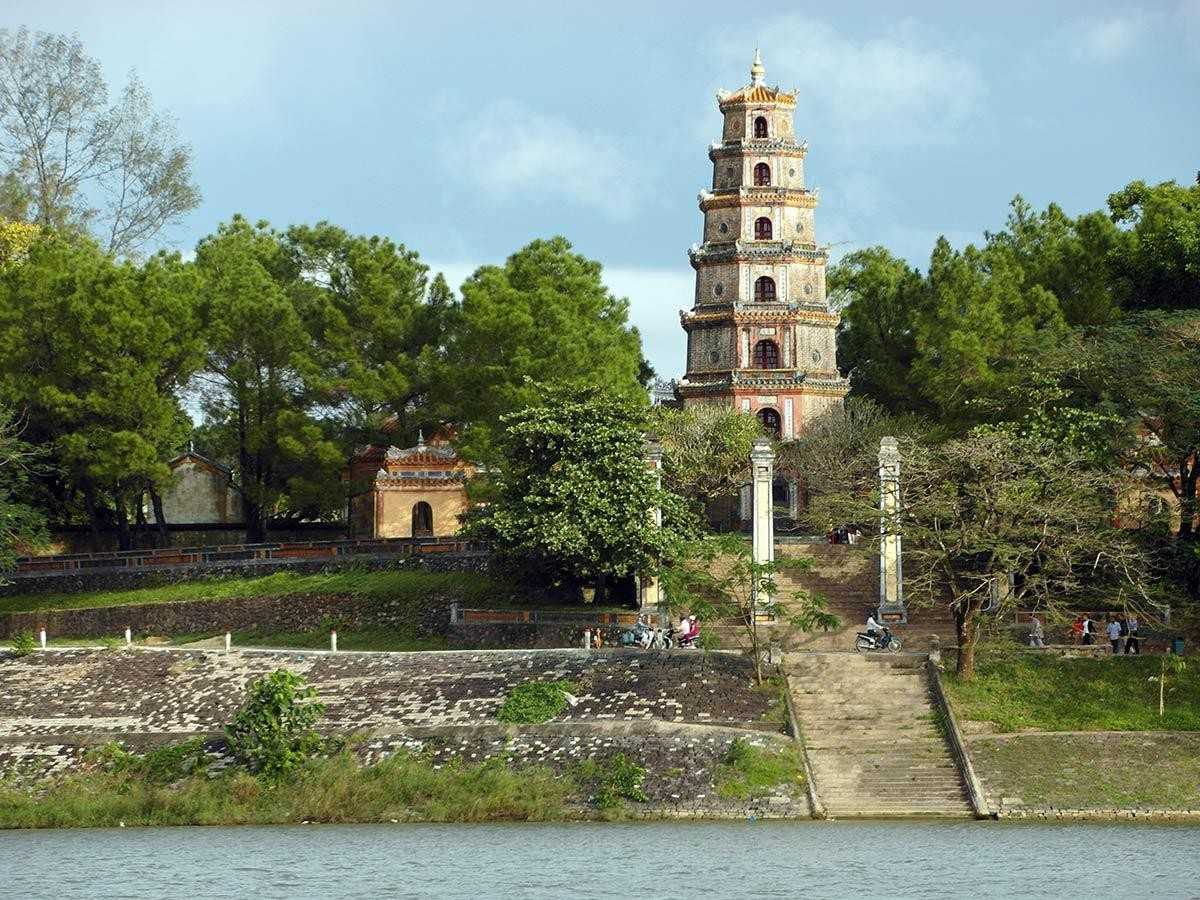
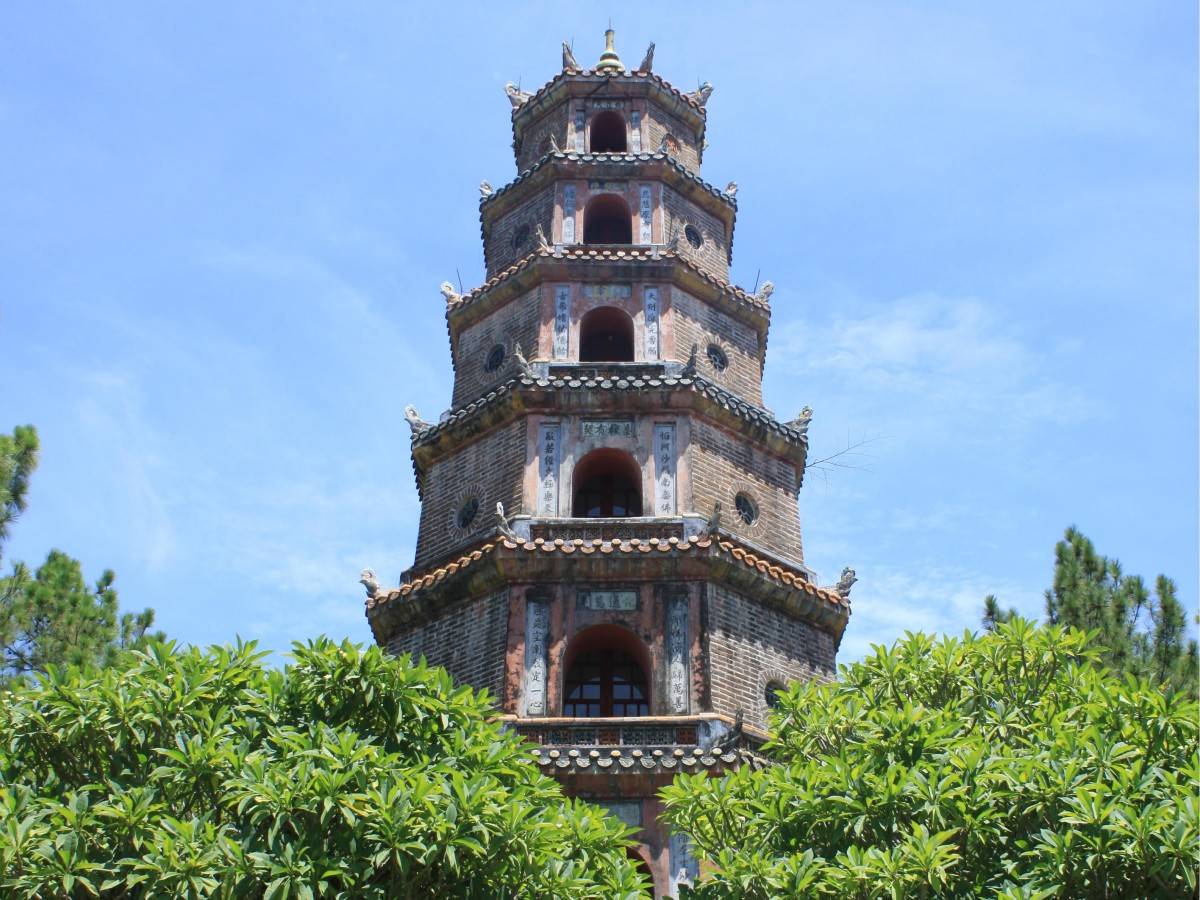
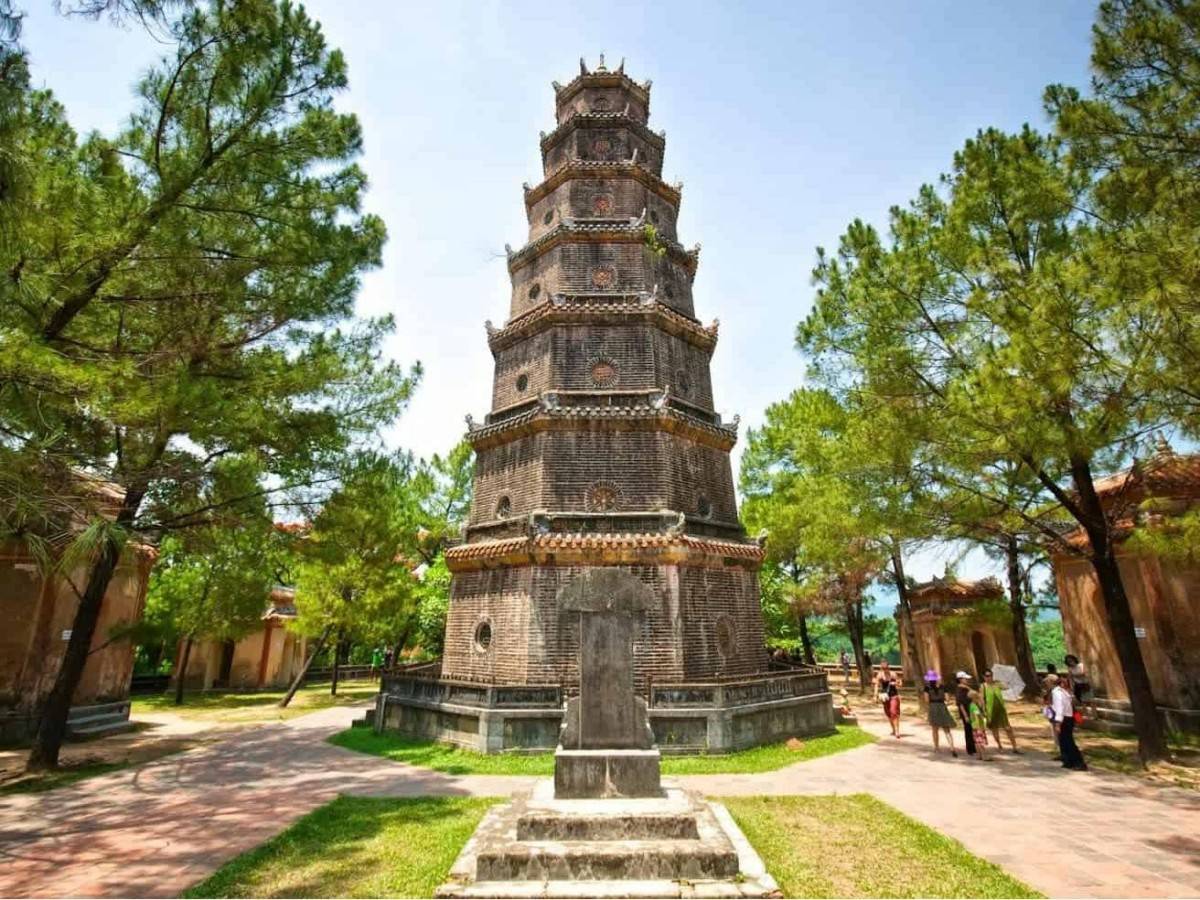
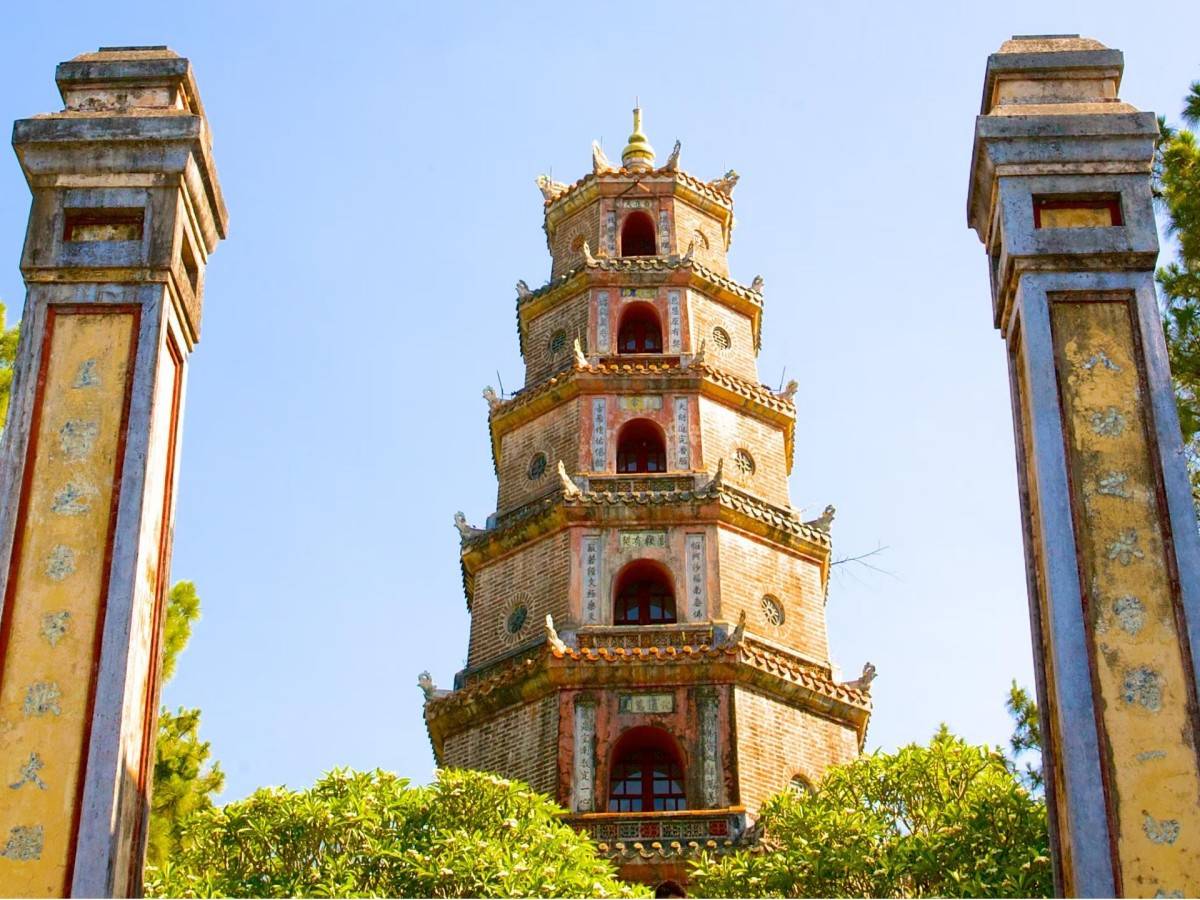
The first thing you see when you walk into Thien Mu Temple is the tall Phước Duyên Tower, a seven-story octagonal tower more than 20 meters high, which can be seen from a distance when standing on the banks of the Xiangjiang River. It is the landmark of the temple and one of the oldest brick towers in Vietnam, built in 1844. Each floor represents a Buddhist realm, from hell to Elysium, symbolizing the process of cultivation in life.
Advertisement
Behind the pagoda is the main hall area, mainly dedicated to Guanyin Bodhisattva and Sakyamuni Buddha. The temple is peaceful with incense going on and sometimes you can hear monks chanting sutras or knocking on wooden fish. There are many paintings and inscriptions hanging on the walls, and also an old bell, said to have been built in 1710, which can transmit sound for several kilometers when struck once.
More interesting, is the old car in the temple - yes, there really is a car. This blue Austin car, the one that Sak Quang Duc rode in when he traveled to Saigon to self-immolate, is now placed in a showroom next to the temple, and many visitors make a point of coming to see it. It is now placed in the exhibition hall next to the temple, and many tourists make a point of looking at it. It is parked there quietly, with no ostentatious decoration, but at first glance, you will think, “This is not a simple thing.
If you walk down the path behind the temple, you can also reach the small platform by the Fragrant River. The view is so nice that many people will sit there for a while, take a few pictures, or simply laze around for a while. The wind in Hue is very soft and the river is very gentle, so it is not a waste of time to laze around in this kind of place, rather it feels just right.
Don't look at Tianmu Temple is a Buddhist shrine, it is actually quite “grounded”. There are many monks living in the temple all year round, both young and old, and in addition to praying to the Buddha, they also grow their own vegetables, sweep the yard, and cook. When you go there, you may see them picking vegetables, or scrubbing the Dharma vessels under the veranda, which is a particularly peaceful scene.
On the Buddha's Birthday (usually on the eighth day of the fourth month of the lunar calendar) or on the Mid-Yuan Festival or the Bon Festival, the temple will hold a large-scale puja, lighting lanterns for blessings, releasing river lanterns, and monks will lead the recitation of scriptures, which makes the scene even more solemn without being noisy and crowded. Sometimes the temple will also open free vegetarian food for tourists, if you are interested, you can try, the flavor is not heavy but very comfortable to eat.
For locals, Thien Mu Temple is not only a place to worship Buddha, but also a place where many people come to pray for studies, health and peace. Especially at the beginning of each year, Hue residents almost always come here to walk around, as a way to “accumulate some virtue” for themselves and hope that the new year will be smooth and successful.
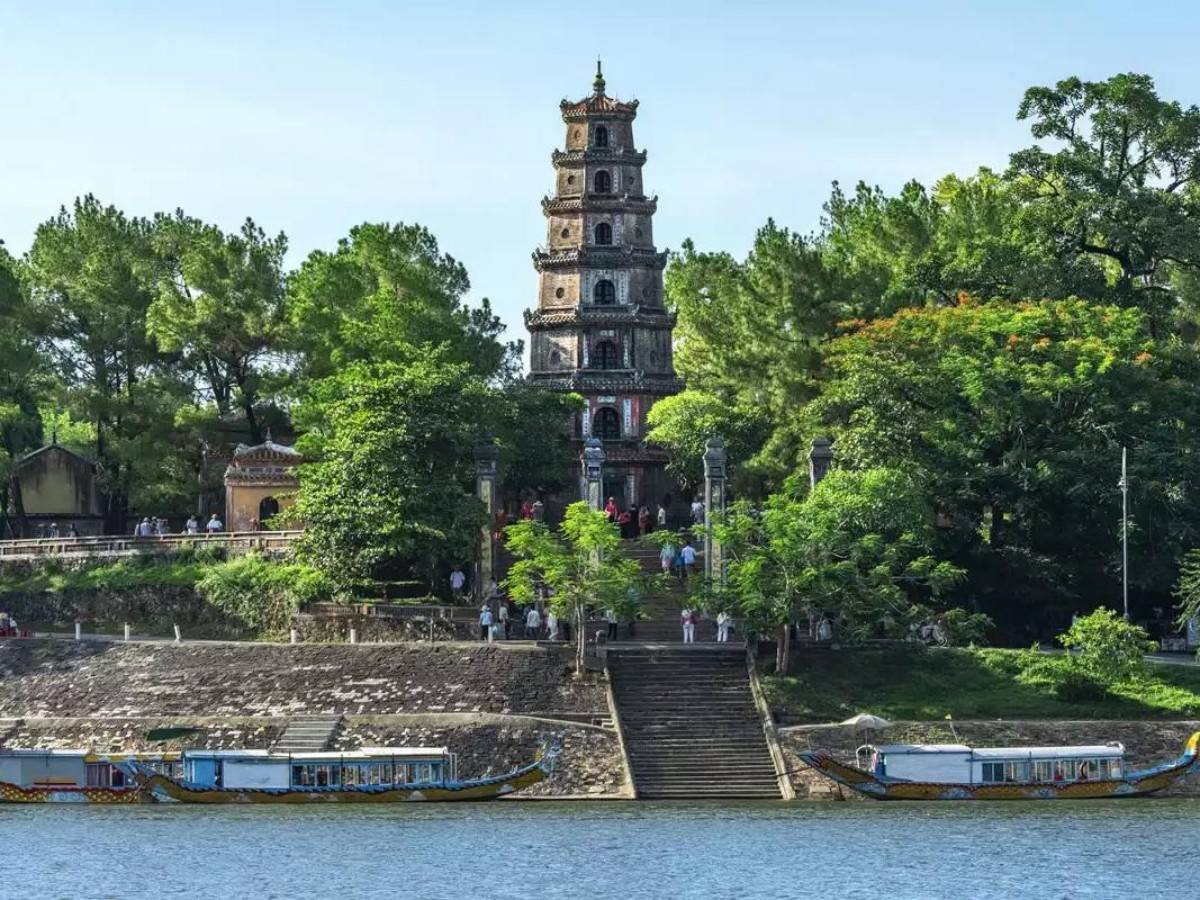
If you want to visit Thien Mu Temple, it's easy to get there by motorcycle, taxi or bicycle from Hue city. The most sentimental way is to take a dragon boat and float all the way down the Fragrant River, about 30-40 minutes, and the scenery along the way is also particularly beautiful, with a cinematic sense of greenery on both sides of the river.
Tianmu Temple does not charge admission, is free to open, but also therefore hope that tourists can respect the environment. Please dress appropriately when entering the temple, preferably without shorts or sleeveless tops, although no one is forcing you to leave, it is basic courtesy. Remember to take off your shoes when entering the main hall, and do not make loud noises or take random photos, especially of the Buddha statues.
It is recommended to visit in the morning or evening, as it is hotter in the middle of the day and the sun in Hue is not polite. It's also important to bring a bottle of water and wear comfortable shoes - after all, there are some slopes and small steps around the temple.
If you're interested, you can also check in advance if there are any pujas or festivals going on, as the atmosphere is not quite the same as on a normal day, and has a more religious flavor. If you just want to see the scenery in peace and quiet, weekday mornings are the most suitable time, with fewer people, clearer wind and better air.
Tianmu Temple is not big, not complicated, come here will not be like walking around the Imperial City to the feet sore, but its charm is: it does not rely on “more”, rely on the “stable”. You don't have to be particularly religious to feel its tranquility and gentleness. It's not in a hurry, it's just there, as if saying, “I'm here whenever you want to come.” On a trip to Hue, if you've only set aside a day, you might prioritize going to the Imperial City, but if you want to set aside an hour and find a place to calm your mind, see the water, and smell the incense, that Thien Nguyen Monastery is definitely worth a visit. You may not have an eye-opening experience here, but you will suddenly feel, the moment you walk out of the temple door, as if your heart is not so messed up.