Advertisement
If you've ever visited Agra—that city where marble dreams still float upon the Yamuna River, where crowds chase its pure white reflections—you may not know that just twenty minutes north, beyond the shadows of trees and the clamor of crowds, lies a quieter, older, perhaps more authentic presence: Akbar's Tomb. Here, red sandstone whispers rather than roars. It is not merely a tomb, but a garden that listens.
Advertisement
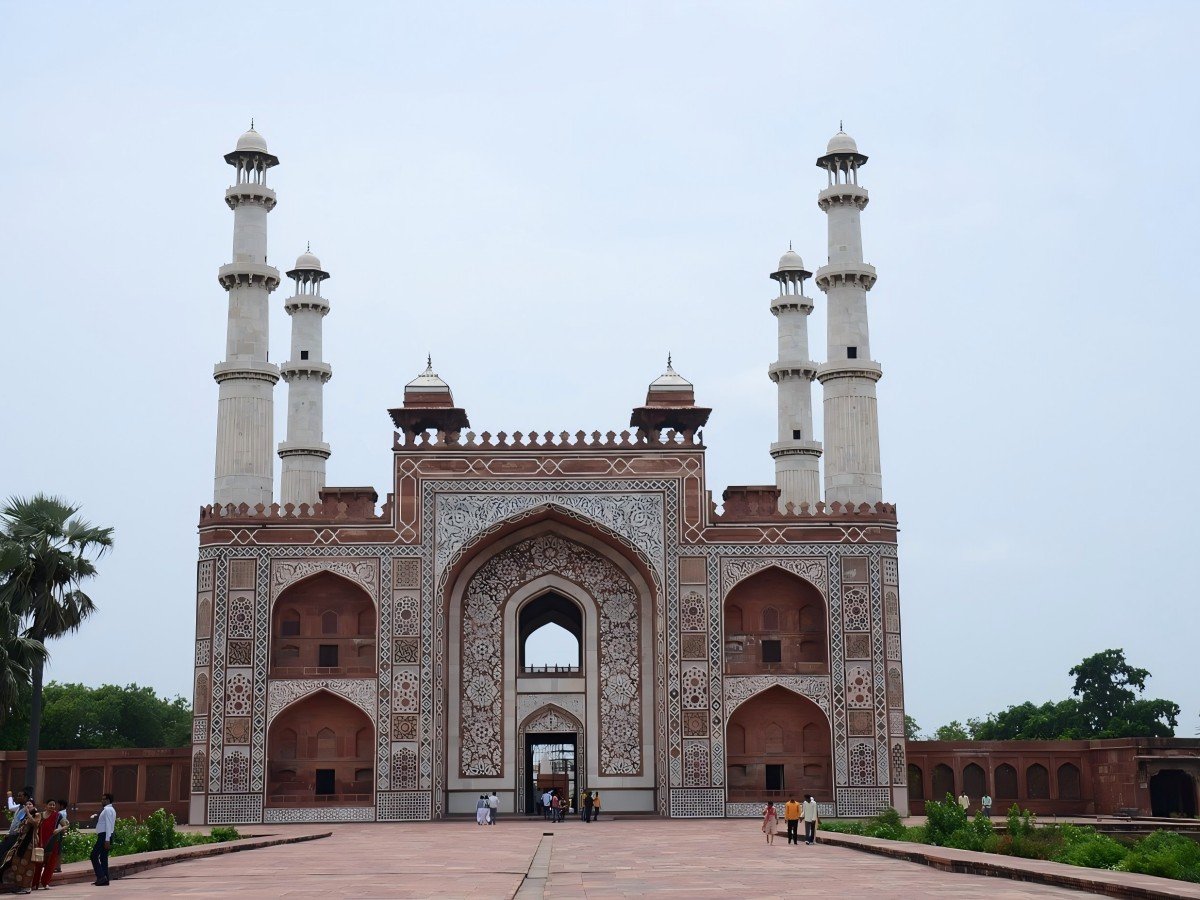
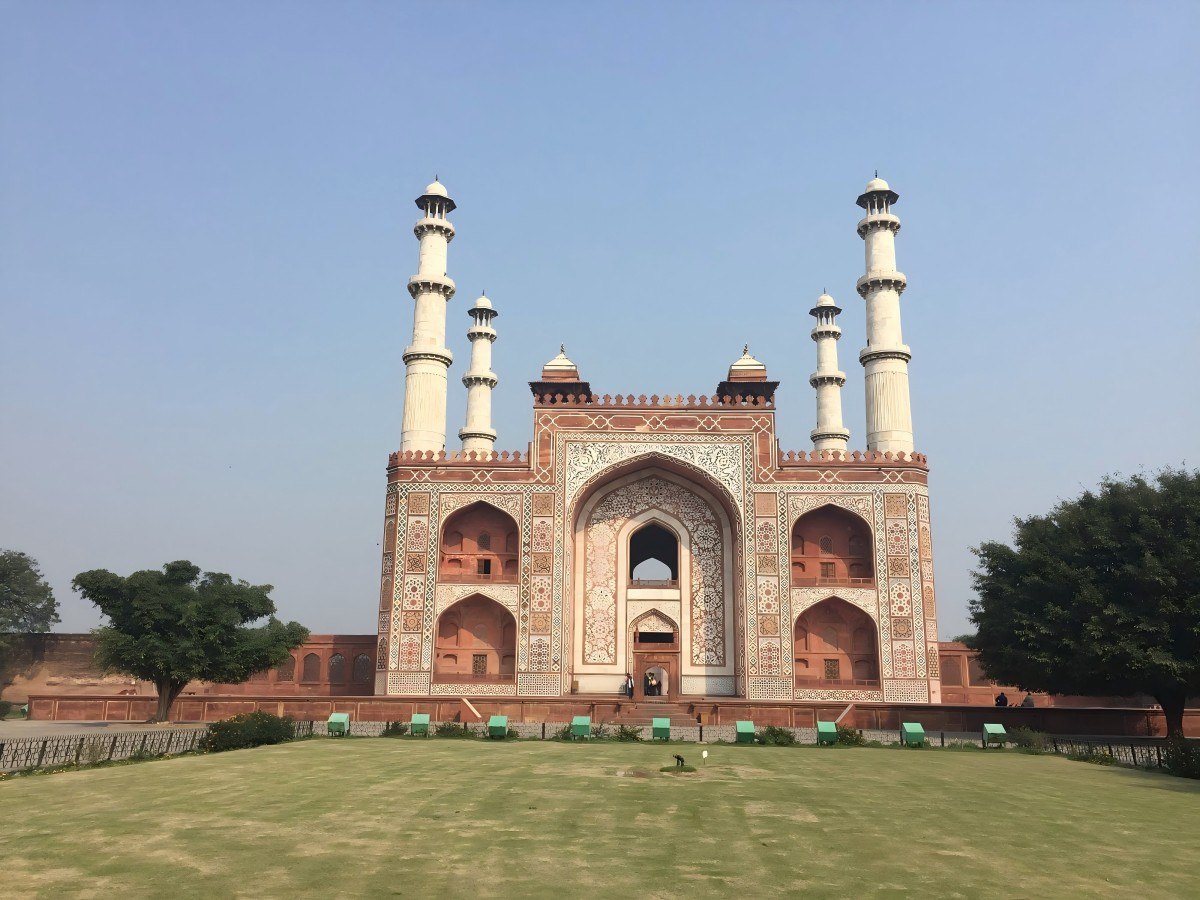
Upon arriving at Sikandra, it is not the tomb itself that first catches the eye, but the magnificent gateway tower rising like crimson flames from the mist. The air carries a faint scent of dust and guava. Arriving around eight in the morning, when visitors are scarce, sunlight bathes the inlaid marble slabs in golden hues. Four white marble minarets rise from the corners, their geometric forms serene and composed, like a prelude to the pinnacle of Mughal architecture. Beyond the gates lay boundless gardens. Paths branched in perfect symmetry, low walls complementing square lawns. Water channels crisscrossed like veins, though some lay dry. The tomb rested at the center, serene and resolute, like the pulse of an empire that once ruled half a continent. Yet the air here carried a peculiar philosophical quality—much like Akbar himself.
Advertisement
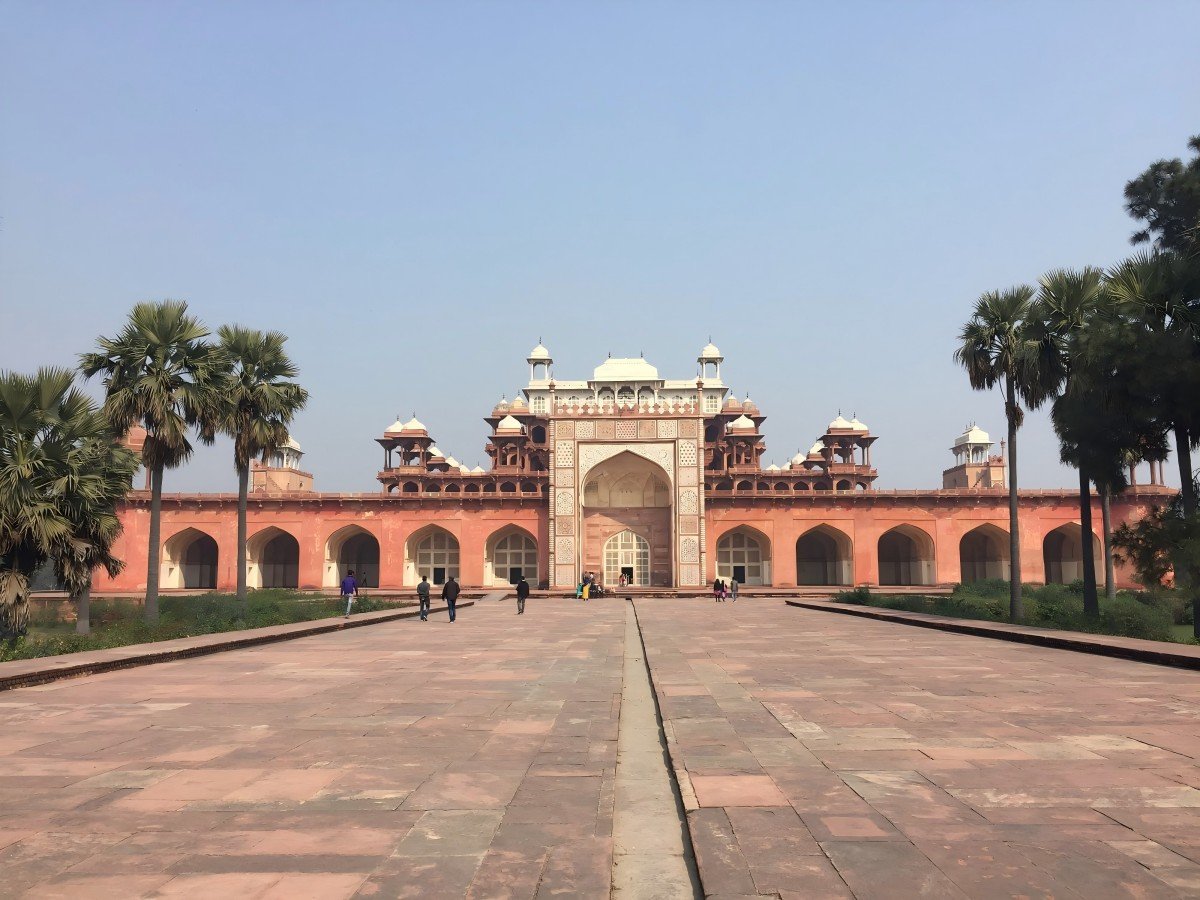
History books refer to Akbar as the “Great Emperor”—the third ruler of the Mughal Empire, reigning from 1556 to 1605. Yet little known is the restlessness within his soul. Though illiterate, he was obsessed with ideas. Within his palace at Fatehpur Sikri, he invited philosophers, Jesuits, Sufis, Hindus, Jains—even atheists—to engage in debate. His ambition extended beyond empire-building; he sought to construct bridges of understanding. Upon his death, his son Jahangir ensured the mausoleum embodied this spirit—a fusion of religious, cultural, and symbolic elements. Thus, as you stroll through Sikandra Gardens, you'll find Hindu pavilion domes standing alongside Islamic arches and Persian inlay patterns. Red sandstone, white marble, black slate—all blend seamlessly, none dominating. This ancient Persian design aims to evoke the image of paradise. Four courtyards, separated by waterways, symbolize the rivers of the celestial realm. Yet what makes it unique is that Akbar's paradise is not merely a geometric construction, but one teeming with life. The call of peacocks can be heard, squirrels dart among the banyan branches, and occasionally, when a sudden gust sweeps through the treetops, the world falls into a profound silence.
Advertisement
Walking through the garden's grid holds a hypnotic charm. Each step feels precise yet effortless. Mausoleums appear and disappear between arches, creating a visual rhythm that draws you forward. Locals say that during the rainy season, the paths reflect shimmering ripples. Now, fallen leaves replace the waves, and occasionally a goat wanders by. Yet even in silence, the beauty of symmetry continues to sing. This is the marvel of this place—it was built both to mirror heaven and to teach patience. The Quadripartite Garden is not merely decoration; it is a flowing meditation. You walk, turn, pause, and walk again—just as life, empires, and faith endlessly cycle. Akbar's tomb embodies this state: balanced yet not rigid, symmetrical yet not monotonous.
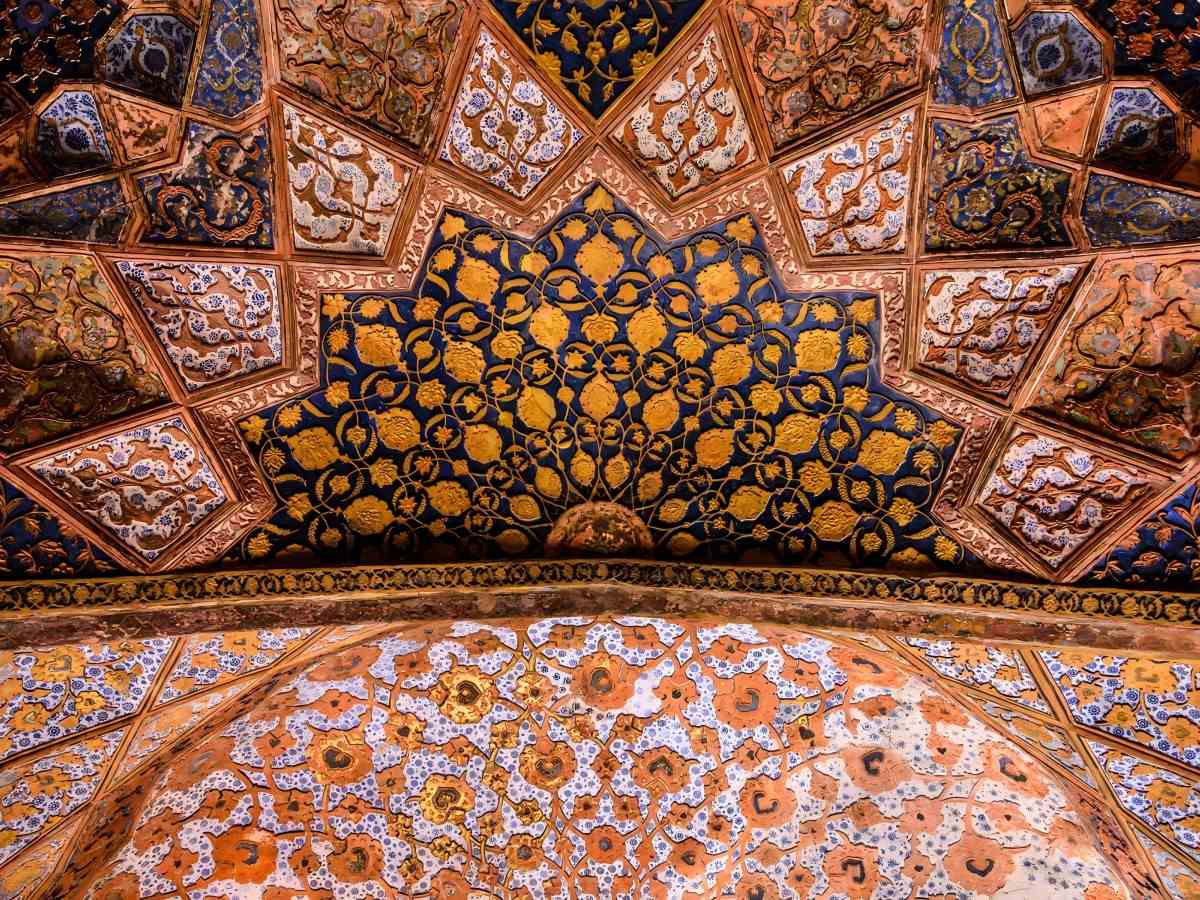
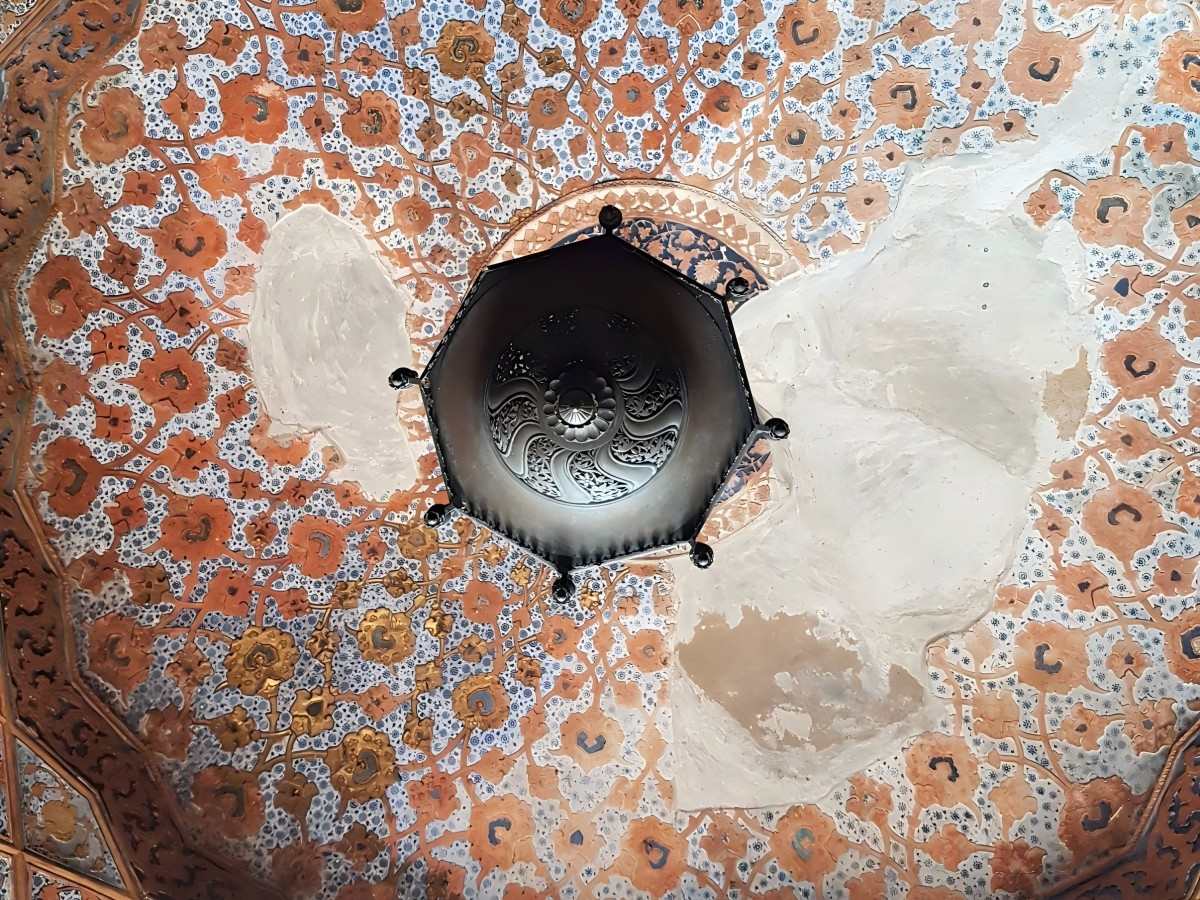
The entrance to the main mausoleum commands reverence. Its facade is covered in intricate floral mosaics, geometric panels, and calligraphic inscriptions that shimmer poetically. Stepping inside, the world falls suddenly silent—no birdsong, no human voices, only the echo of footsteps. The central hall enshrines Akbar's *false tomb*—a simple white marble monument beneath a dome adorned with exquisite murals. His true remains lie hidden in an underground chamber, forever sealed from the world. A glimpse through latticed windows offers a hint, but the deeper sense is that this ruler has reconciled with his own contradictions. If the Taj Mahal is love carved in marble, Akbar’s Tomb is wisdom carved in red sandstone. It seeks not to please, but to understand you. The ceiling bears faded blue-green paintings adorned with intricate patterns. Sunlight streams through the jalies, dust dancing in the beams.
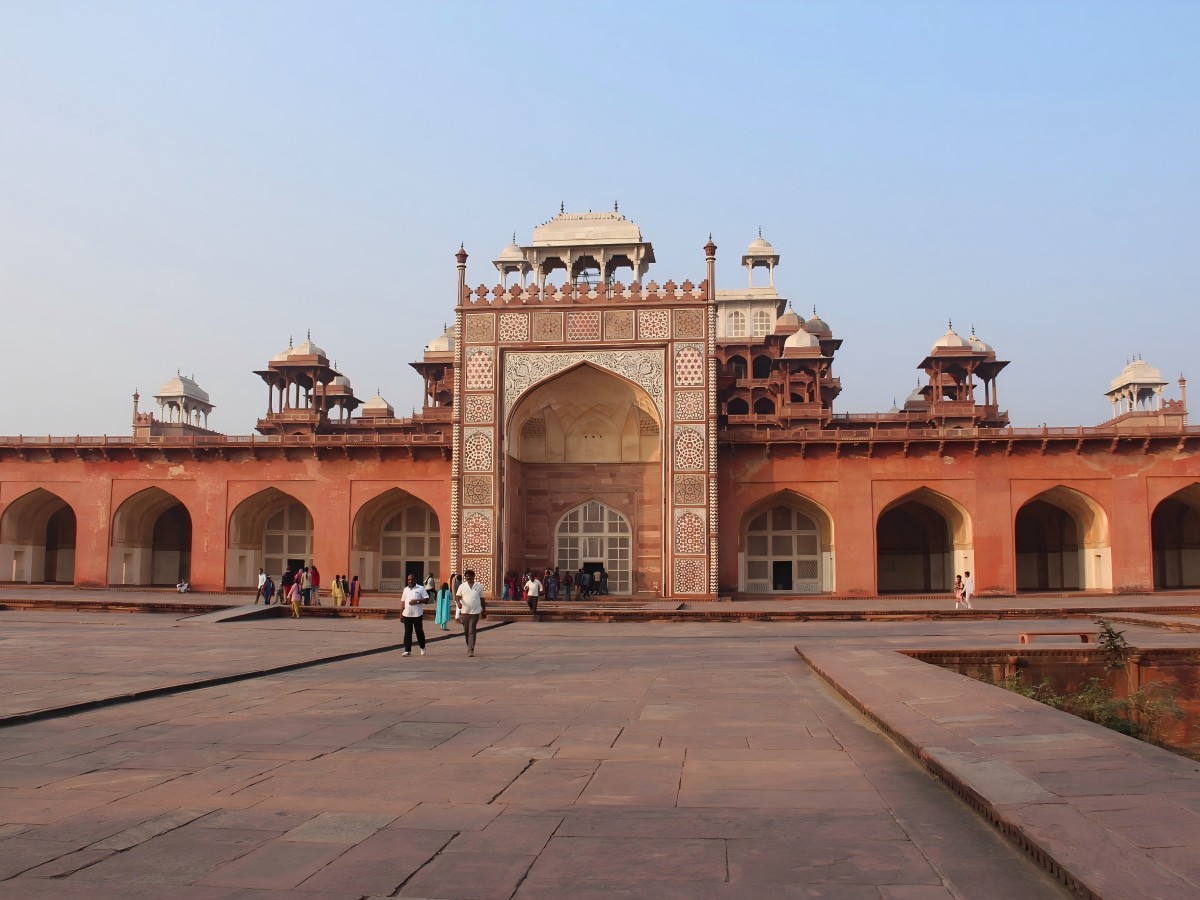
At noon, the garden transforms. The sandstone radiates warmth, and the lawn glows softly. Visitors begin to appear—families with water bottles, architecture students sketching the arches, foreign couples leafing through guidebooks beneath the shade. For a moment, it feels as though time has reversed—under this same sunlight, Mughal courtiers once gazed here in rapt silence. As dusk deepens, the mausoleum transforms: red sandstone turns amber, marble glows softly, and long shadows stretch across the lawn. Paths soften beneathfoot, and the air grows cool. Sounds returned to your ears—the rustle of leaves, the cooing of pigeons, the distant, persistent honking of Agra's traffic. Past and present coexisted peacefully here. As the sun dipped below the horizon, the mausoleum's arches captured the last rays of light, and for a moment, the entire structure seemed to breathe. Gardens, symmetry, silence—all dissolve into a vast, listening presence. You finally understand why an emperor like Akbar chose this place. He sought not a monument, but the meaning of life.
Visiting Akbar's Tomb is not merely about checking off another ancient site, but about slowing down—letting symmetry, silence, and sunlight awaken the soul. Slightly uneven tiles, faded murals, and the whisper of wind breathe life into this space. When you leave, you won't be dazzled by spectacle, but lost in contemplation. You begin to discern patterns—in nature, in people, in history—for when viewed from the right angle, all things align. Perhaps this was Emperor Akbar's vision: a garden where opposites meet, a courtyard where faiths converge. Even after centuries of change, the stones still listen.