Advertisement
In the city of Agra in the Indian state of Uttar Pradesh, a building as white as snow stands quietly on the banks of the Yamuna River. It shimmers in the sunlight and exudes an extraordinary beauty: the world-famous Taj Mahal. Over the centuries, the Taj Mahal has not only conquered the world with its unparalleled architectural art, but has also become one of the most romantic buildings in the world because of the romantic love story behind it. So, the Taj Mahal in fact has what kind of magic charm, can make it in the world's architectural history to leave such a colorful one?
Advertisement

The birth of the Taj Mahal, from a bitter love. 17th century, the early Mughal dynasty, the fifth emperor Shah Jahan and his wife Muttazhi Maha acquaintance, the two are in love, love very much. Maha was not only beautiful, but also intelligent. She accompanied Shah Jahan in his battles and advised him, occupying an irreplaceable position in his heart. However, fate was cruel and in 1631, Maha died in childbirth during the delivery of her 14th child. The grief-stricken Shah Jahan decided to dedicate the entire country's treasury to the memory of his beloved wife by building her a mausoleum like no other in the world. Thus, the Taj Mahal was finally completed after 22 years under the meticulous carving of countless craftsmen. The mausoleum is not only a testament to Shah Jahan's love for Maha, but also an eternal reminder of his wife. This romantic and poignant love story for the Taj Mahal has given a layer of strong emotional color, so that every visitor to here can feel the deep love across time and space.
Advertisement
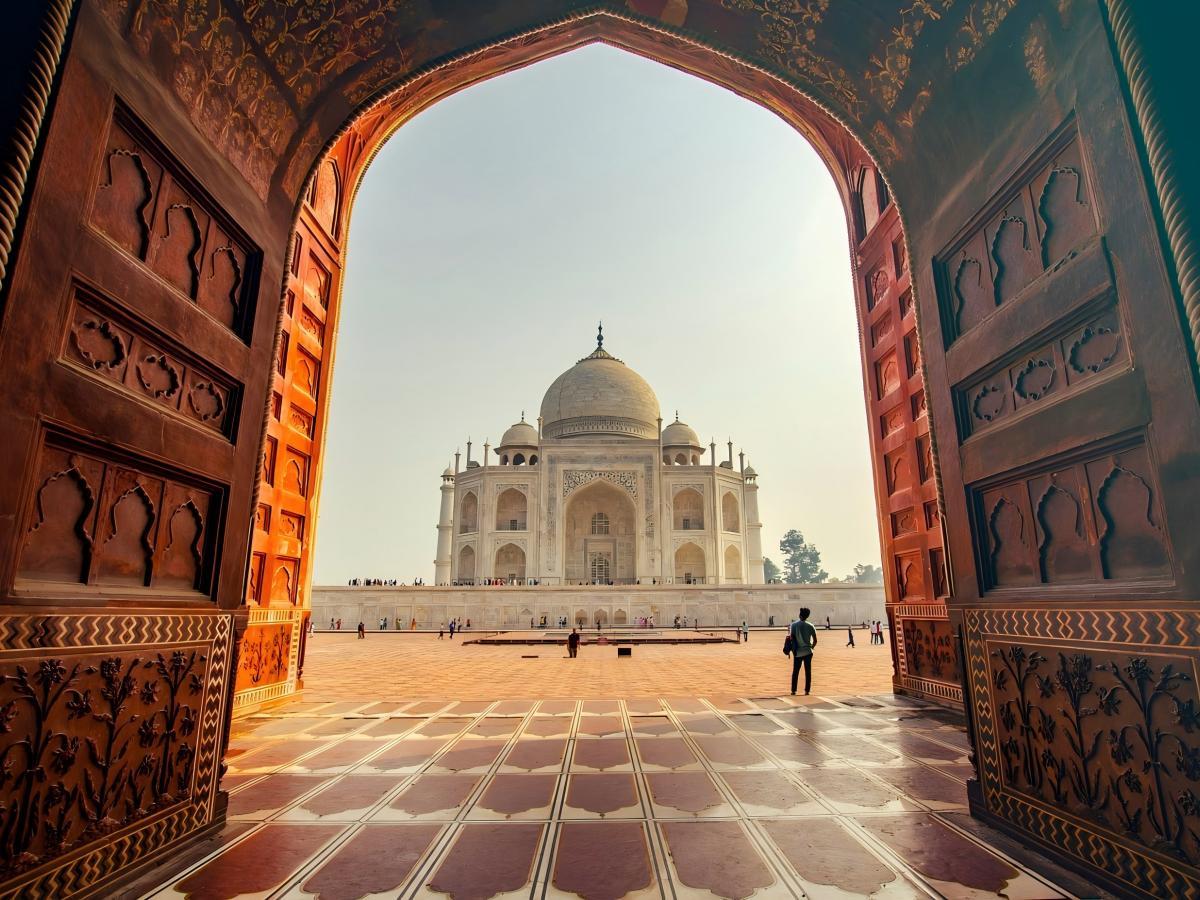
Taj Mahal's architectural aesthetics is a masterpiece, which combines the essence of Indian, Persian and Islamic architectural styles, forming a unique and harmonious artistic style.
Advertisement
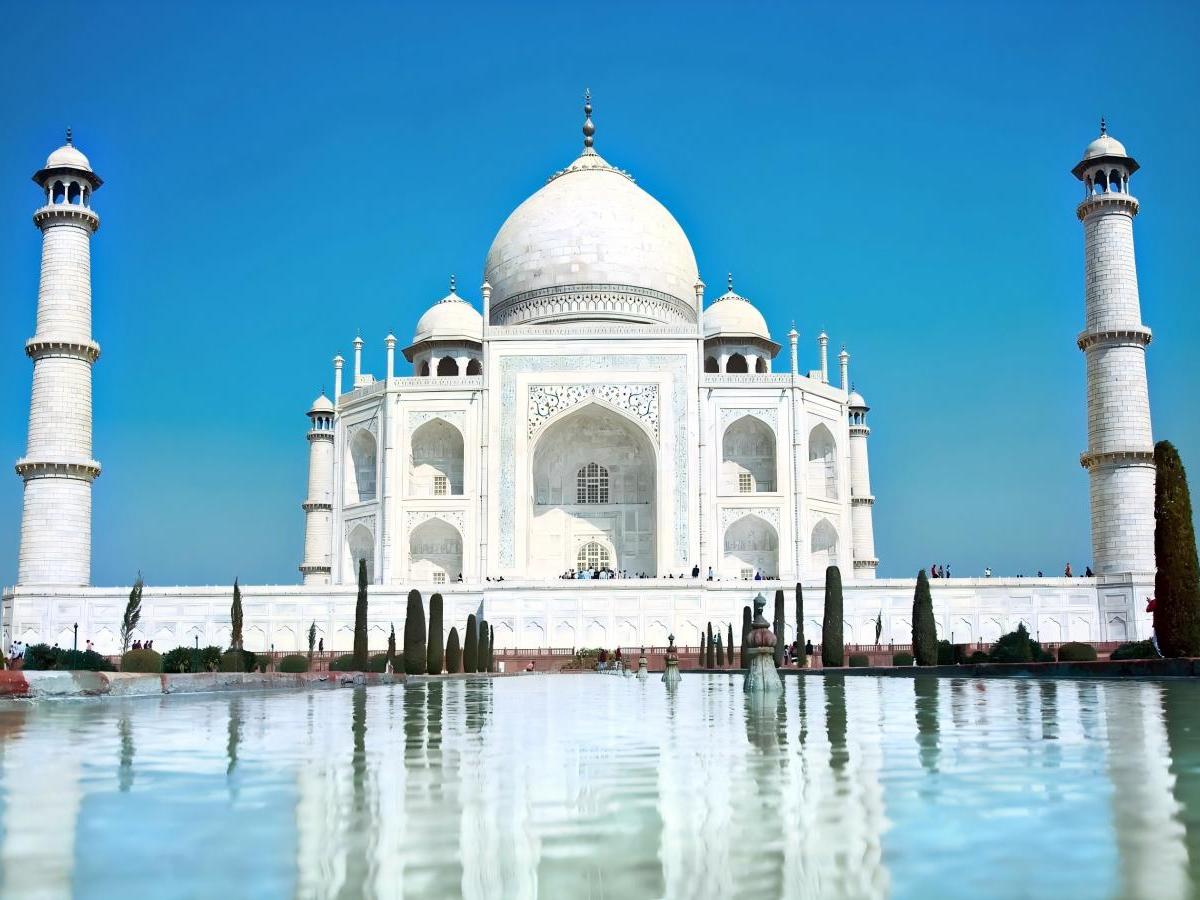
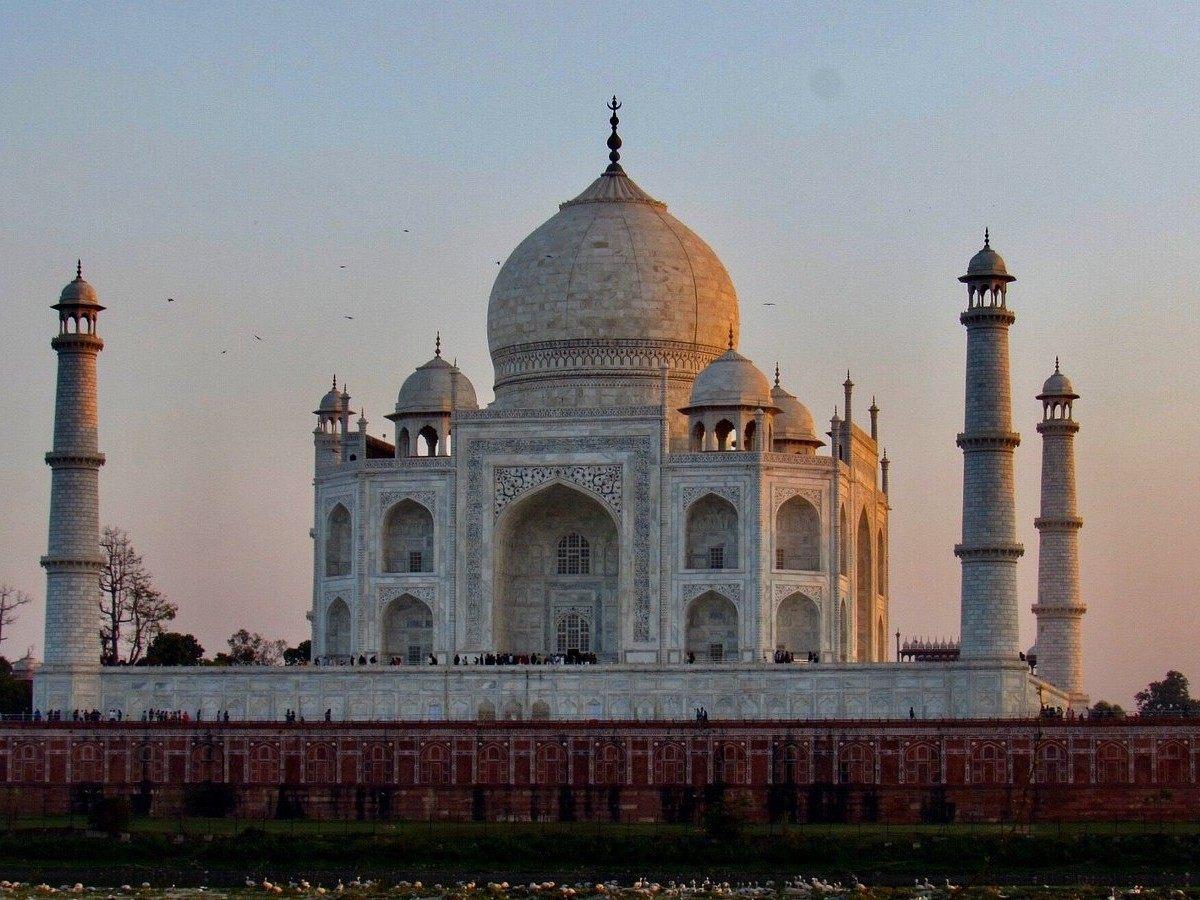
From the overall layout, the Taj Mahal is symmetrical design, solemn and elegant. The gate of the mausoleum is tall and grand, with exquisite carvings on it, giving people a solemn feeling. Through the gate, a wide central waterway bisects the entire mausoleum, which is lined with lush lawns and delicate flowers, creating a serene and peaceful atmosphere. As you walk along the waterway, you will be able to see the main Taj Mahal building. The main body of the mausoleum is constructed with clean white marble, which emits a soft luster under the sunlight, resembling a dreamy white palace.
The architectural details of the Taj Mahal are even more breathtaking. The marble is inlaid with a variety of precious stones, such as rubies, sapphires, turquoise and so on, which make up the exquisite floral patterns and Arabic characters, each carving is lifelike and delicate. The dome of the mausoleum is 74 meters high, like a huge pearl inlaid in the building, surrounded by four small domes, which echo each other, forming a unique visual effect. In the four corners of the mausoleum, each with a 40-meter-high spire, these spires not only play a decorative role, more importantly, they are in the earthquake and other natural disasters, can play a role in supporting and protecting the mausoleum.
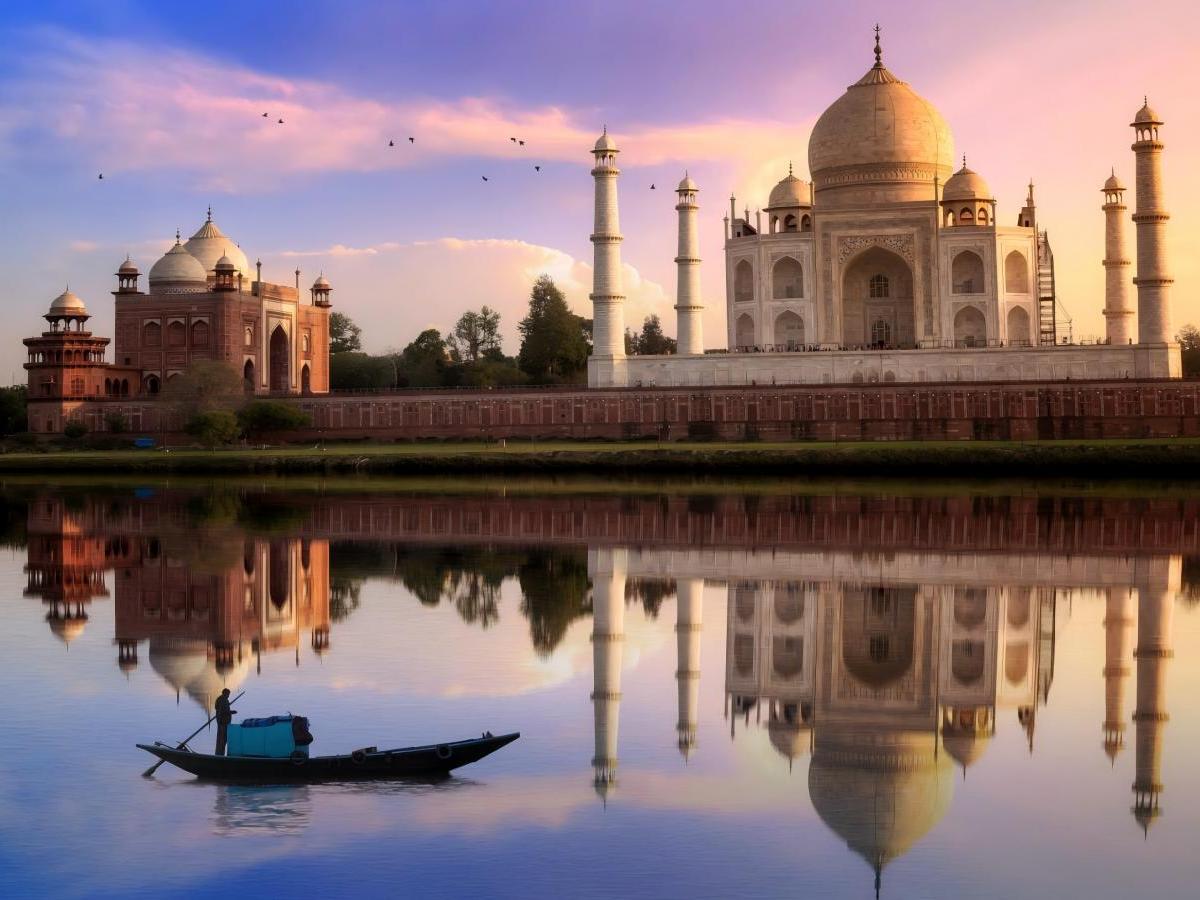
The beauty of the Taj Mahal is also reflected in the different postures it presents with the change of time and light.
Early in the morning, when the first ray of sunshine sprinkled on the Taj Mahal, white marble was dyed a light pink, the whole building as if awakening from a deep sleep, exuding a soft and warm light. At this time, the fog around the Taj Mahal has not been completely dispersed, adding a layer of mysterious veil to it, so that people seem to be in a fairyland. As the sun gradually rises, the Taj Mahal's color also gradually become white as snow, in the blue sky against the backdrop, seems particularly pure and beautiful.
In the evening, the afterglow of the setting sun will be the Taj Mahal dyed golden yellow, the whole building is shrouded in a golden light, looks particularly solemn and sacred. At this time, the water of the Yamuna River reflects the figure of the Taj Mahal, sparkling, like a dream. When night falls, the moonlight sprinkled on the Taj Mahal, it becomes a silver palace again, in the silence of the night, exudes a serene and mysterious atmosphere.
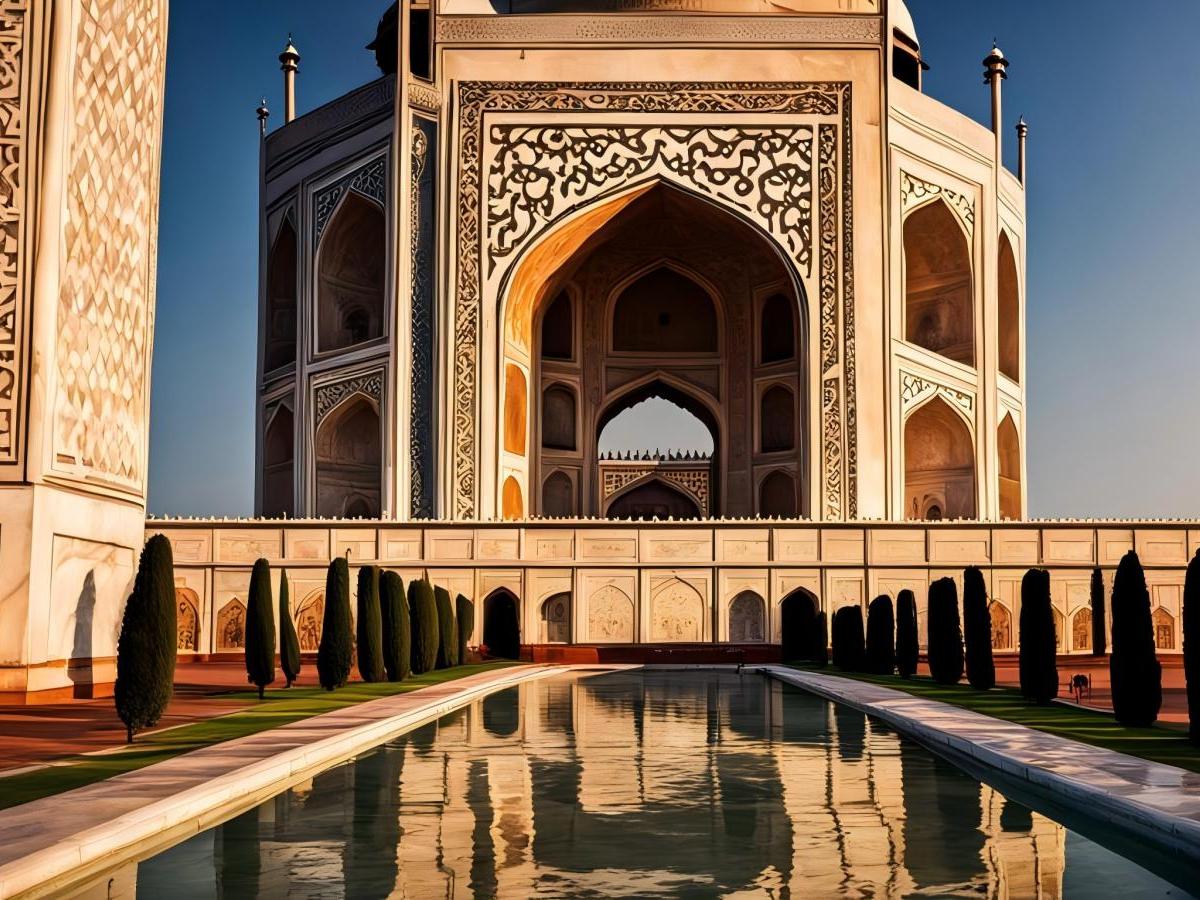
Taj Mahal is not only an architectural masterpiece, but also the crystallization of Indian culture and art. It combines a variety of cultural elements, reflecting the multi-cultural characteristics of India in the Mughal dynasty period.
In terms of architectural style, the Taj Mahal combines the symmetrical layout of traditional Indian architecture and the dome and minarets of Persian architecture, and at the same time, it also integrates the decorative art of Islamic architecture, such as the carving of the Arabic script and the use of geometric patterns, etc. The integration of these different cultural elements makes the Taj Mahal a masterpiece of Indian culture and art. The fusion of these different cultural elements makes the Taj Mahal not only has the mysterious flavor of oriental architecture, but also does not lose the elegant atmosphere of western architecture.
In addition, the gardens and waterways around the Taj Mahal are also designed to reflect the reverence and awe of nature in Indian culture. The garden has a wide variety of flowers and trees, and different flowers bloom in all seasons, symbolizing the cycle of life and eternity. The central waterway represents the Ganges, the sacred river of Hinduism, which not only adds to the beauty of the mausoleum, but also symbolizes the source of life and purification.
The Taj Mahal is one of the most romantic buildings in the world, with its romantic love story, unrivaled architectural aesthetics, marvelous landscapes of light and shadow, and blend of culture and art. It is not only the pride of India, but also a cultural treasure for all mankind. Every visitor to the Taj Mahal will be attracted by its magical charm and feel the great power of love and human wisdom across time and space. No matter how time flows, the Taj Mahal will always stand on the banks of the Yamuna River, witnessing the eternity of love and the splendor of human civilization.