
Advertisement
In the long history of Nara, Japan, Todai-ji Temple is like a bright pearl, radiating a unique and fascinating religious and cultural splendor. Carrying a thousand years of history, it attracts visitors from all over the world with its magnificent architecture and solemn statues of Buddha, starting a journey that touches the heart.
Advertisement
The story of Todai-ji Temple begins in 728 A.D., when the Buddhist Emperor Shomu prayed for the blessing of his crown prince, Prince Ki, and it was originally known as Konjōsanji Temple. In 741, Emperor Shomu issued an edict to elevate the temple to the status of a temple of the Golden Light of the Republic of Yamato in order to pray for the peace of the nation, which was the predecessor of Todai-ji Temple. Since then, Todai-ji Temple, as a national branch temple, has been responsible for the study of Buddhist doctrines and the training of monks, and has become a temple for the study of the eight Buddhist traditions.
Advertisement
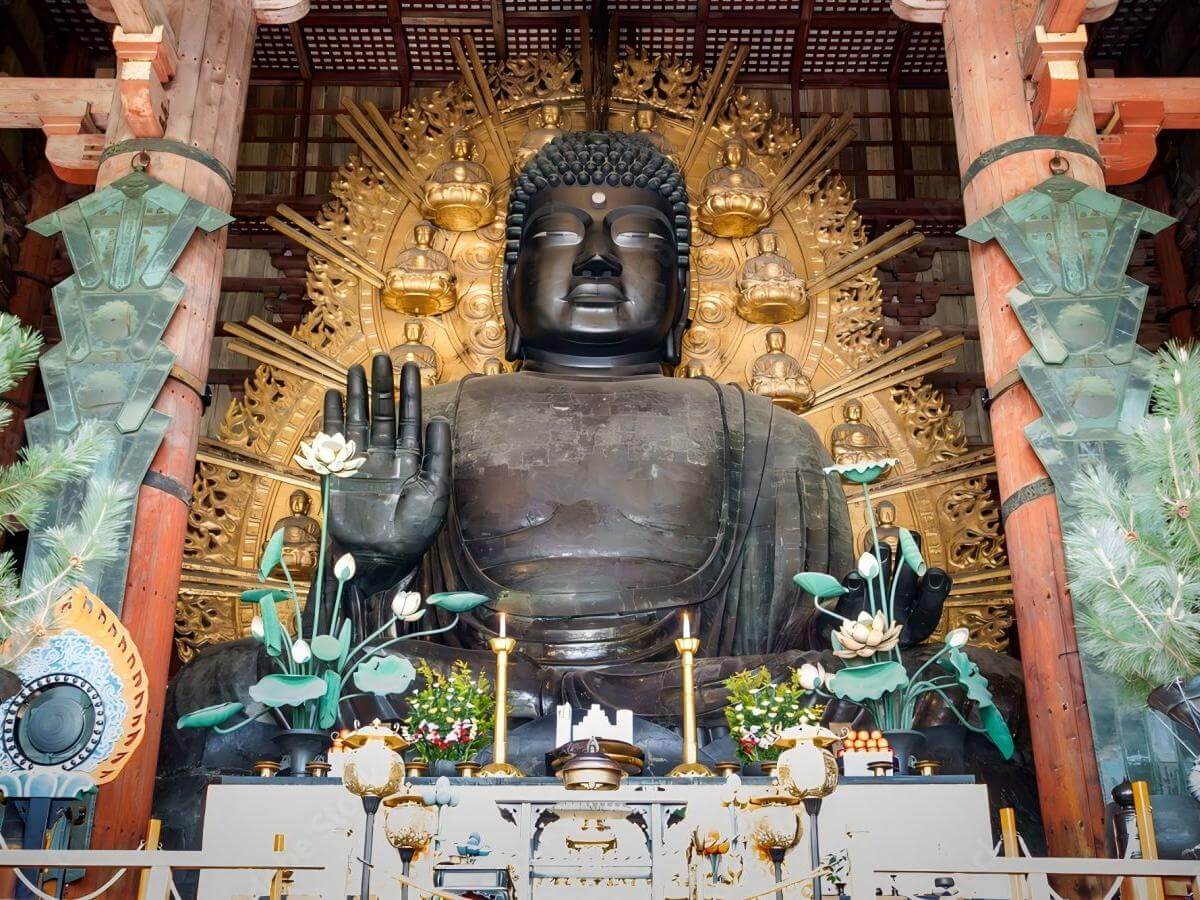
In the fifteenth year of Tenpyo (743), Emperor Shomu made a wish to cast the Nara Daibutsu (Great Buddha of Vairochana). After several years, in the fourth year of Tenpyo Seppo (752), a grand eye-opening ceremony was held at Todai-ji Temple, in which Emperor Seibu, Empress Dowager Komyo, Emperor Hyokken, and other civil and military officials participated, and more than 10,000 monks gathered, and a Buddhist monk, Bodhichandra, performed the eye-opening brush (the brush is now in Shokuryoin Temple). In 753 A.D., Tang Jianzhen traveled east to Japan and gave precepts to monks and laymen in front of the Great Buddha Temple, adding to the rich cultural heritage of Todai-ji Temple.
However, the fate of Todai-ji Temple was not always easy, as war mercilessly destroyed half of the temple at the end of the twelfth century, and in 1182, Shigenobu was commissioned to rebuild the temple, adopting the “Daibutsu style” of Song dynasty temple architecture, employing the Song dynasty's Chen Woqing as the conductor, and hiring the Mingzhou craftsman Iyashin as the director. He hired a Mingzhou craftsman, Iyongmu, and others to carve stone statues and lions, and began the long and difficult road of reconstruction. Thereafter, Todai-ji Temple was subjected to many natural disasters and wars, such as the wars of Miyoshi and Matsunaga in the 10th year of Yongroku in the Warring States period (1567), which resulted in the burning down of the Daibutsu-den, the preceptory hall, and many other buildings, which were rebuilt through the endeavors of Kung-kei Shonin and others, but in a different scale.
During the Meiji period, Japanese officials began to use new methods to repair the Great Buddha Hall, such as reinforcing the beams and columns with iron frames. Later, problems such as leakage of roof beams were solved, and Todai-ji Temple was continuously protected and restored. Today, Todai-ji Temple is still standing, and in 1998, it was designated by UNESCO as an Ancient Nara Historical Monument and a part of the World Cultural Heritage, telling the story of a thousand years of change.
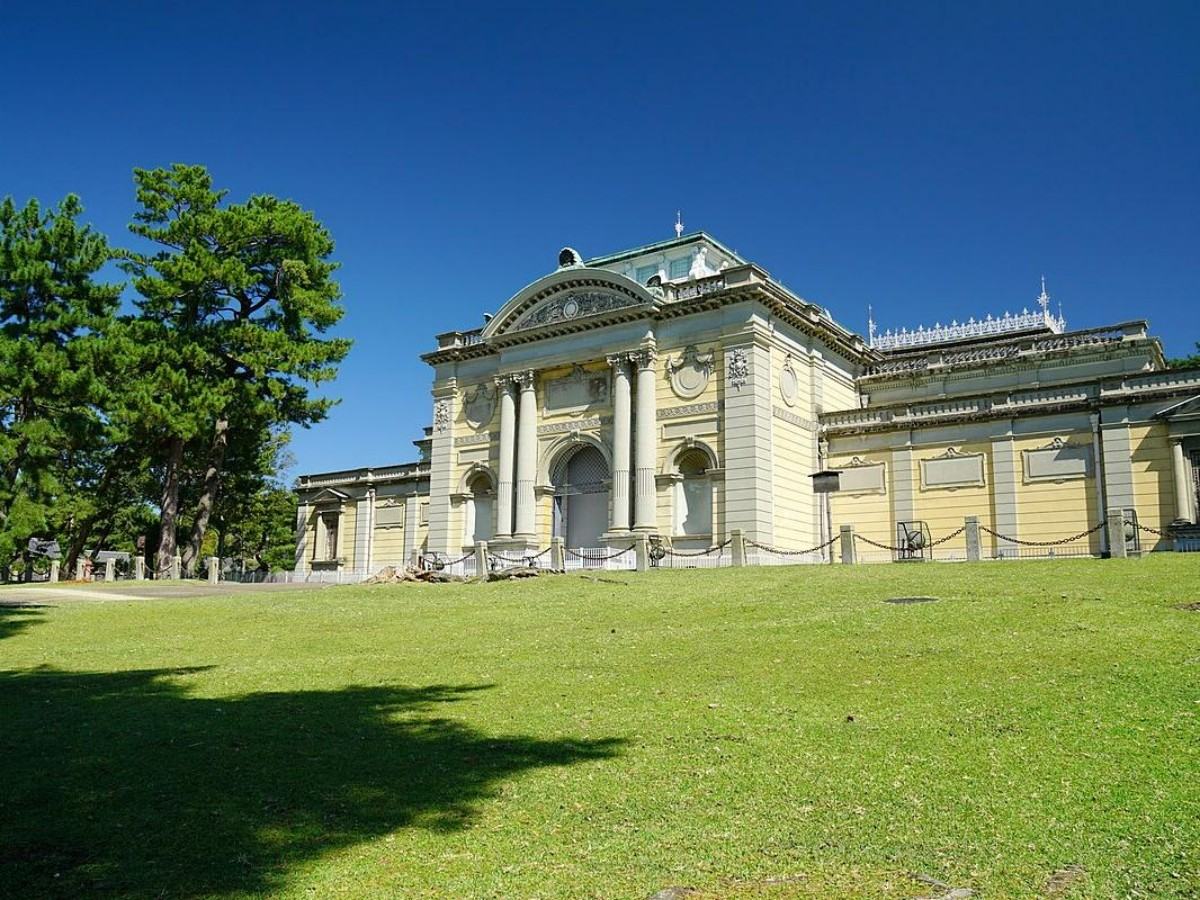
Todai-ji Temple is located in Nara East, northwest of the Kasugayama Forest, with Bonjourin Temple to the north, Nara Park to the south, and the Nara Prefectural Museum of Art to the west, and easily accessible by public transportation. Its overall spatial layout follows the traditional Chinese ritual system, symmetrically distributed on the north-south axis. On the central axis, the south gate, the middle gate and the golden hall are arranged in order, surrounded by corridors. The temple is vast and grand in scale, and is one of the largest wooden structures in the world.
Advertisement
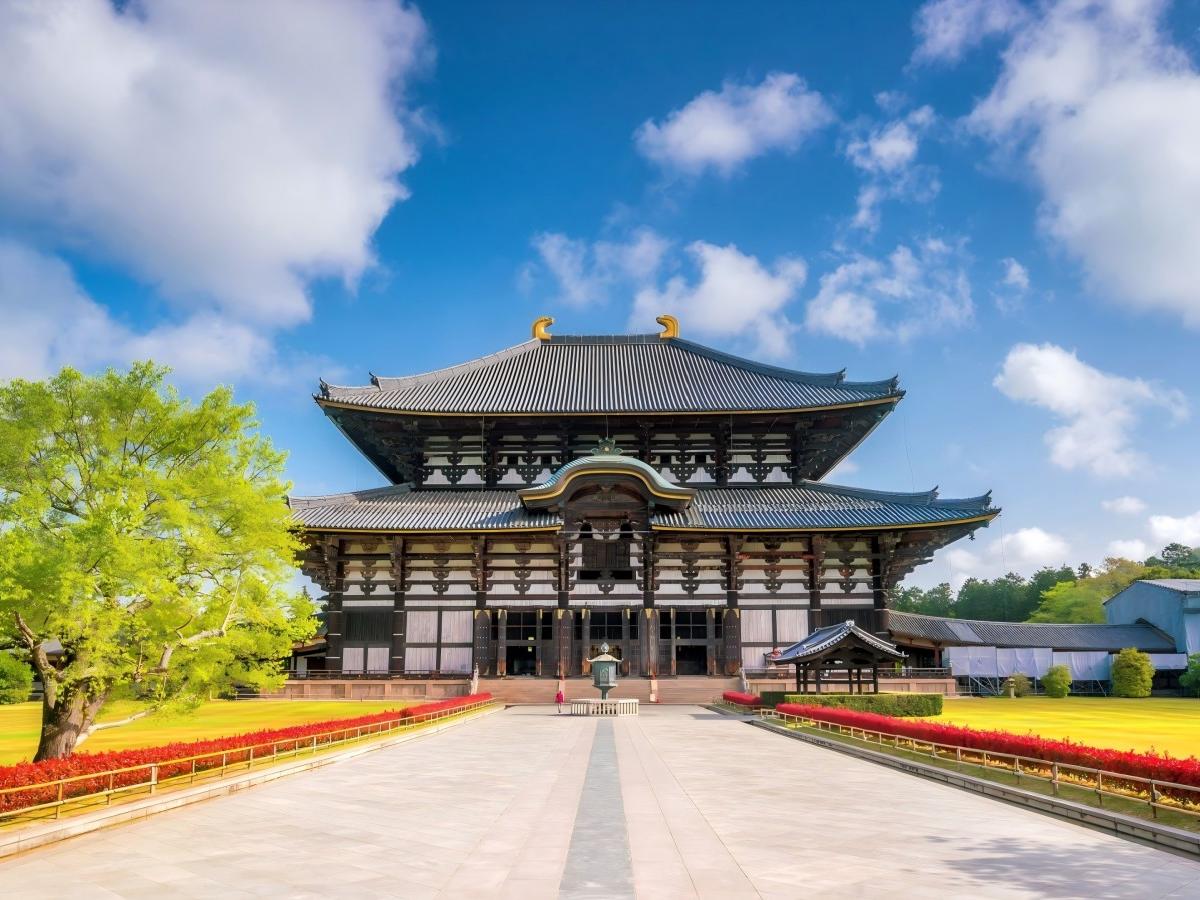
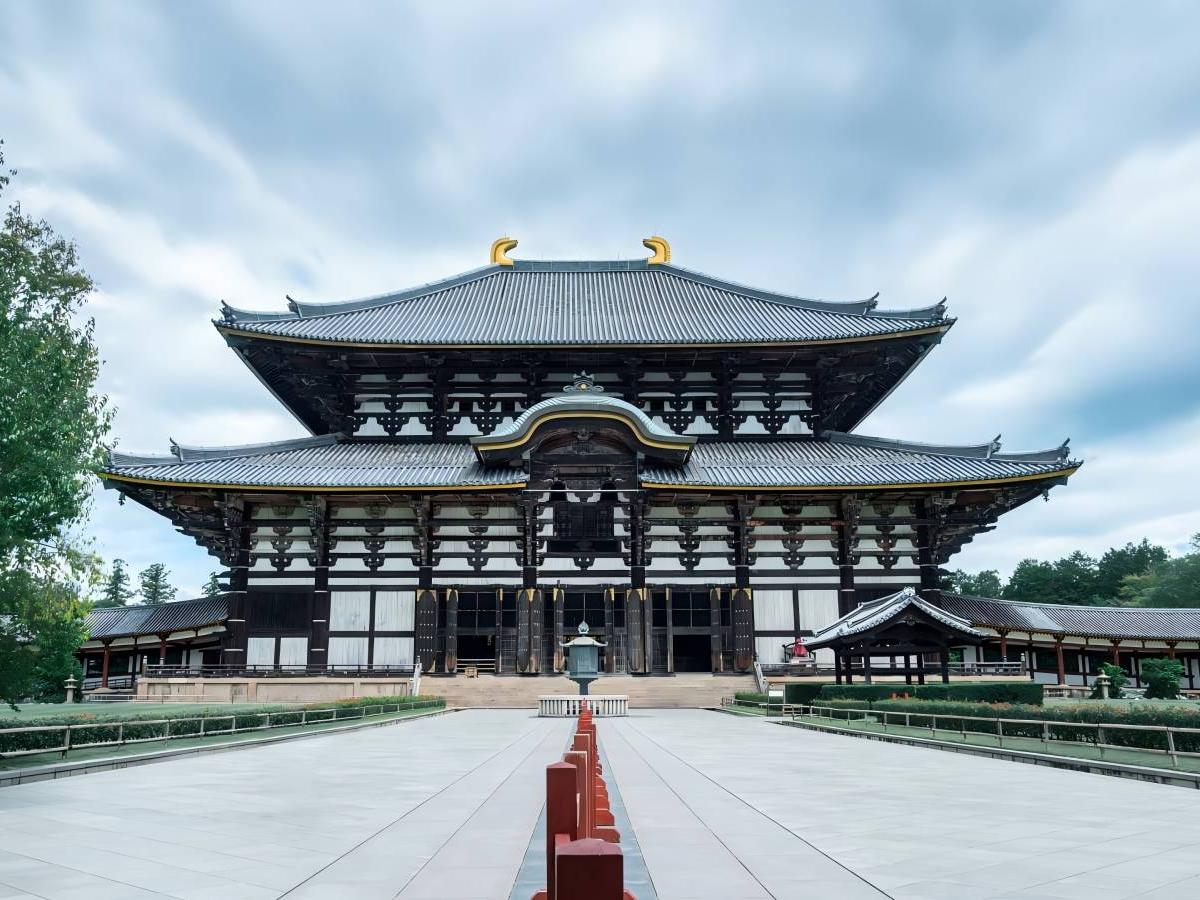
When you enter Todai-ji Temple, the first thing that strikes you is the magnificent Great Buddha Hall. It was founded in the Nara period, and although it has been rebuilt after many wars, it is still magnificent today with a width of 57 meters, a length of 50 meters and a height of 48 meters, making it one of the largest wooden buildings in the world. The Great Buddha Hall has a hipped, heavy eaves roof with large eaves overhangs and exposed wood-framed white infill walls . The decorative style of the “Tang Bakufu” on the front eaves, which is not common in China, is widely used in Japan, reflecting the fact that Japan has absorbed the essence of Tang Dynasty architecture and culture while retaining the local style of sophistication and slenderness.
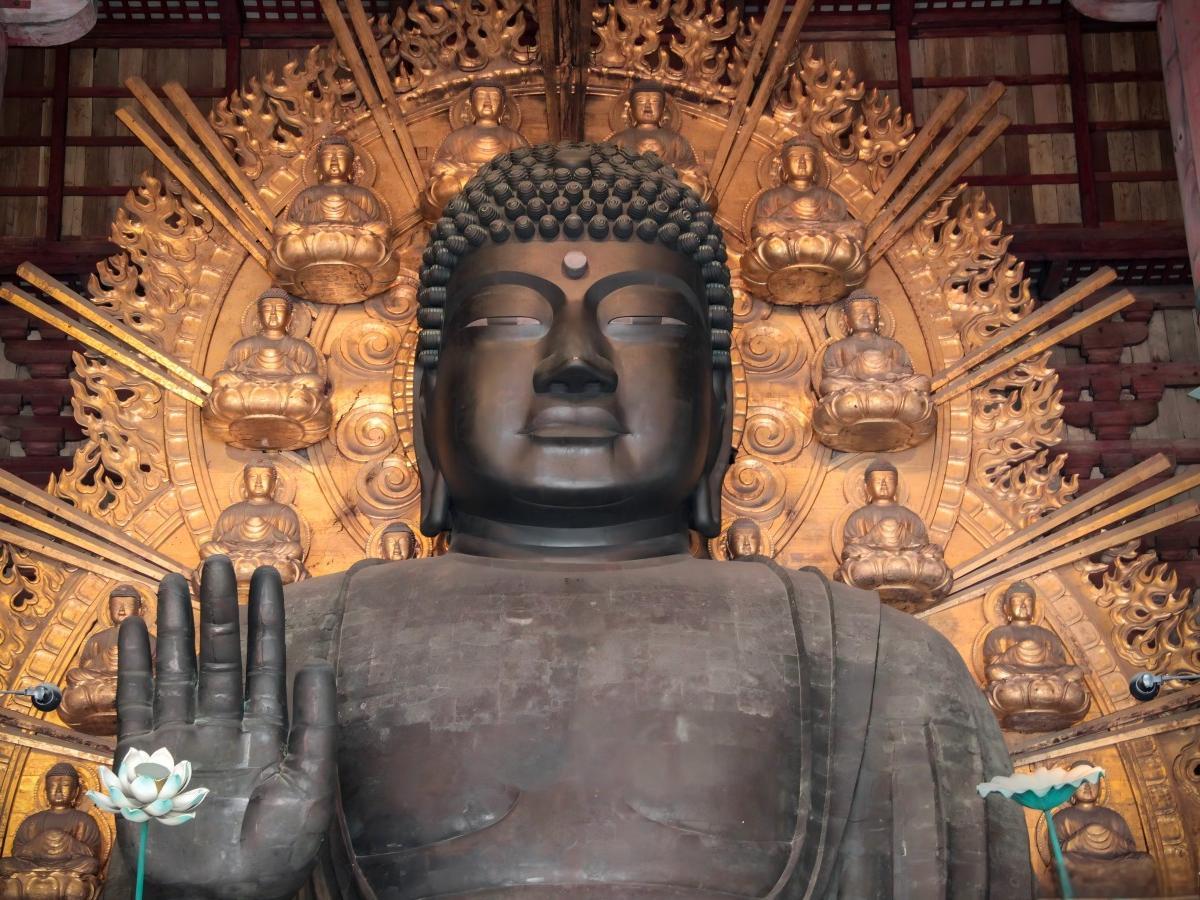
Inside the Great Buddha Hall, a stunning bronze statue of Vairochana is enshrined. The statue is solemn and compassionate, quietly gazing at all things in the world. Standing at a height of more than 15 meters, the statue is made of about 437 tons of bronze and 250 kilograms of gold, and although it has been damaged and restored many times in its history, it still retains its majesty. Standing at the foot of the Buddha, people can't help but feel in awe of their own insignificance and the magnitude of the Buddha's teachings.
In addition to the Great Buddha Hall, Todai-ji Temple has many other buildings worth exploring. Hoba-do, one of the oldest buildings in Todai-ji Temple, was built between the 12th and 19th years of the Tenpyo era (740 - 747). Originally dedicated to the statue of Fukko Kannon, it was called Kanno-do, and is said to be the place where the Avatamsaka Sutra was taught for the first time in Japan, and later became known as Hoba-do, because of the Hoba-kyokai (the annual Hoba Festival) held there in March. Sentan-in Senju-do was founded in 1605. The statue of Senju Kannon in the niche was made in the Kamakura period and is covered with gold clay, with a beautifully balanced face and body, and the seated statue of Kannon has been enshrined in this hall. Nigetsu-do is said to have been built by Minoritsune, the chief disciple of the monk Ryoji, and was named after the Shujikai held here in the second month of the old lunar calendar. The auditorium, the inner formation and the outer formation are well configured and suitable for holding pujas. The bell tower was rebuilt by Zen Master Eisai during the Seongwon era (1207-1210), adopting the technical string construction practices of the Southern Song Dynasty to maintain the stability of the overall structure, and housing the 26.3-ton bell that weighed 26.3 tons at the time of its creation, which is ranked as one of the three famous bells in Japan, with its melodious sound and lingering aftertaste.
When you enter Todai-ji Temple, the hustle and bustle of the city is instantly cut off, leaving you with a sense of inner peace and tranquility. Here, one can see monks in robes quietly chanting and practicing, their silhouettes reflecting the ancient architecture, forming a peaceful picture. Visitors can either worship the Buddha statue or stroll quietly inside the temple, feeling the heavy atmosphere of history and religion, and their inner fatigue and worries gradually dissipate.
At Todai-ji Temple, various rituals such as the Shujikai are regularly held every year. These events not only pass on the traditional religious rituals, but also provide an opportunity for visitors to gain a deeper understanding of Japanese Buddhist culture. When the solemn chanting of sutras is heard and the smoke rises, it is as if people can travel through time and space, empathize with the believers of a thousand years ago, and gain spiritual comfort and enlightenment.
Todai-ji Temple is not only a religious place, but also a place of cultural heritage. Many artifacts, such as the statue of Fukko Kannon and the statue of Tsukimitsu Bodhisattva, bear witness to the history of Todai-ji Temple and demonstrate the high level of artistry of ancient Japan. Walking around the temple and admiring these precious artifacts, one can feel the ingenuity of ancient craftsmen and appreciate the depth of Buddhist culture.
Transportation: If you choose to travel by air, you can first arrive at Osaka's Kansai International Airport or Itami Airport. From Kansai International Airport, take the JR Line, Kintetsu Line or airport bus to Nara, and then transfer to a bus or taxi to Todai-ji Temple. From Itami Airport, you can also take the airport bus or the JR line to Nara, and then transfer to another means of transportation to Todai-ji Temple.
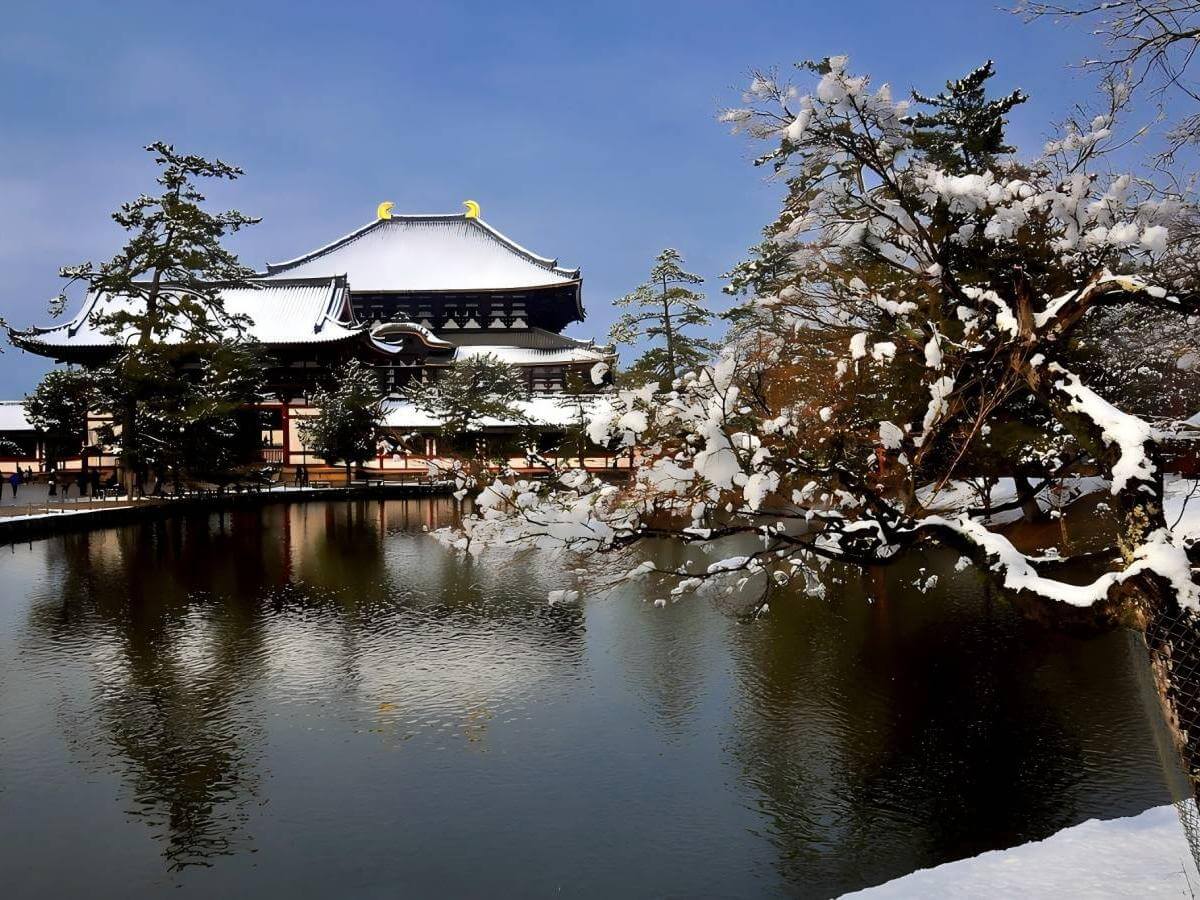
Suggestions: Todai-ji Temple is open to the public all year round, but the scenery varies from season to season. In spring, the cherry blossoms are in full bloom and the pink petals intertwine beautifully with the old buildings, while in autumn, the maple leaves add a touch of rich color to Todai-ji Temple. It is recommended that visitors choose these two seasons to enjoy the beautiful natural scenery and the unique flavor of Todai-ji Temple. Entrance to Todai-ji Temple requires an entrance ticket, the price of which may vary depending on the time of year.
Todai-ji Temple, a temple that carries a thousand years of history and faith, awaits every visitor with its unique charm. Here you will encounter a magnificent temple, admire a solemn statue of Buddha, and embark on a journey that will touch your heart . Whether you are in search of history and culture, or longing for inner peace, Todai-ji Temple offers the most profound experience.